As I settle into my gaming chair this October, the air feels thick with anticipation and digital ghosts. While the spooky season of 2026 is in full, vibrant swing, my mind drifts back to the gaming news cycles of yesteryear, particularly that pivotal third week of October 2021. It was a week that felt like a prelude to the landscape I navigate today—a landscape shaped by delays, cross-platform dreams, and the ever-present specter of bugs and leaks. Revisiting those stories is like examining the fossilized roots of the gaming world tree I now climb; they explain so much of its current, sprawling shape.
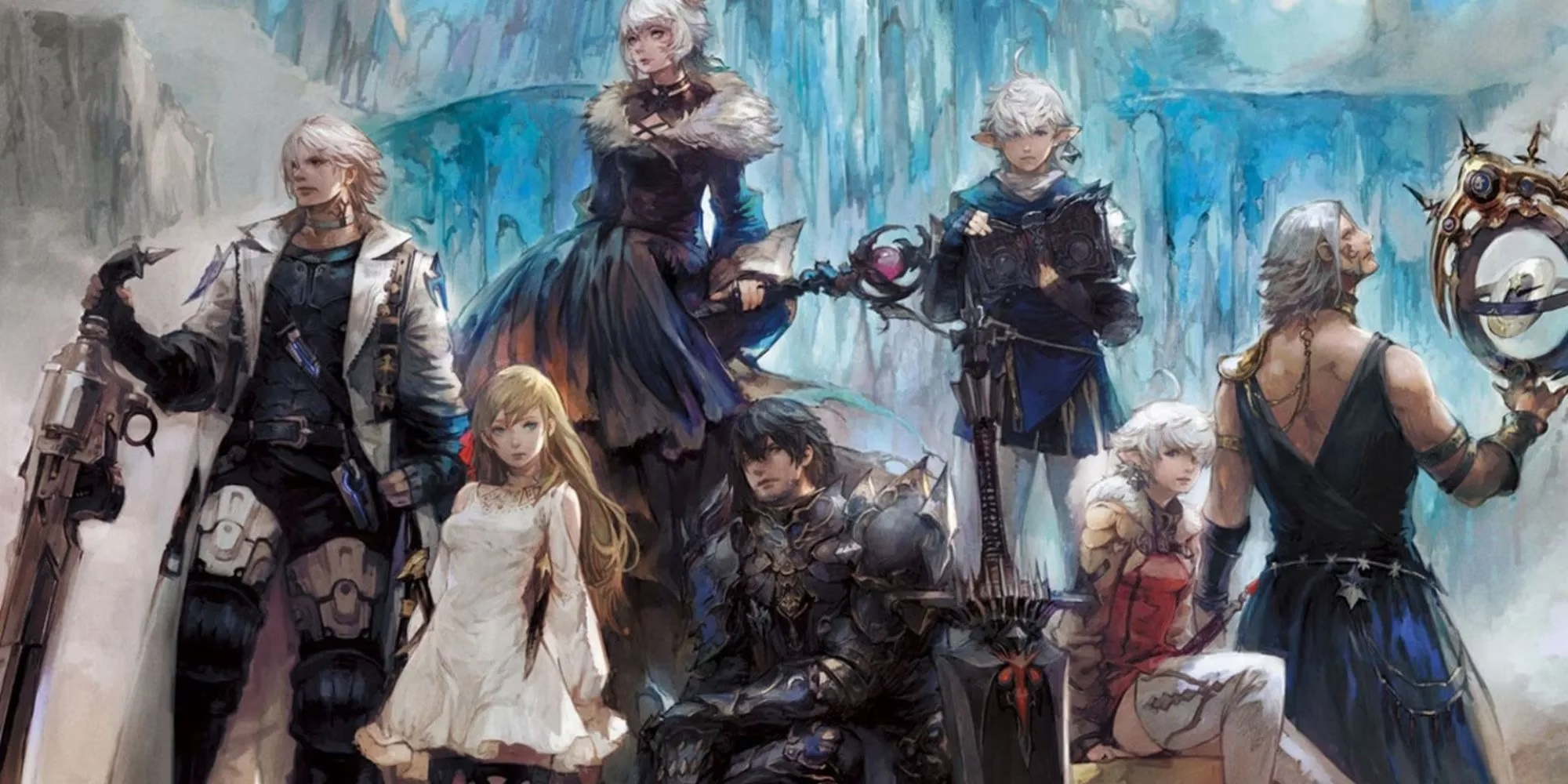
One of the most persistent echoes from that time is the long-running saga of Final Fantasy 14 coming to Xbox. Back in 2021, Square Enix was reportedly "positive" about bringing its massively profitable MMO to Microsoft's console, emphasizing a desire to do it "properly." Looking back from 2026, this story feels like watching a master chef meticulously prepare a single, perfect dish for years. The journey to Xbox was less a sprint and more a slow, deliberate pilgrimage. That initial caution from the developers was prophetic, setting a tone for the careful, community-first expansions that have defined the game's continued dominance. It was a reminder that in gaming, some of the most rewarding experiences are those that are patiently brewed, not hastily served.
The week also brought a classic case of modern marketing synergy with Dune's anticipated arrival in Fortnite. Leaked data mines suggested the sci-fi epic would hit the battle royale island ahead of its theatrical debut. This news, while unsurprising even then, now feels like a foundational blueprint for the media crossovers that have since become as common as loot chests. In 2026, these collaborations are intricate tapestries woven from dozens of franchises, but back then, the mere hint of one was a novelty. It was the moment the gaming industry realized its platform wasn't just for games; it was a global cultural stage, a digital agora where movies, music, and mythologies could collide and be remixed by players.
 .jpg)
.jpg)
Not all news was about exciting expansions. A more frustrating headline involved the PS5 disc installation bug reportedly making an unwelcome comeback. Players found that inserting a PS5 game disc could trigger an automatic download of the PS4 version—a ghost in the machine haunting titles like No Man's Sky and Final Fantasy 7 Remake. From my 2026 vantage point, this bug was like a stubborn poltergeist that refused to be exorcised, a reminder that even our most advanced consoles are complex ecosystems prone to mysterious, recurring glitches. It taught us, the players, a lesson in vigilance: to always check what version is installing, a habit that has stayed with me through this console generation.
In a charmingly literal turn of events, Sega announced it would open a new Ikebukuro arcade... right across the street from the legendary one that had just closed. This move was less about moving on and more about a phoenix rising from almost the exact same ashes. It was a perfect, almost poetic metaphor for the gaming industry's cyclical nature—nostalgia and innovation constantly dancing on opposite sidewalks. While arcades have continued to evolve into immersive experience centers, that 2021 news item captured a uniquely Japanese commitment to preserving spirit over mere location.
The world of Pokémon was buzzing with multiple updates. Pokémon Unite teased the arrival of Greedent for its Halloween event, alongside spooky holowear for Lucario and Zeraora. Meanwhile, in the physical world, it was revealed that Eevee would join Pikachu in a new Macy's Thanksgiving Day Parade balloon, celebrating the franchise's 25th anniversary. The duality of these stories—a digital game update and a real-world cultural event—highlighted Pokémon's unique position. It wasn't just a game; it was a consistent, joyful presence in global pop culture, as comfortable on a smartphone screen as it was floating above New York City. The Greedent tease was like finding an extra piece of candy in your Halloween bucket, while the Eevee balloon announcement was the main event, a celebration of enduring legacy.
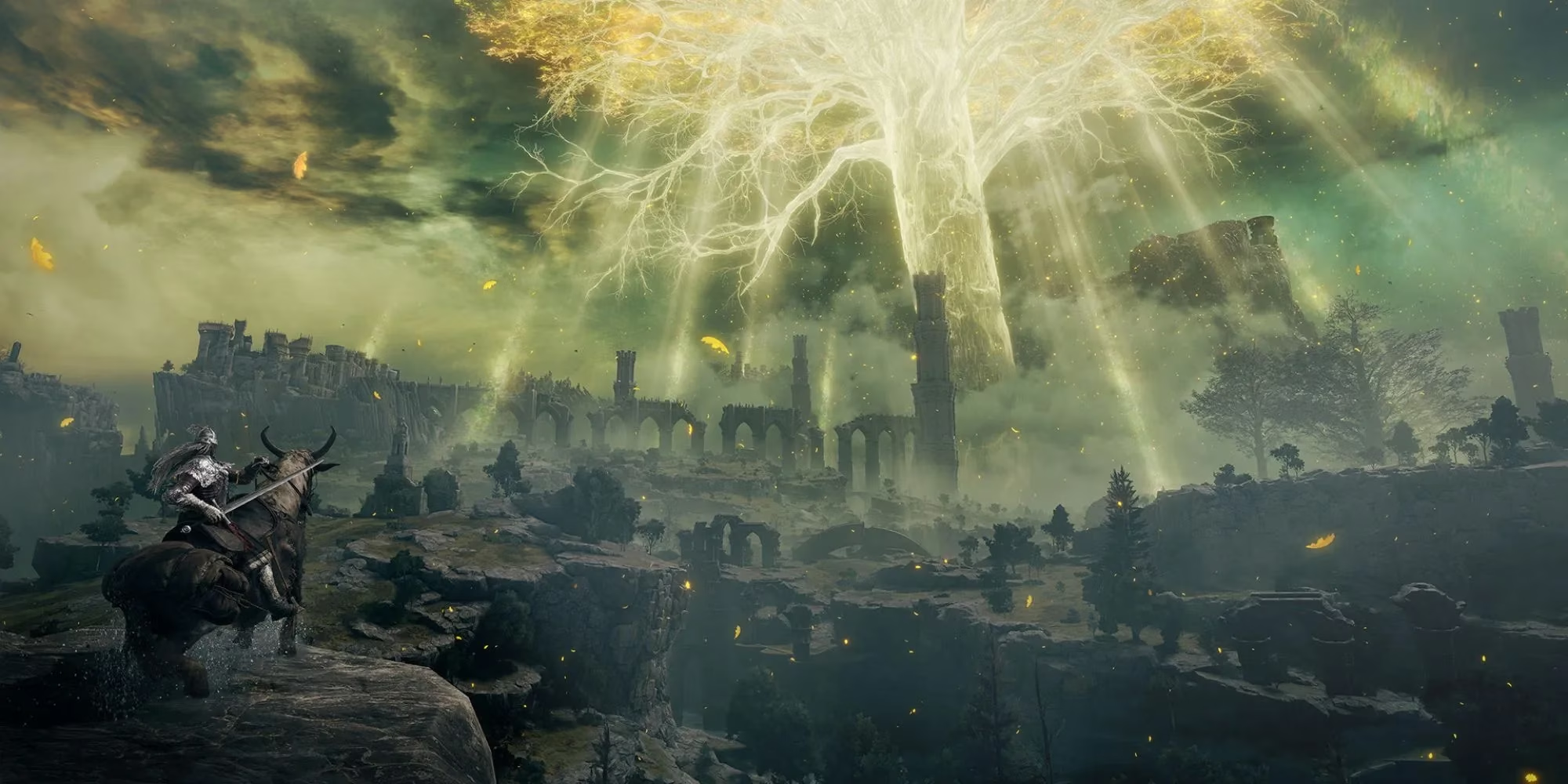
Perhaps the most impactful news for core gamers was the delay of Elden Ring to February of the following year. However, FromSoftware softened the blow by announcing a closed network test for the next month. In hindsight, this delay was a masterclass in managing expectations. The promised test was a life raft of hope tossed to a sea of disappointed fans. It transformed the narrative from "we have to wait longer" to "we get to try it sooner." This approach has since become a benchmark for how to handle delays in a transparent, community-engaged way. The eventual release proved the wait was worth it, but in that October week, the network test was a flickering lantern in the dark, guiding us forward.
On the security front, Twitch was in damage control mode, reaffirming that credit cards and passwords were safe after a massive data leak. This incident was a stark, early warning in the ongoing saga of digital security in gaming spaces. It was the moment many of us realized our virtual hangouts were as vulnerable as any other online space. The reassurance from Twitch felt like a landlord promising the locks were changed after a break-in—necessary, but the sense of violation lingered. It pushed streamers and viewers alike to be more proactive about digital hygiene, a lesson that remains critically relevant in 2026.
The week also served up a moment of pure, baffling confusion from Xbox. The official account teased potential Fable news, only to delete the tweet shortly after and state there was, in fact, no news coming. This whiplash-inducing episode was the gaming news equivalent of a mirage in the desert—a fleeting glimpse of hope that vanished upon approach. It left the community scratching their heads, a feeling that would become familiar in the long, quiet years of waiting for the franchise's reboot. It taught us to temper our excitement for unofficial teases, a skepticism that has served me well in deciphering today's endless rumor mills.
Finally, Battlefield 2042 news indicated the number of tanks on the 'Orbital' map would double before launch. This specific, granular update was fascinating. It showed developers fine-tuning the symphony of chaos that is a Battlefield match right up to the last minute. Deciding to double the tanks wasn't just a balance change; it was a deliberate choice to amplify a specific kind of ground-shaking, explosive gameplay. It promised more of the series' signature, large-scale vehicular warfare, setting expectations for the chaotic playground that was to come.
Reflecting on that week from 2026, I see the seeds of today's gaming world. The cross-platform aspirations, the handling of delays with playable tests, the blend of digital and real-world celebrations, and even the frustrating, recurring bugs—they all trace their lineage back to these moments. Gaming news isn't just announcements; it's the chronicle of an evolving art form, a community's hopes and frustrations, and the relentless march of technology. That October week was a single, vibrant frame in a much larger, still-unfolding animation.
Comments