As a long-time Battlefield veteran, I still remember the mixed emotions that swept through the community when DICE officially pulled the plug on Hazard Zone back in 2022. At the time, Battlefield 2042 was already struggling under the weight of technical issues and dwindling player counts, and this decision felt like both a mercy killing and a stark admission of failure. Fast forward to 2026, and the scars of that launch window still define how we talk about the game – but Hazard Zone's quiet disappearance also taught the industry some valuable lessons about risk, player expectations, and the limits of live-service ambition.
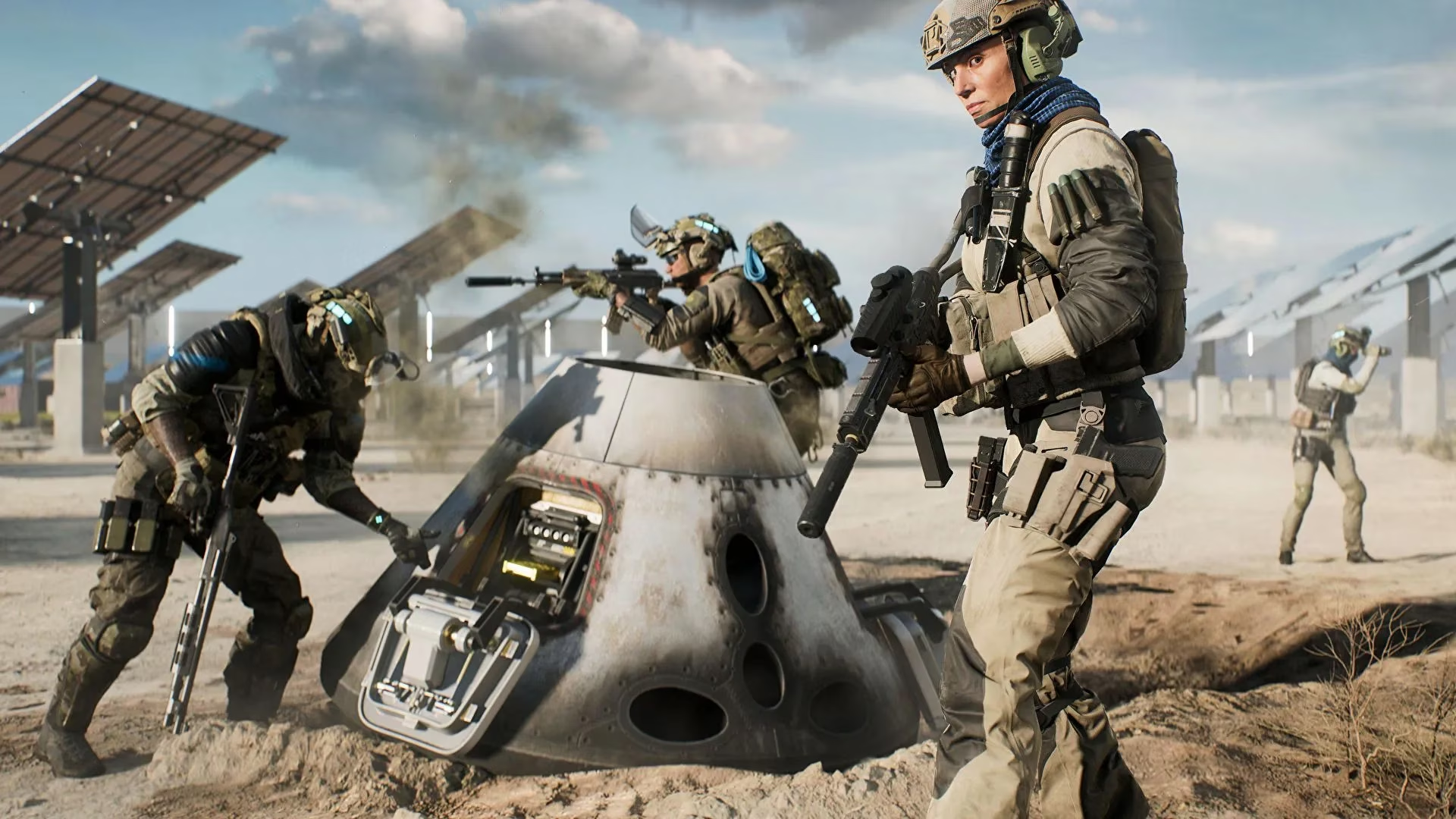
Hazard Zone was supposed to be Battlefield 2042's answer to the extraction shooter craze, a high-stakes squad-based mode where teams fought over data drives and fought to extract before time ran out. On paper, it sounded thrilling. In practice, the mode launched with barebones features, confusing mechanics, and almost zero post-launch support outside of a handful of bug fixes. I remember queuing for matches just weeks after release and staring at a timer that stretched into the double digits – a clear sign that players had already moved on.
When DICE finally addressed the elephant in the room, they didn't mince words. In a developer update ahead of Season 1, the team acknowledged that Hazard Zone "hasn't found the right home in Battlefield 2042." That sentence stung, not because it was harsh, but because it was painfully accurate. The mode never integrated with the core Battlefield loop, never built a dedicated community, and never received the kind of iterative updates that could have saved it. Instead of trying to revive an empty server, DICE made the pragmatic call to cut their losses and redirect resources towards Conquest, Breakthrough, and Portal – the experiences that still had a pulse.
Season 1, which was finally revealed in June 2022, became the symbolic funeral for Hazard Zone. Alongside a new map (Exposure), a new specialist (Liz), and a much-needed redesign of the Kaleidoscope map, DICE officially ceased active development on the mode. The season itself brought genuine quality-of-life improvements: better animations, smoother movement, and map reworks that addressed some of the open-space complaints that had plagued launch. But for those of us who had hoped Hazard Zone would evolve, the message was clear – this was the end of the road.
Looking back, it's easy to see why Hazard Zone failed so spectacularly. The mode arrived in a game already drowning in negativity. Players were furious about missing legacy features, poor performance, and a chaotic Specialist system that stripped away class identity. Throwing an experimental extraction mode into that storm without a free-to-play model or a robust progression hook was like launching a paper boat into a hurricane. Industry rumors at the time floated the idea that EA might spin Hazard Zone into a standalone free-to-play title – a path that could have given it the breathing room it needed – but those whispers never materialized. Instead, the mode was quietly left to rot, its menu option eventually becoming a ghost town for the few stragglers who still clicked on it.
By 2026, the legacy of Hazard Zone serves as a cautionary tale. DICE's decision to stop supporting it may have felt like giving up, but in retrospect, it was a rare moment of clarity during a turbulent post-launch period. Concentrating on the modes players actually wanted allowed Battlefield 2042 to slowly claw back some goodwill over the following seasons. We saw more map reworks, classic weapons returning, and a gradual shift toward the class system fans had begged for. While the game never fully recaptured the magic of its predecessors, it at least found a stable – if diminished – player base.
For developers, the Hazard Zone story is a reminder that not every trendy mode needs to be bolted onto a flagship franchise. Extraction shooters require intricate balance, persistent stakes, and a carefully nurtured community – none of which can be slapped together in an already shaky launch window. Sometimes, the bravest thing a studio can do is admit a mistake early and pivot, rather than pouring years into a sinking ship.
As I write this in 2026, with whispers of the next Battlefield title likely on the horizon, I hope the lessons of Hazard Zone aren’t forgotten. Innovation is essential, but it must be grounded in what makes a series tick. Hazard Zone may have been a failure, but its ghost lives on in every post-mortem analysis, every community wishlist, and every cautious step DICE takes toward the future.
| Key Hazard Zone Timeline | Details |
|---|---|
| November 2021 | Battlefield 2042 launches with Hazard Zone as one of three core experiences |
| December 2021 | Matchmaking times balloon; player count in Hazard Zone plummets |
| May 2022 | DICE announces end of active support for Hazard Zone ahead of Season 1 |
| June 2022 | Season 1 arrives with no new Hazard Zone content; mode left in maintenance mode |
| 2023–2025 | Hazard Zone remains playable but stagnant, eventually fading from main menus |
In the end, Hazard Zone wasn't just a mode that failed – it was a symbol of a troubled launch and the growing pains of live-service game design. And if history has taught us anything, it's that the best comebacks come from learning what not to do.
Comments