When Battlefield 2042 arrived in November 2021, it carried the weight of a franchise known for massive-scale warfare. On Steam, the game peaked at approximately 100,000 concurrent players during its launch window. Yet by early January 2022, the daily player count had dropped to around 10,000. Observers could only assume that console numbers experienced a similarly dramatic fall. The decline grew so noticeable that dedicated Battlefield fans began returning to Battlefield V, a previous installment, to satisfy their desire for classic combined-arms action.
The community’s frustration was impossible to ignore. On forums, social media, and video platforms, players outlined a host of problems with Battlefield 2042. Many complaints centered on the absence of features considered fundamental to the series, such as a traditional scoreboard and built-in voice chat. Others focused on the new specialist system, which many fans believed prioritized cosmetic microtransactions over balanced, immersive gameplay. The result was a loud and sustained chorus of dissatisfaction that continued through the holiday season.
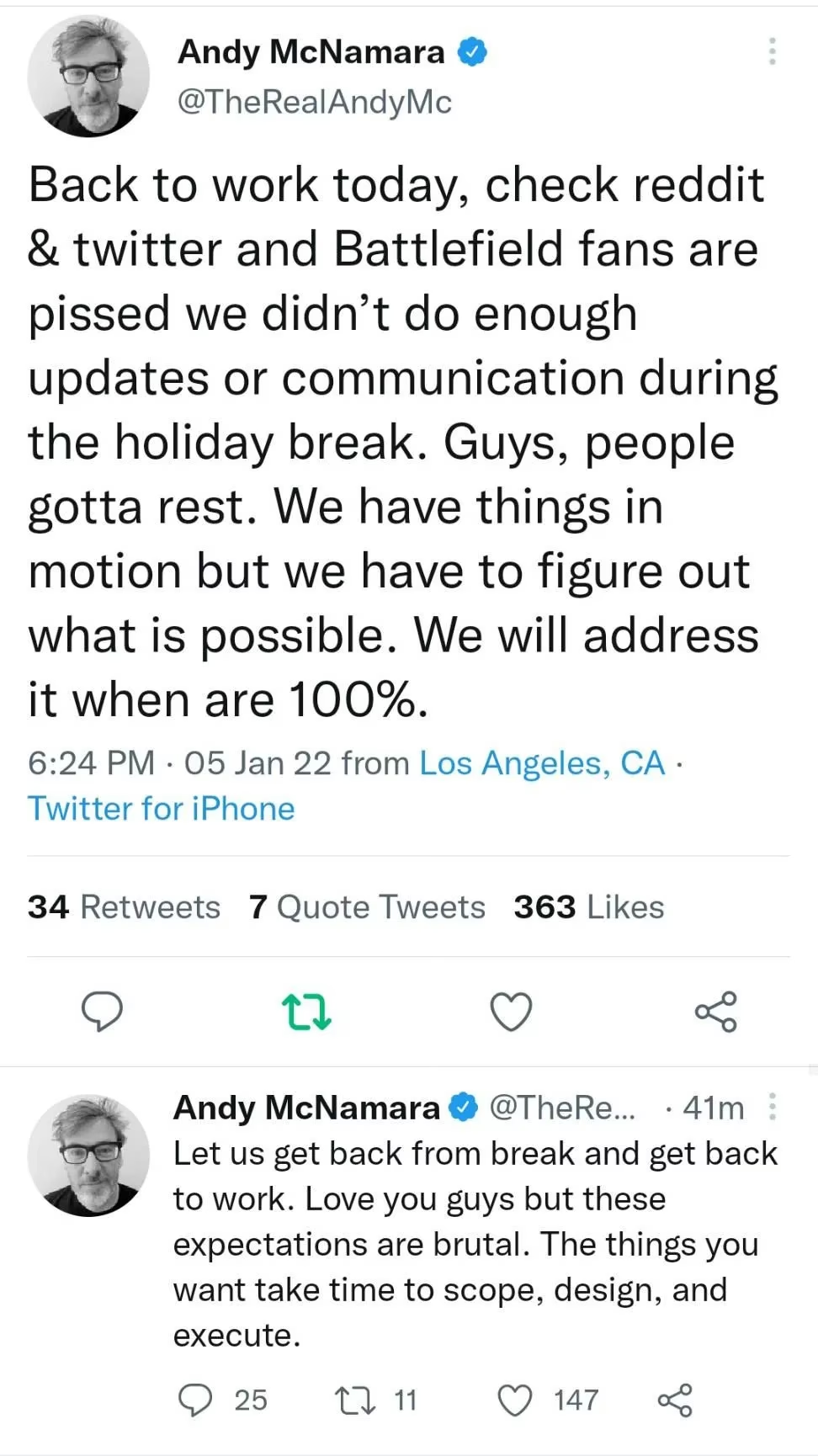
Andy McNamara, EA’s global director of integrated communications, addressed the backlash after returning to work. He posted a series of tweets acknowledging the community’s anger while also asking for patience. In one message, he wrote that players were upset because the team did not provide enough updates or communication during the holiday break. He noted that people needed rest and that the studio had things in motion but had to determine what was possible before making promises. In another tweet, he told fans that their expectations were “brutal” and that the changes they wanted would take time to scope, design, and execute.
Those tweets were removed shortly after they appeared. Many interpreted the deletion as a sign that the comments had been poorly received. From a community management perspective, the episode demonstrated the difficulty of responding to an angry player base with defensive language. Rather than reducing tension, the statements seemed to magnify it. Within days, the conversation shifted from the deleted tweets to a new gameplay controversy.
Rush, a fan-favorite mode that has appeared throughout the Battlefield series, rotated out of Portal. For many players, Rush represented a focused, high-stakes alternative to the larger modes, and its removal felt like another example of DICE ignoring the community’s preferences. Social media filled with posts from fans who said their feedback was not being heard. The timing could hardly have been worse. After weeks of criticism about missing features, poor communication, and controversial design choices, the loss of Rush added fresh fuel to the fire.
Several core issues stood out during this period. The table below summarizes the main community complaints and their practical impact on the player experience.
| Community Complaint | Why It Mattered | Observed Impact |
|---|---|---|
| No traditional scoreboard | Players could not compare performance or track squad contributions easily | Reduced competitive motivation |
| No built-in voice chat | Squads struggled to coordinate in a team-based shooter | Weakened squad play |
| Specialist skins focus | Felt more like a storefront than a battlefield sandbox | Damaged series identity |
| Rush removal from Portal | Removed a popular, objective-driven mode | Intensified trust issues |
Looking back from 2026, the early Battlefield 2042 crisis remains a defining example of how quickly a live-service game can lose player trust. The sudden drop from 100,000 to 10,000 Steam players was not just a number; it reflected a deep disconnect between the developers and the people who had supported the franchise for years. The McNamara tweets, however brief, captured the tension between corporate pacing and community expectations. Players wanted immediate answers, while developers needed time to investigate and build fixes.
The Rush rotation proved that even smaller content decisions could carry enormous symbolic weight. When a beloved mode disappeared without clear communication or a satisfying roadmap, it became easier for players to believe that their priorities were not being considered. That perception can be more damaging than any single bug or missing feature.
For DICE and EA, the early weeks of 2022 became a period of hard lessons. The game’s player count continued to fluctuate, and the studio faced a long road toward restoring confidence. By 2026, the industry often references this period when discussing the importance of transparent communication, core feature completeness, and humility in crisis response. Battlefield 2042 may have evolved since then, but the frustration of that January remains a powerful reminder that player trust is earned slowly and lost quickly.
Comments