As we approach the end of 2026, I find myself reflecting on the significant shifts in game development cycles that have become commonplace. One of the most notable examples from recent years was the delay of Battlefield 2042, a moment that highlighted the profound impact of external global events on even the most established studios and publishers. The decision by EA and developer DICE to postpone the launch from its original October date to November 19, 2021, was a clear signal that the industry's traditional timelines were being fundamentally reshaped. It wasn't just about moving a date on a calendar; it was an acknowledgment of the very real, human challenges faced by development teams worldwide. The pandemic created a perfect storm of logistical hurdles, forcing a rapid and unplanned transition to remote work that affected collaboration, testing, and the final polish that defines a triple-A release. This wasn't an isolated incident but part of a broader pattern we've seen unfold across the industry, where flexibility and adaptability have become as crucial as creative vision and technical prowess.
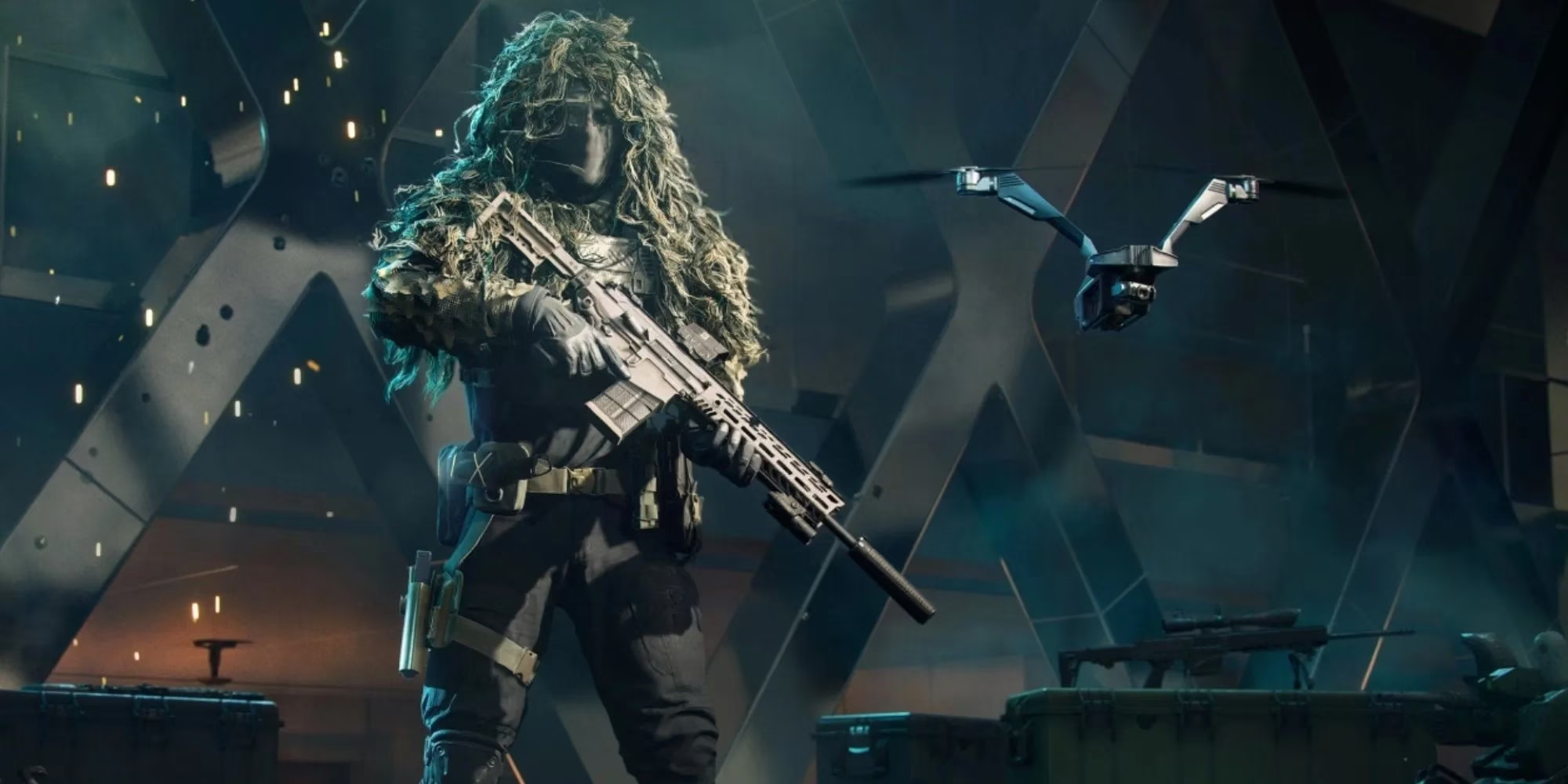
The official statement from DICE's leadership at the time pointed directly to the "unforeseen challenges" posed by COVID-19. The studio, like so many others, had to prioritize the safety and well-being of its team by shifting to a work-from-home model. This transition, while necessary, disrupted the intricate, collaborative rhythms of game development. The hope to reunite the team in-studio for the final push before launch became another casualty of the pandemic's unpredictable nature. This scenario played out repeatedly, creating what many in the industry began to call "delay season." The rumor mill had been active, with whispers initially suggesting a much longer postponement into 2022, underscoring the uncertainty that clouded development schedules. The delay of Battlefield 2042's open beta, originally slated for late September, was another ripple effect, leaving players in the dark about when they could finally get hands-on with the highly anticipated title.
Looking back, the delay of Battlefield 2042 sits firmly within a larger narrative of the early-to-mid 2020s. It was part of a wave that included major titles like Dying Light 2 and affected platform-specific releases like Life is Strange: True Colors for Nintendo Switch. These weren't decisions made lightly; they were calculated risks to preserve game quality and team health in an unprecedented situation. The industry learned hard lessons about planning and communication. 😔
Key Factors Behind the 2021 Delay Wave:
-
Remote Work Transition: Sudden shift from collaborative studio environments to distributed teams.
-
Pipeline Disruption: Complex asset workflows and integration testing became more difficult.
-
Playtesting Challenges: Organizing large-scale, in-person beta tests and focus groups was nearly impossible.
-
Resource Strain: Teams balancing professional workloads with personal pandemic stressors.
-
Supply Chain Issues: Affecting physical production and distribution of collector's editions and consoles.
Fast forward to 2026, and the echoes of those decisions are still felt. The development processes that were hastily adopted in 2020 and 2021 have now evolved into more mature, hybrid models. Many studios have permanently embraced flexible work arrangements, finding that they can maintain productivity while offering a better work-life balance—a silver lining born from necessity. The communication around delays has also become more transparent. Publishers now often provide deeper dives into the why, sharing insights about specific development hurdles rather than issuing vague statements. Players, while still eager for new content, have generally shown more patience and understanding, recognizing that the people behind their favorite games are navigating a complex world.
The journey from Battlefield 2042's delayed launch to today's development landscape is a story of resilience. The industry was forced to innovate under pressure, leading to new tools for remote collaboration, more robust asynchronous communication channels, and a greater emphasis on mental health and sustainable crunches. While no one would wish for a global pandemic, the adaptations it necessitated have arguably led to a more humane and efficient creative process in the long run. The delay of Battlefield 2042 wasn't an endpoint; it was a pivotal moment in an ongoing transformation of how games are made. 🎮
| Aspect | Pre-2020 Norm | 2020-2022 Reality | 2026 Evolution |
|---|---|---|---|
| Work Model | Primarily in-studio | Mandatory remote/work-from-home | Hybrid, flexible models |
| Timeline Certainty | Relatively stable schedules | High volatility, frequent delays | More buffer, adaptive planning |
| Player Communication | Standard marketing cycles | Reactive delay announcements | Proactive, detailed roadmaps |
| Team Well-being | Often secondary to deadlines | A primary concern and challenge | Integrated into core studio culture |
In conclusion, the story of Battlefield 2042's shift from October to November 2021 is a microcosm of a defining era for video games. It was a headline that represented hundreds of similar stories across the industry. The challenges were immense, but they catalyzed changes that have made the industry stronger and more resilient. As we play the latest titles in 2026, it's worth remembering the difficult paths that led to their creation. The games we enjoy are not just products of code and art; they are the result of human perseverance in the face of global adversity. The legacy of those pandemic-era delays is a more thoughtful, sustainable, and player-connected industry—a victory forged in the fires of unforeseen challenge.
Comments