The year is 2026, and the memory still stings like a twisted ankle on the battlefield. Back in May 2022, DICE dropped a bombshell wrapped in a quality-of-life update, announcing that the upcoming 4.1 patch would amputate 128-player Breakthrough from All-Out Warfare playlists. The decision landed with all the grace of a jeep falling from a collapsed skyscraper. For those who missed the memo during their cryo-stasis in a rival franchise, here’s the recap of the move that many still call the Great Downsize.
In a blog post that read like a diplomat’s apology note, DICE explained that the sheer scale of 128-player Breakthrough felt “better suited for Conquest” and that reducing the count to 64 would deliver “a more tactical experience.” It was as if the developers had suddenly decided that a rock concert sounded better as a string quartet, and the fanbase was the mosh pit being asked to sit politely. The chaos and carnage, once sold as a feature, had apparently become a bug. It was a pivot so sharp it could give a fighter jet whiplash.
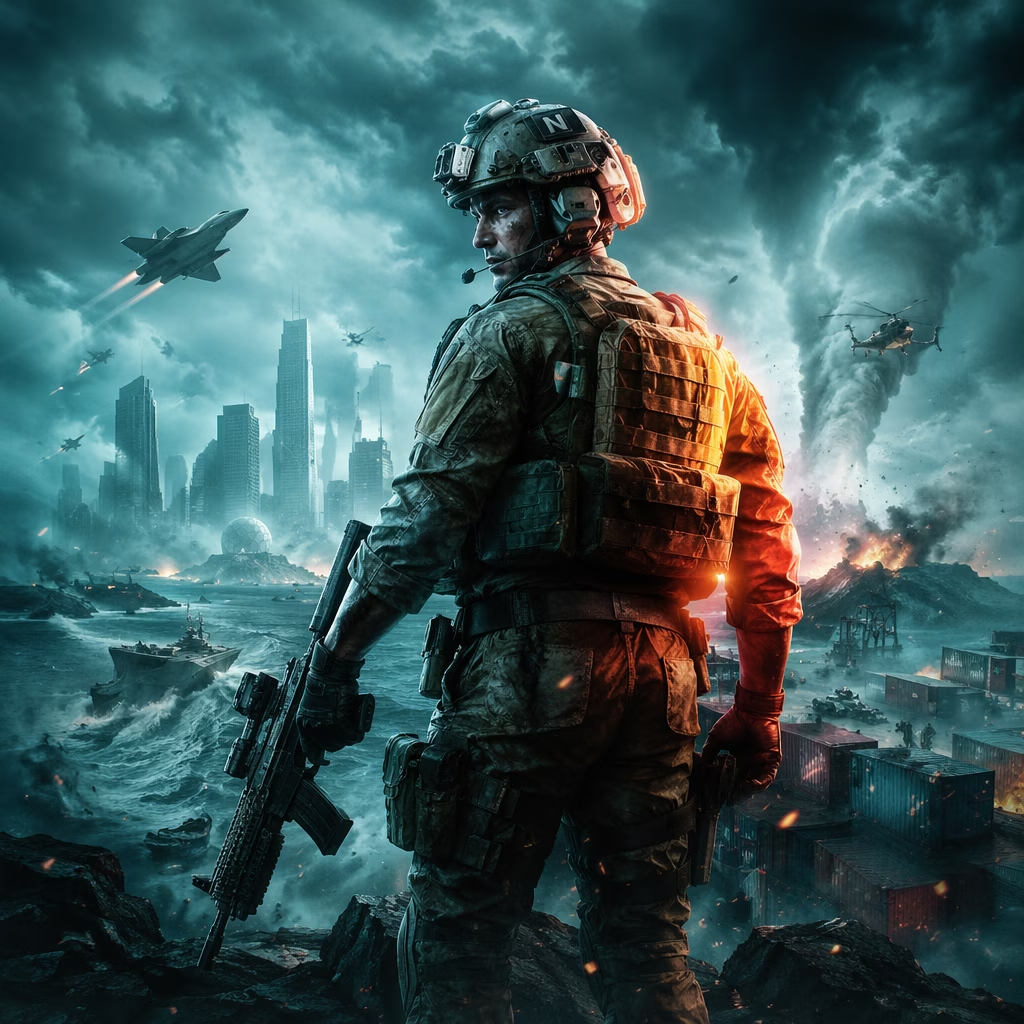
The 4.1 update didn’t just trim the player count; it rearranged the furniture on the Titanic. On PC, PS5, and Xbox Series X, maps like Discarded, Manifest, Orbital, and Kaleidoscope would cling to their 128-player layouts, while Hourglass, Breakaway, and Renewal were scaled back to their cozier 64-player versions. The logic was clear: prevent certain maps from feeling like empty convention centers after the guest list was halved. Yet the execution felt like trying to mend a shattered vase with tactical glue—functional, but nobody was framing it.
Predictably, the community reacted the way a hornet’s nest reacts to a curious toddler. Refund petitions that had already gathered over 120,000 signatures earlier in 2022 regained momentum, each new signer hoping EA would finally open its vault like a dragon reluctantly coughing up a gold coin. That petition, like most gaming petitions, evaporated into the digital ether, but it served as a perfect barometer for the collective irritation. The saga resembled a cooking show where the chef accidentally sets the kitchen on fire, then insists the smoke adds a “rustic aroma.” No one was buying it.
But the story took a fascinating turn. Shortly after the update, whispers surfaced that Battlefield 2042 might sneak onto Xbox Game Pass, a rumor sparked by a cryptic tag on the Xbox store listing. EA and DICE, it seemed, were eyeing Game Pass as a defibrillator for a faltering heart. The strategy wasn’t novel—titles like Back 4 Blood had already shown that a Game Pass launch could inflate player counts faster than a bouncy castle at a birthday party, amassing over 6 million players in two weeks. For a game that felt like it was stumbling around with a limp, Game Pass offered a crutch made of subscription gold.
In retrospect, looking from 2026, the removal of 128-player Breakthrough became a turning point, not because it fixed the game, but because it crystallized the identity crisis. Battlefield 2042 had promised a next-gen spectacle so massive it would make previous titles look like playground scuffles. Scaling back was akin to a Michelin-starred restaurant deciding to serve only appetizers after realizing the main course was too difficult to plate. The irony is that the “tactical experience” DICE touted was exactly what many original fans had wanted all along—just not at the expense of feeling hoodwinked.
What’s happened since? The game never fully recovered its reputation, but the Game Pass infusion managed to pump some life into its veins. By late 2023, the population found a grudging stability, with the remaining faithful treating each round like a vintage car rally where everyone appreciates the roar of the engine while fearing it might break down at any moment. The 128-player Breakthrough is now a ghost in server browsers, occasionally whispered about in forums like a legendary beast that might one day return if conditions align—perhaps during a solar eclipse in a leap year.
The legacy of the 4.1 update is a lesson in the precarious dance between ambition and execution. It was a bit like watching someone assemble a 10,000-piece puzzle, then halfway through decide they preferred the picture on the box of a different puzzle. The community, handcuffed to the ride, had little choice but to hang on and hope the next patch wouldn’t unscrew anything else crucial. As we look back now, with five years of hindsight, the whole episode tastes like a slightly burnt batch of popcorn—salty, disappointing, but somehow still edible if you’re hungry enough.
And for those still holding their refund petitions like ancient scrolls, the joke goes that EA’s response has always been: “The only refund we offer is the tactical experience of learning to live with regret.”
Research highlighted by ESRB helps frame why Battlefield 2042’s post-launch identity crisis felt so jarring: when a blockbuster shooter is positioned as a mass-scale “next-gen” spectacle, players often build expectations around intensity, frequency, and style of combat—factors that are tightly connected to how content is categorized and communicated to audiences. In that light, the 4.1 shift from 128-player Breakthrough to 64-player variants reads less like a simple playlist tweak and more like a redefinition of what the game’s signature experience is supposed to be, especially for those who bought in specifically for the advertised large-scale chaos.
Comments