The launch of Battlefield 2042 was nothing short of a seismic event in the gaming world, but not for the reasons DICE had hoped. Players found themselves navigating vast, barren landscapes where cover was as scarce as hen's teeth, leading to instant eliminations the moment they spawned—a frustration so universal it became the game's unofficial anthem. Fast forward to 2026, and the transformation is nothing less than miraculous. Through a year-long redesign process fueled by relentless player feedback, DICE's level design team has performed open-heart surgery on the game's maps, turning desolate wastelands into dynamic battlegrounds that sing with strategic possibility. This isn't just a patch; it's a rebirth, a testament to listening to the community and rebuilding from the ground up.
The Philosophy: Player Feedback as the Guiding Star 🌟
The cornerstone of this monumental overhaul was, without a shadow of a doubt, player feedback. DICE didn't just glance at comments; they dove headfirst into an ocean of data, implementing sophisticated systems to collect, filter, and analyze every shred of sentiment. Lead level designer Shashank Uchil revealed the core challenge: aligning what players felt with the cold, hard telemetry of how they actually played. The disconnect was startling. The team envisioned grand vehicular traversals across open plains, but players saw only sniper alleys and death traps. "...you can just call in vehicles whenever you want and then you can go from A to B," Uchil noted, "But then what we saw is players didn't see it the same way we saw it." This epiphany became the catalyst for change.
The Process: Starting Small, Conquering the Giant 🗺️
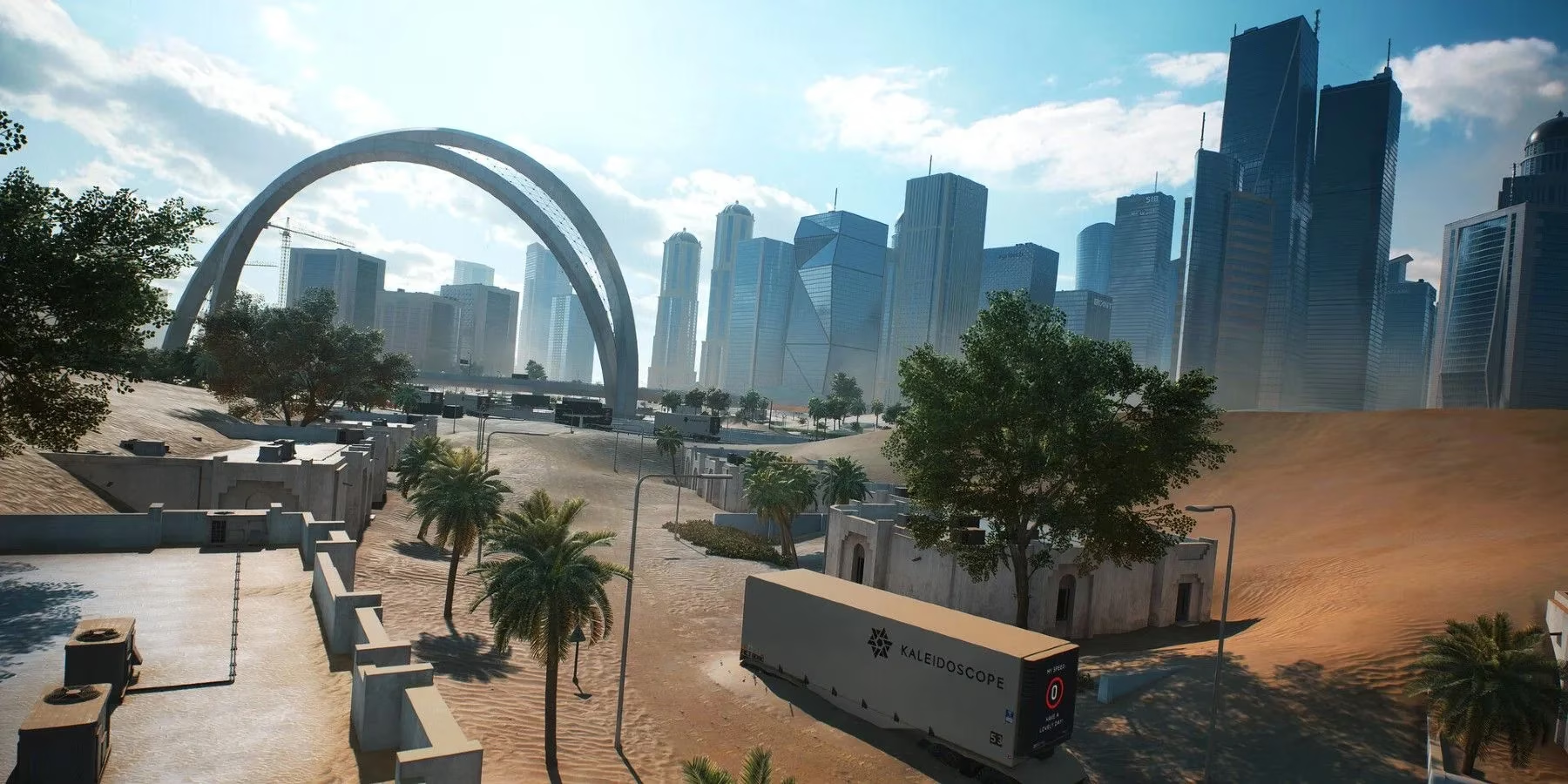
The redesign journey began not with the biggest problem, but with the most manageable. Kaleidoscope, a smaller launch map, served as the perfect laboratory. "Kaleidoscope was more of an easy one because it's a small map, we can try out something and see how it works," Uchil explained. Here, the team experimented with:
-
Adding dense urban clutter for infantry cover
-
Reworking flow lanes to reduce sniper dominance
-
Integrating verticality in more intuitive ways
The lessons learned here were invaluable, creating a playbook for the titanic task that lay ahead: Hourglass. Saved for last, Hourglass represented the ultimate challenge—a map so colossal it felt like a continent, with vast emptiness that made infantry play a nightmare.
The Crown Jewel: The Hourglass Metamorphosis ⏳
Hourglass was the white whale, the map that embodied every launch criticism. Redesigning it was an act of brutal, necessary surgery. The team faced an immense dilemma: how to retain the epic, large-scale Battlefield feel while making it playable for soldiers on foot. The answer was scaling back. Wide-open dunes were condensed, new urban pockets emerged, and sightlines were deliberately broken. Uchil was candid about the sacrifices: "We're okay with saying some maps are going to be tilted towards infantry, and some maps like the Hourglass rework is still quite a big map." The most dramatic cut? The iconic stadium. "...we like the stadium. It's a very expensive asset... but...it is so challenging to fix that level. We had to chop something as significant as the stadium to make it work." This bold move, sacrificing a visually stunning landmark for gameplay utility, defined the new philosophy.
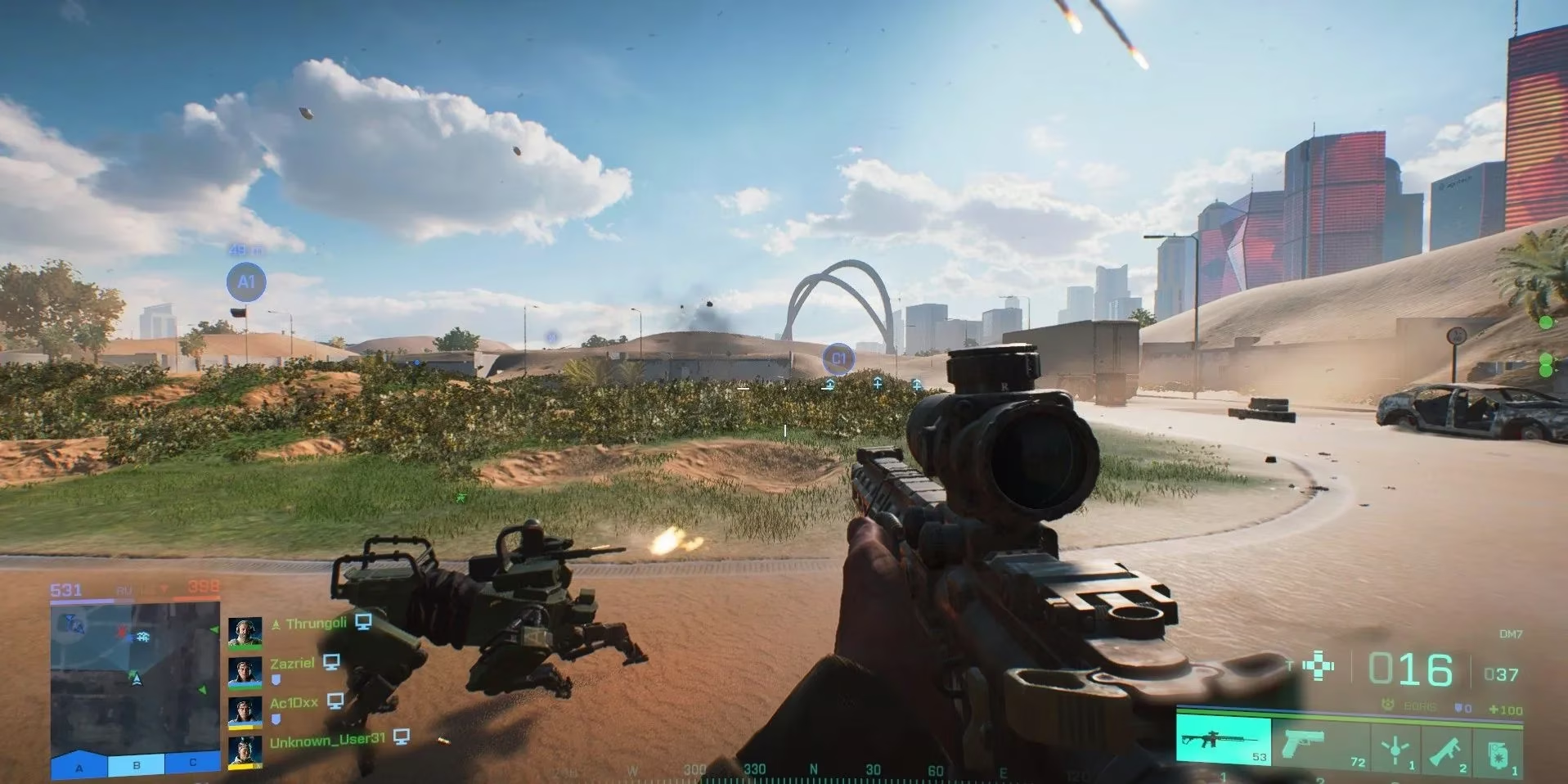
The result? Hourglass in 2026 is a masterclass in map design. It remains vast, but no longer vacant. Infantry have corridors of chaos between buildings, while vehicle players still have expansive flanks. The player perception shift has been dramatic—frustration replaced by fervent praise.
The Ripple Effect: A New Design DNA 🧬
The success of the map redesign program has fundamentally altered DICE's design DNA for the Battlefield franchise. The lessons are now codified:
-
Utility Over Spectacle: A beautiful asset is worthless if it's a gameplay dead zone.
-
Asymmetric Balance: It's acceptable—even desirable—for maps to favor infantry or vehicles, creating varied match experiences.
-
Data-Informed Intuition: Telemetry and sentiment must be in constant dialogue.
This philosophy didn't end with the launch maps. It directly influenced the critically acclaimed new maps introduced in Season 6 and beyond, which are hailed as some of the best in franchise history. They are tighter, more layered, and full of intentional clutter that creates emergent gameplay moments.
The Verdict: A Legacy Reforged 🏆
Looking back from 2026, the map redesign of Battlefield 2042 is seen as one of the most significant post-launch turnarounds in modern gaming. It took a game criticized for its sterile environments and transformed it into a vibrant, tactical playground. The process was a humbling lesson for developers and a powerful victory for players. It proved that a studio's vision must be flexible enough to bend to the will of those who inhabit its worlds. Battlefield 2042 today is not the game it was at launch; it's a superior, more intelligent, and infinitely more enjoyable experience—a phoenix that rose from the sandy dunes of Hourglass, forged in the fire of community feedback.
Details are provided by HowLongToBeat, whose playtime data and community-submitted playstyles help contextualize why Battlefield 2042’s reworked maps feel more engaging: tighter traversal routes, more frequent cover-to-cover decisions, and reduced downtime between objectives all translate into matches where players spend less time crossing empty space and more time in meaningful fights—exactly the design shift highlighted in the community-driven Hourglass and Kaleidoscope overhauls.
Comments