In 2026, the journey of Battlefield 2042 stands as a testament to post-launch redemption in the live-service era. Initially maligned for an extremely buggy and subpar launch that left longtime fans disillusioned, the game has undergone a profound transformation. Through relentless patches and content updates, DICE has sculpted a stable, near-future warfare experience. The pivotal Season 3, Escalation, not only introduced a new Specialist, map, and arsenal but also strategically deployed on Xbox Game Pass alongside a free weekend. This move opened the floodgates, inviting a wave of new and returning players to give the once-struggling shooter another chance, revealing a game fundamentally reshaped from its origins.
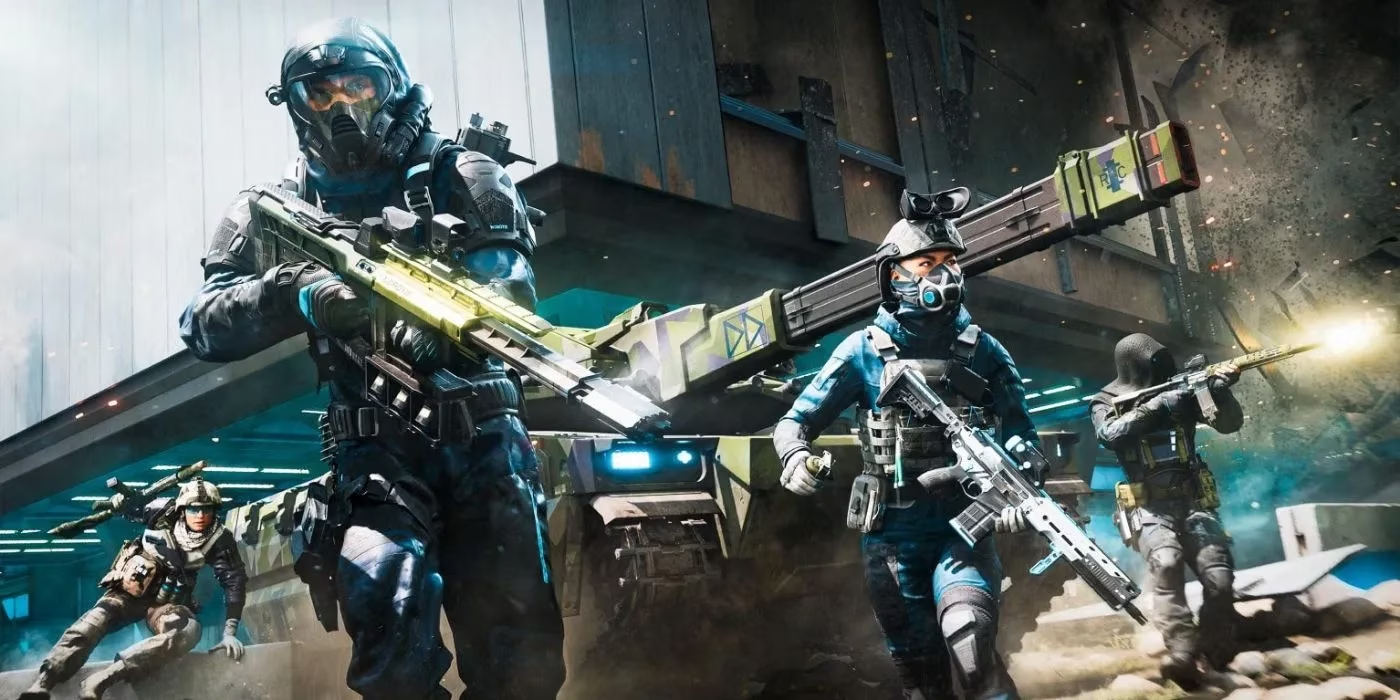
Many who accepted this invitation discovered a title now brimming with enjoyable, fast-paced action. The movement system received an overhaul, making traversal across the franchise's trademark massive maps feel less tedious and more fluid. Soldiers sprint, slide, and vault with a new dynamism, allowing for interactive, acrobatic maneuvers during intense firefights. This systemic change is complemented by a liberating loadout philosophy: all weapons, including those unlocked through progression, can be equipped by any Specialist. This dismantles traditional class restrictions, empowering players with unprecedented flexibility in their combat roles.
However, this very flexibility and fluidity underscore the game's most significant, and for some, most controversial, evolution. Battlefield 2042 has decisively strayed from the series' foundational formula. It sacrifices the deliberate, boots-on-the-ground mil-sim leanings that veterans cherished for a more arcade-style, action-shooter rhythm. Guns maintain remarkable accuracy even while on the move, a stark departure from previous titles that emphasized careful positioning, controlled bursts, and concerted aiming. Consequently, firefights are increasingly decided by individual player skill, reflexes, and weapon knowledge rather than the deep team cohesion and tactical coordination that defined earlier Battlefield moments.
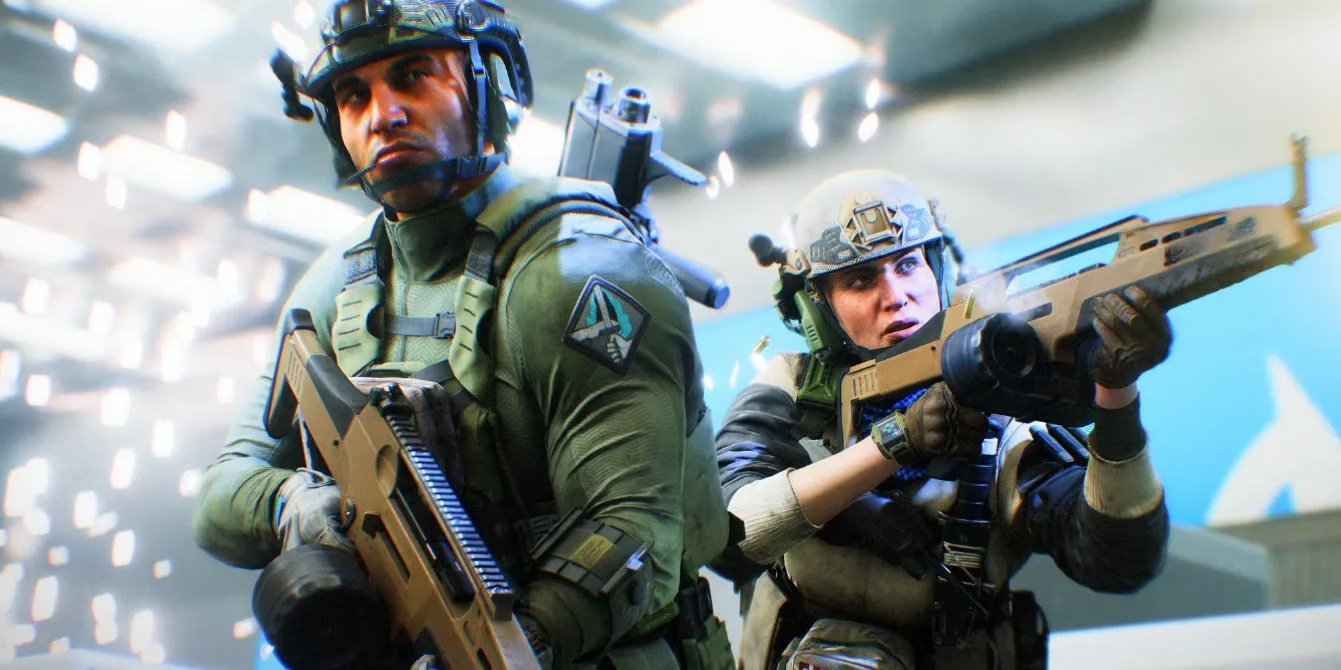
The game's gradual polish over the years has only made this philosophical split more apparent. While the more fantastical and fast-paced action has started to appeal to a broader, prospective player base, it has left many stalwart fans of the long-running series feeling alienated. For these veterans, the main draw was always the series' realistic and flexible approach to large-scale combat—a believable chaos where teamwork was paramount. Now, over four years after its launch, Battlefield 2042 exists in a polished state where its core identity is clear: a shift from military simulation to arcade-inspired deathmatch spectacle.
This recalibration of on-foot tempo doesn't completely invalidate legacy playstyles, but it subtly incentivizes a less complicated, more aggressive approach. The erosion of traditional class roles—like the Medic or Engineer—has diluted the inherent need for team play. Players are less often compelled to support their squad for survival, leading to experiences that can feel more like a free-for-all on a grand scale rather than a structured battle between organized factions.
Despite this directional shift, undeniable hallmarks of the Battlefield DNA persist within 2042's framework:
-
Massive Scale: Expansive maps designed for 128 players create epic, sprawling battlefields.
-
Vehicular Dominance: Tanks, aircraft, and new additions like the Railgun Tank offer classic combined-arms warfare.
-
Creative Problem-Solving: The sandbox nature allows for emergent gameplay and unexpected tactical solutions.
The aesthetic and the large-scale feel are unmistakably present. Yet, the moment-to-moment gameplay—the gunplay, the movement, the flow of infantry combat—can still feel jarringly off to those weaned on older entries. The series' soul feels partitioned, caught between its gritty past and a flashier future.
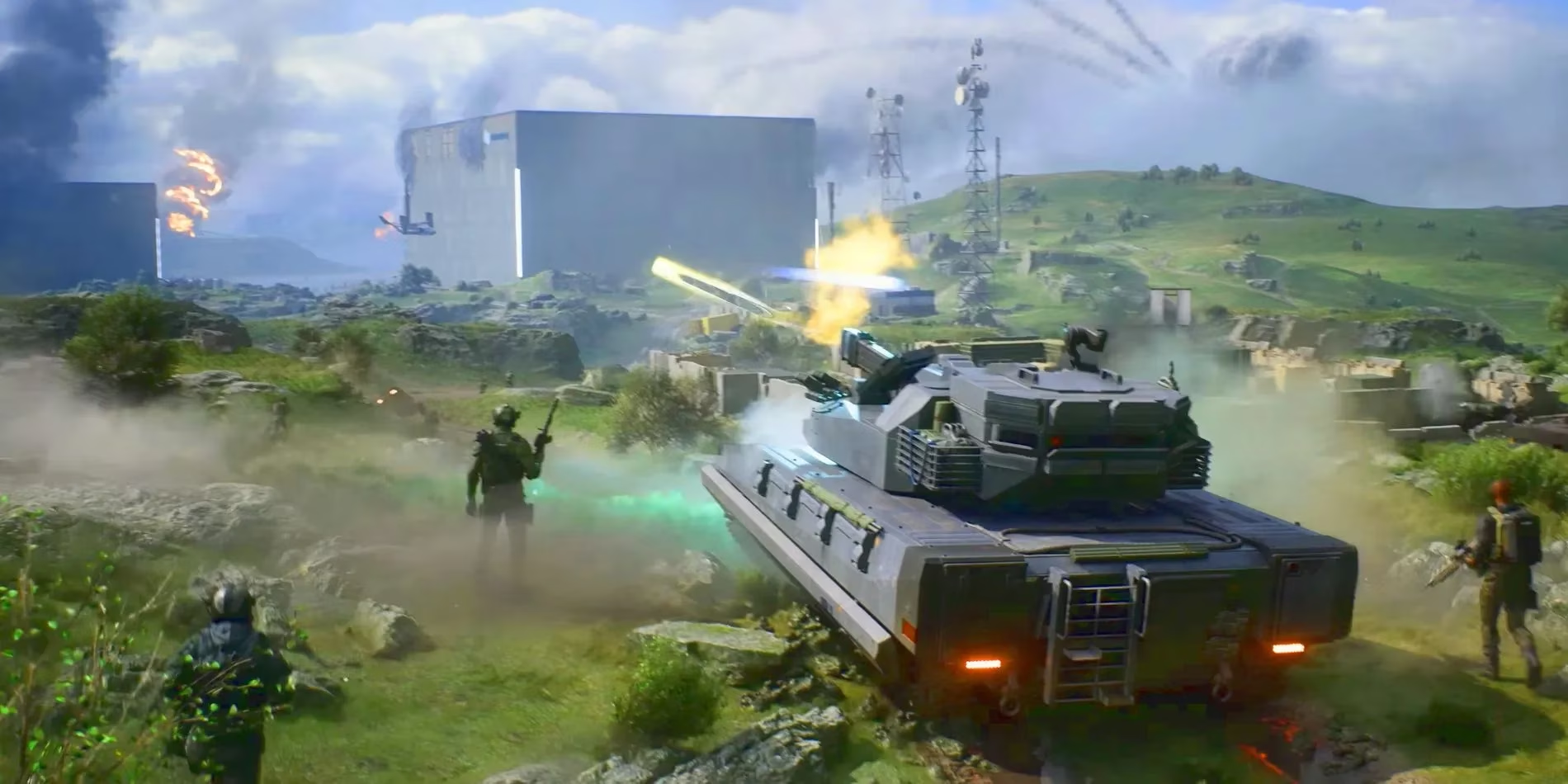
Nevertheless, the strategy has yielded measurable results. Following Season 3 and its accessibility pushes, Battlefield 2042 experienced a significant and sustained boost in player numbers. Across forums and social media, a mix of cautious optimism and newfound praise emerged alongside the continued criticism from purists. This revival suggests the change in direction, likely a calculated move to recover from the franchise's recent commercial and critical stumbles, has found an audience. The game now operates as a competent, high-octane arcade shooter wearing a Battlefield skin.
Ultimately, the legacy of Battlefield 2042 will be defined by this very compromise. Was the sacrifice of its mil-sim roots a necessary evolution to stay relevant in a crowded market? Or was it a fundamental betrayal of what made the series unique? Time has proven its approach can attract and retain players, but the final judgment on whether this trade-off was "worth it" for the future of the franchise rests solely in the hands of its community—a community now more divided than ever between its past and its potential future.
Comments