Few launches in recent memory have felt as much like a meteor striking a beloved franchise as Battlefield 2042. Back in 2021, the game arrived with the ambition of a new dawn—128-player chaos, dynamic weather, and map-altering events—but quickly became a showcase of how overreach can crumble under its own weight. By 2026, the dust has settled enough to examine one of the most debated lifelines ever proposed for a AAA shooter: turning the game free-to-play. While the conversation first ignited in early 2022, the years since have transformed it from a desperate rumor into a layered case study on what happens when a premium military sim tries to wear a live-service costume that never quite fit.
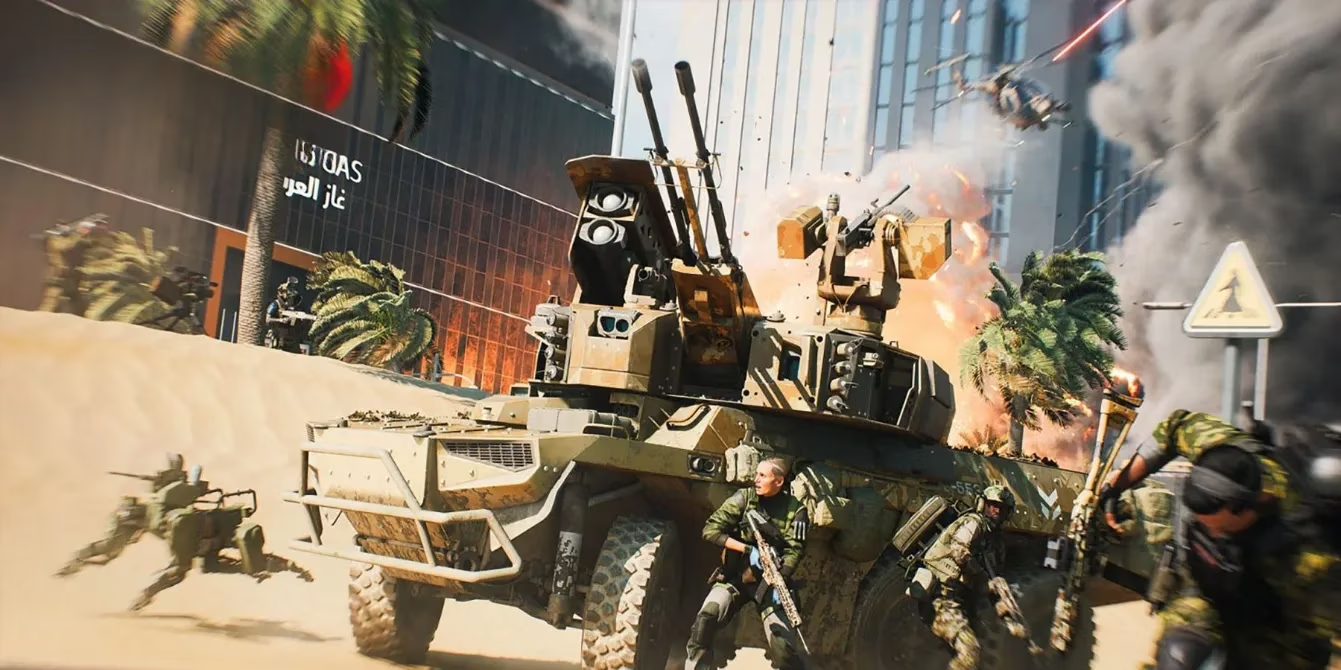
Pivoting Battlefield 2042 to a free-to-play model is, by 2026 standards, like watching an architect attempt to convert a half-built cathedral into a bustling marketplace while the congregation still demands a solemn mass. The idea has surface-level appeal. After all, games like Fortnite turned structural reinvention into a cultural phenomenon, and For Honor proved that a struggling premium title could find new life when the cost of entry vanished. Yet Battlefield 2042 carried a unique burden—a legacy forged in full-priced releases and premium DLC. The franchise’s DNA was built on class-based teamwork, not battle passes, and the very suggestion of free-to-play chafed against what loyalists considered sacred. DICE itself seemed caught in a paradox: the game needed a massive player infusion to sustain its all-out warfare promise, but the quickest way to get players was also the most likely to unravel its identity.
The technical state of the game at launch only deepened the dilemma. Describing Battlefield 2042’s release window as a “house of cards in a windstorm” undersells just how fragile its foundation was. Missing features, persistent bugs, and a specialist system that obliterated traditional squad roles turned every match into a lottery of frustration. When the first season of content was pushed from March 2022 to that summer—officially to fix core issues—it became clear the ship was being patched in open water while still trying to chart a course. Fast-forward to 2026, and while multiple seasons have since rolled out, the scars remain: maps like Kaleidoscope and Hourglass have seen reworks, and some legacy mechanics have crept back, but the game never fully shook the perception of being a work-in-progress bolted onto a full-price tag.
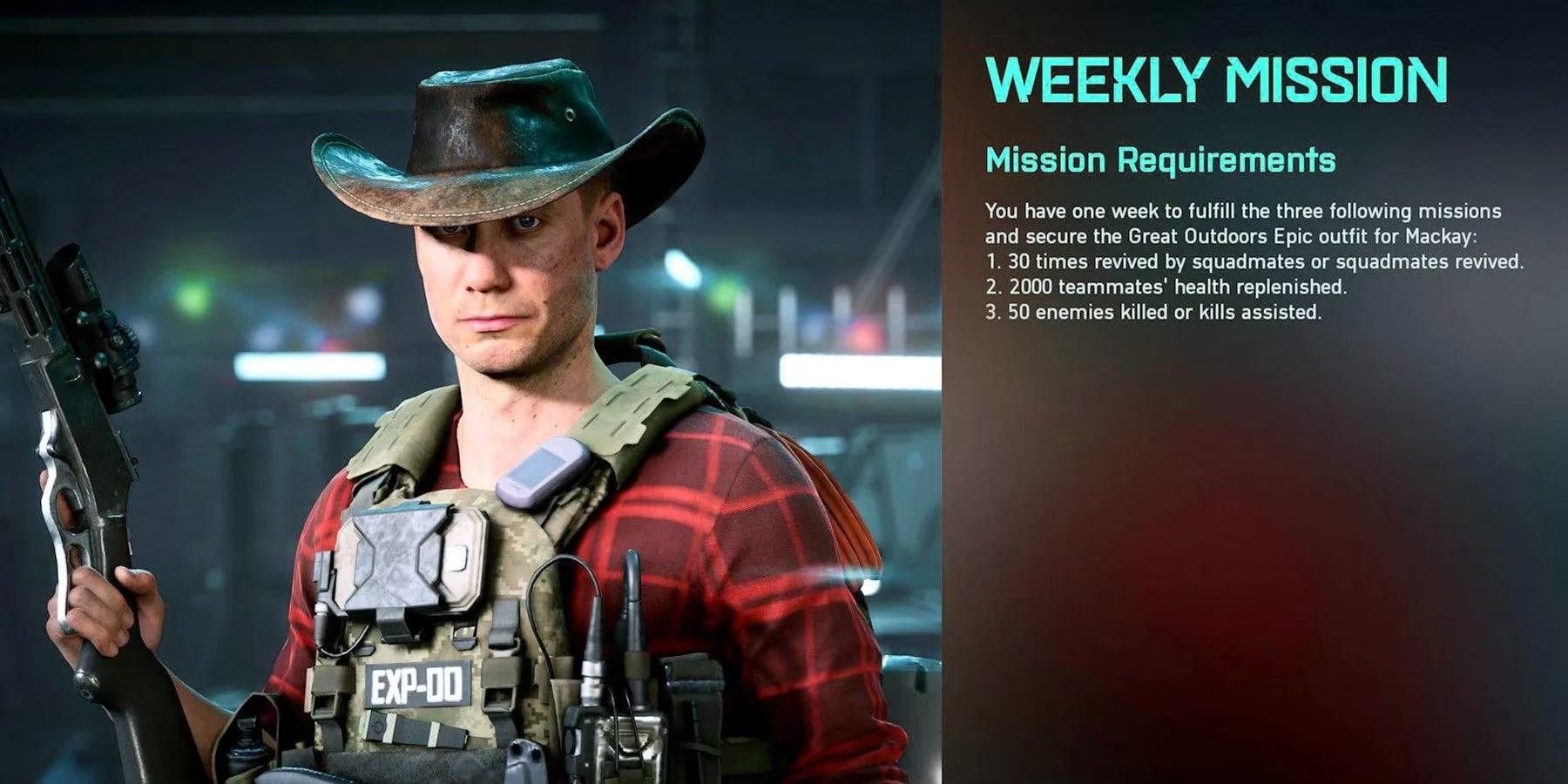
A free-to-play transition would demand a monetization engine that Battlefield 2042 simply wasn’t engineered to house. This brings us to the Santa Claus conundrum. In early 2022, a datamined skin dressed specialist Boris as a holiday icon, and the backlash felt like a temperature check for an entire community’s tolerance of whimsy in a warzone. Cosmetic microtransactions in a military shooter are akin to fitting a prize fighter with a clown nose—it might grab attention, but it saps the gravity that makes the punch land. The franchise always prided itself on a gritty, immersive aesthetic, and even in 2026, the tension between selling flashy operator skins and preserving that grounded feel persists. Without a vast, sellable cosmetic ecosystem, a free-to-play model risks starving itself of the revenue needed to sustain meaningful content drops. Meanwhile, Call of Duty’s Warzone demonstrated that players will accept a rifle-wielding Snoop Dogg if the gunplay is sharp, but Battlefield’s audience has historically been a more stubborn creature—reluctant to trade authenticity for absurdity.
Player retention data from 2024 onwards revealed an uncomfortable truth: free weekends and deep discounts did lift concurrent numbers temporarily, but the core loop lacked the sticky, session-to-session hooks that define top-tier live-service titles. The missing squad dynamics left by the specialist overhaul remained a raw nerve, and even the belated introduction of a class-like framework in Season 3 felt more like triage than surgery. DICE’s iterative updates never stopped being genuinely responsive, yet the community’s patience, already tested, couldn’t always stretch to meet the pace of repair. One developer statement from a 2023 blog post captured the mood perfectly: “We are rebuilding the aircraft while it’s flying.” That metaphor, worn thin by now, is still the most accurate description of the game’s development saga.
What’s fascinating in 2026 is how Battlefield 2042 has become an unintentional reference point for the industry. Studios now weigh the cost of launching half-formed against the pressure of quarterly earnings, and the ghost of this game haunts every ambitious multiplayer reveal. As for the free-to-play question, it remains an unresolved thought experiment. Perhaps some titles are never meant to be retrofitted; maybe 2042 was always destined to be a cautionary tale about the limits of evolution when the starting design pulls in opposite directions. For the fans still in the servers, the hope is that the next Battlefield entry remembers that a cathedral doesn’t need to become a marketplace—it just needs to inspire awe again.
Comments