Five years after its tumultuous launch, the conversation around Battlefield 2042 has evolved from one of disappointment to a case study in live-service redemption. While the initial release in 2021 was marred by foundational glitches, visual bugs, and hit detection problems, publisher EA and developer DICE embarked on a long-term commitment to salvage their flagship FPS. Fast forward to 2026, and the game's strategy of offering targeted free trials remains a cornerstone of its player acquisition and retention plan, a tactic first widely deployed in those early, critical years post-launch.
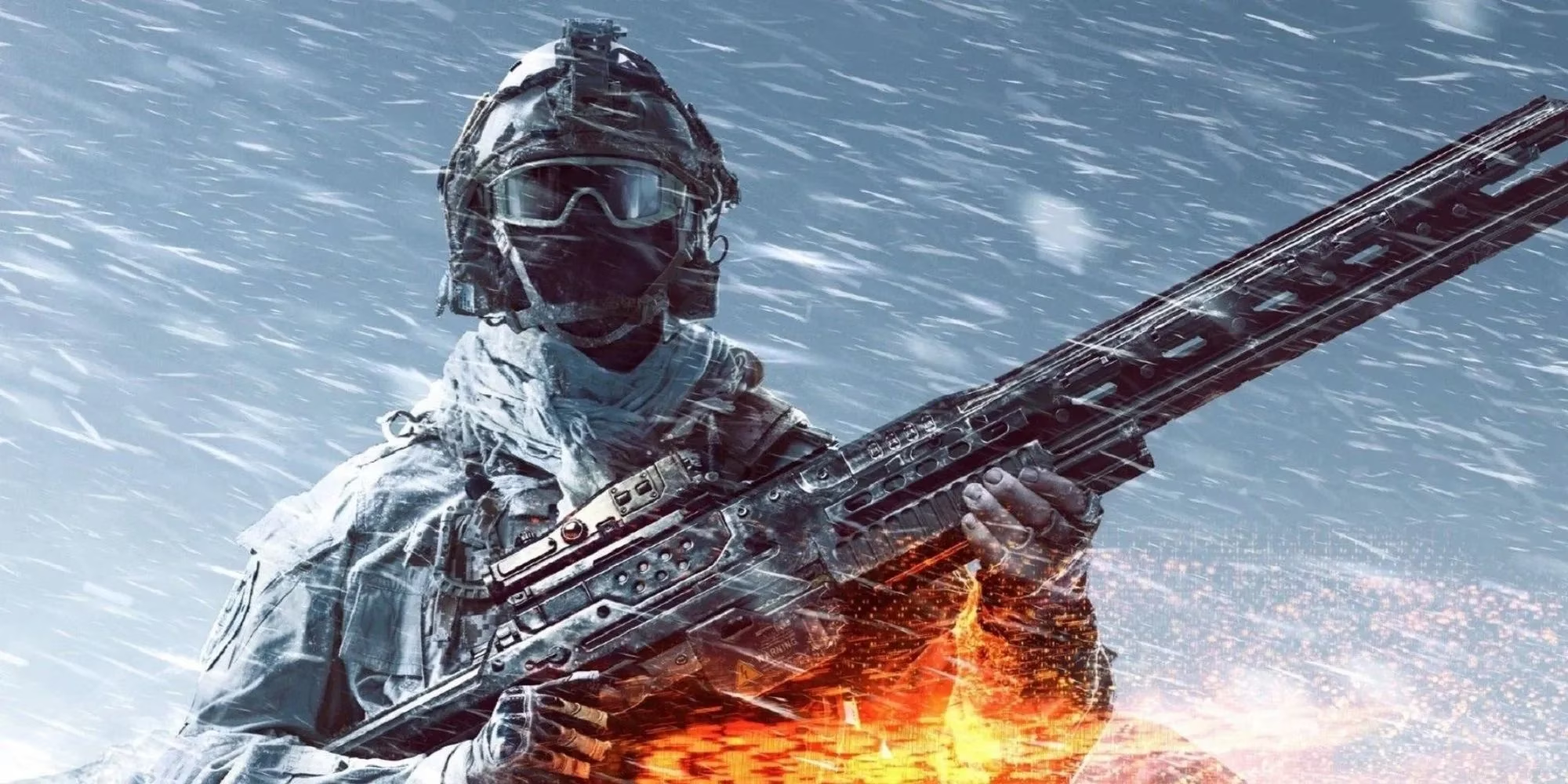
The Foundation of the Turnaround
The journey was far from easy. Players in 2021 and 2022 shared countless viral clips of soldiers clipping through terrain or bullets passing harmlessly through enemies—frustrations that defined the game's rocky start. 😓 The developer's response was a persistent live-service model. They didn't stop at the initially promised four seasons of content; instead, they pushed forward, confirming additional content would arrive well into 2023 and beyond. This commitment laid the groundwork for stability. By 2026, the core gameplay experience is widely acknowledged to be in a vastly improved, and more importantly, a reliable state. The glitchy buildings and unreliable gunplay are now relics discussed in 'remember when' conversations among the veteran community.
The Trial Strategy: Then and Now
The free trial periods announced back in late 2022 were a masterstroke in perception management. EA cleverly staggered them across platforms:
-
Xbox: Short, urgent windows (like a 24-hour trial) to create a sense of immediacy.
-
PC (Steam): Slightly longer trials, often aligning with seasonal updates or Steam sales.
-
PlayStation: The most generous offers, sometimes week-long trials, to tap into that platform's massive user base.
This strategy proved its worth almost immediately. Steam Charts from that era showed a remarkable bounce, with 2042 temporarily doubling the concurrent player counts of beloved predecessors like Battlefield V and Battlefield 1. The logic was simple yet effective: Let the improved product speak for itself. Progression carried over from trial to purchase, removing a significant barrier for interested players.
The 2026 Landscape: Trials as a Service
In today's gaming ecosystem, the free trial has evolved from a promotional event into an integrated feature. For Battlefield 2042, it operates on a few key principles:
-
Timed with Content: Major updates, map reworks, or new limited-time modes are almost always accompanied by a free access period. It's a way to showcase the new, polished content directly.
-
Platform Synergy: The game's inclusion in subscription services like Xbox Game Pass Ultimate and EA Play provides a permanent, 'always-on' trial for millions. This has been crucial for maintaining a healthy matchmaking pool.
-
Community Goals: Trials are sometimes tied to community-wide challenges. For example, DICE might announce, "If we reach 5 million hours played during this free week, all players get a unique legendary skin."
The table below contrasts the early trial approach with its modern, refined implementation:
| Aspect | Early Trials (2022-2023) | Modern Trials (2026) |
|---|---|---|
| Primary Goal | Damage control, proving the game is fixed. | Sustained growth, showcasing new content. |
| Duration | Short, platform-specific bursts. | Regular, predictable schedules alongside updates. |
| Integration | Isolated promotion. | Deeply tied to seasonal narratives and community events. |
| Player Incentive | Basic progression carryover. | Progression carryover + exclusive rewards for trial participants. |
The Verdict on a Recovered Game
So, where does Battlefield 2042 stand in 2026? It is a title that has successfully navigated one of the most difficult paths in modern gaming: the post-launch recovery. 🎮 The game serves as a textbook example for other studios on the importance of perseverance, clear communication, and smart player outreach. The free trials were not a sign of desperation but a confident invitation. They said, "We know we messed up. Here is what we've built since then."
The player base, while perhaps not reaching the zeniths of Battlefield 1's popularity, is stable and engaged. The chat channels are filled less with complaints about bugs and more with strategies for the latest map or appreciation for a well-balanced weapon patch. The narrative has finally shifted from what the game was to what it is—a competent, often thrilling, large-scale military shooter that learned from its very public stumbles. The journey of Battlefield 2042 underscores a modern truth in game development: a launch is not an endpoint, but a beginning, and player trust, once lost, can be earned back with consistent, quality effort and the courage to openly say, 'Try it now.'
Comments