When Battlefield 2042 launched, it felt less like a triumphant return to all-out warfare and more like an early access beta that somehow slipped into a full release. The community was vocal, the Steam reviews dipped into "Overwhelmingly Negative" territory, and many longtime fans wondered if DICE had finally lost the magic. Fast forward to 2026, and while the shooter hasn't quite become the genre-defining titan players hoped for, it has undergone a quiet but powerful revival. The turning point? A patch simply titled Zero-Hour.
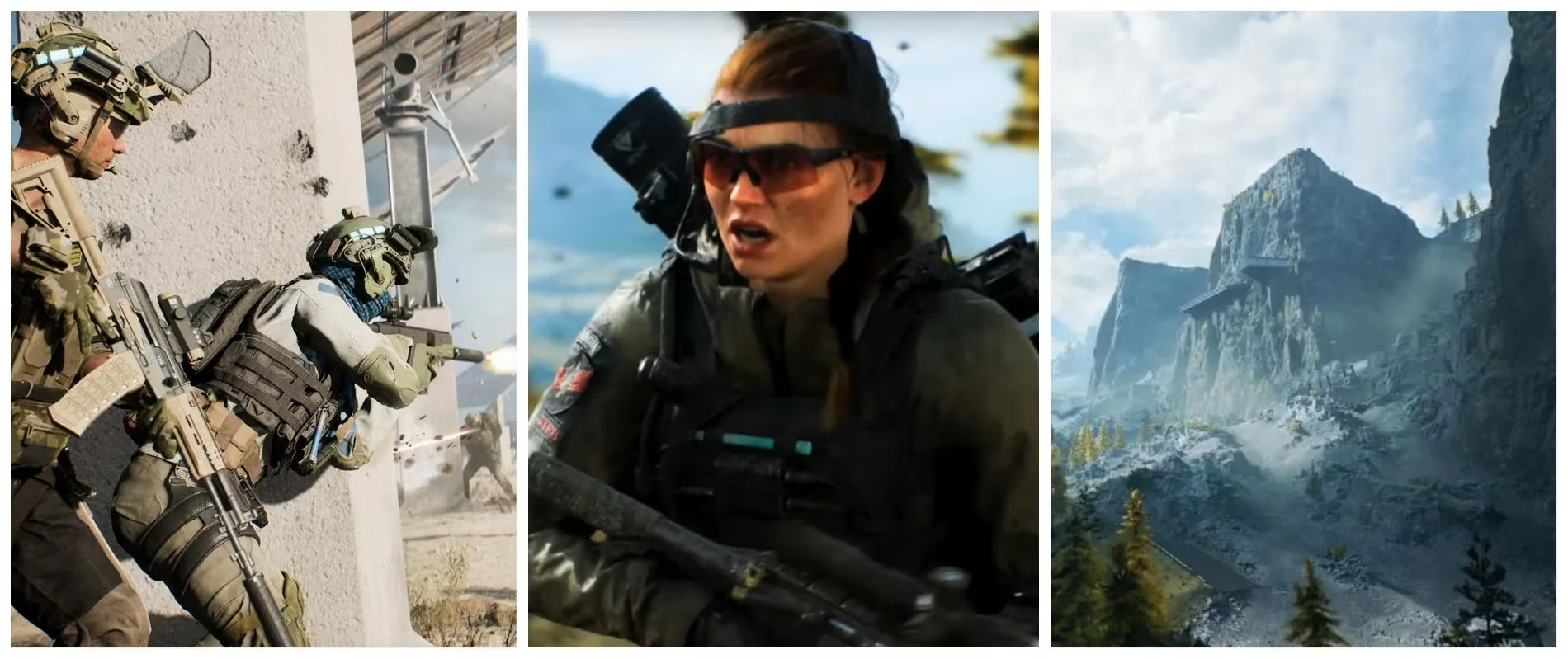
That first season update, which dropped back in mid-2022, arrived like a rescue helicopter after a disastrous insertion. It didn't just add a specialist, a map, and some guns – it fundamentally reworked the core experience. And looking back from 2026, it's clear that Zero-Hour didn't just fix bugs. It gave Battlefield 2042 a new lease on life, one that still keeps servers healthy and communities thriving today. Let's break down exactly how that happened, and why these changes still matter.
Movement: From Clunky to Fluid
Anyone who played the beta will remember the awkward, almost sticky movement that made every sprint feel like jogging through molasses. The series has always prided itself on fluid, weighty motion that let you vault over obstacles, slide into cover, and transition seamlessly from sprinting to shooting. Battlefield 2042’s early builds threw that out the window. Specialist abilities, which were supposed to open up tactical options, often felt useless because the base movement was so sluggish. If you were playing a mobility-focused character like Sundance, the clunkiness could be outright maddening.
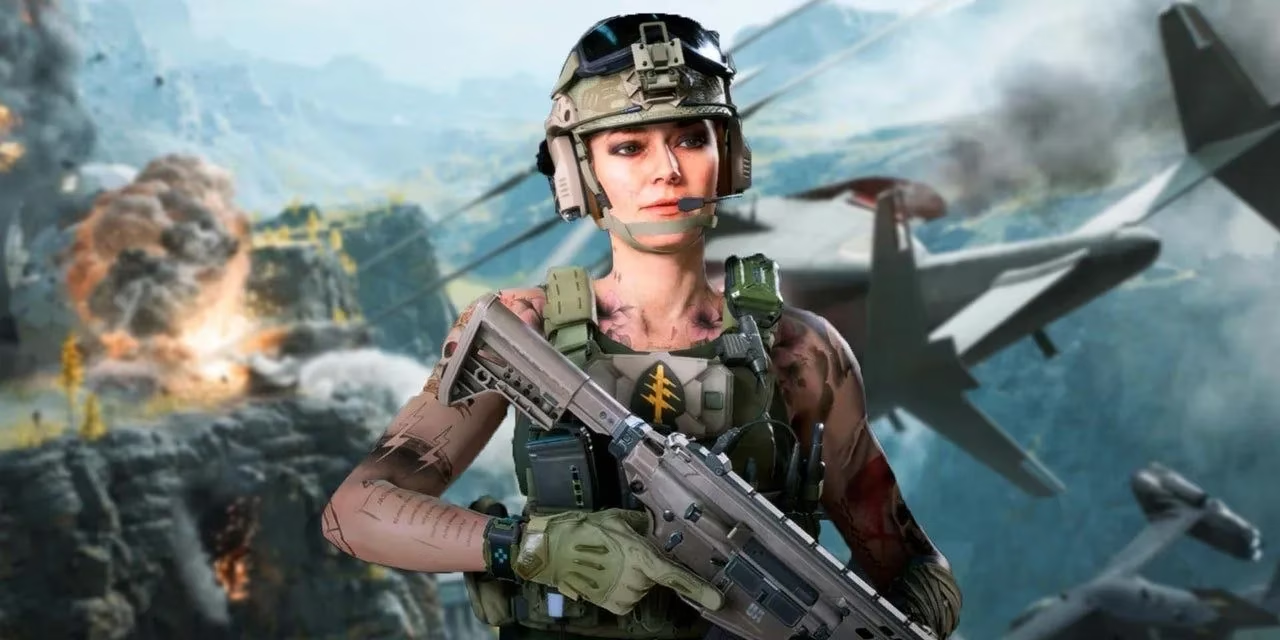
Then came Zero-Hour, and honestly, it was like someone oiled the joints of every soldier. The update made movement more responsive, bringing back that classic Battlefield feeling where you can actually outmaneuver an enemy rather than just out-aim them. Suddenly, Sundance’s wingsuit felt less like a death sentence and more like a legitimate playstyle. Falck could zip between teammates without getting stuck on a pebble. Players could push objectives aggressively, and that beautiful, chaotic dance that defines Battlefield returned. From a 2026 perspective, this fix wasn't just about comfort – it proved that DICE was willing to admit the vision they shipped at launch was wrong. That kind of humility is rare, and it set the tone for every improvement that followed.
Experience That Actually Rewards Playing the Objective
There’s a running joke in the community that Battlefield players would rather revive a tank than capture a flag, but in early 2042, the game almost encouraged that. Kills were the only meaningful source of XP. Healing, resupplying, spotting, repairing vehicles – all of those classic objective-based actions barely moved the needle. Progress felt like a job, not a battlefield. You could spend an entire match being the best squadmate on the planet and still end up with a pitiful amount of experience.
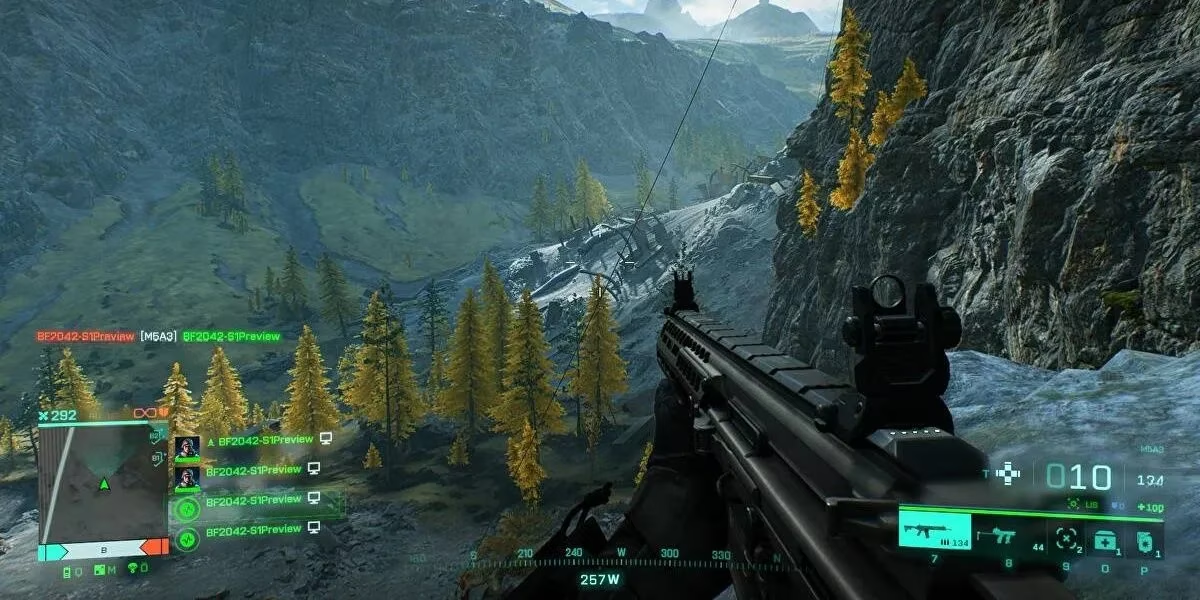
Zero-Hour flipped the script. DICE looked at older titles – particularly Battlefield 3 and 4 – and brought back the generous XP payouts for team play, assists, and objective ticks. Now, you’ll actually see your rank climb after a well-played round of Conquest, even if your K/D ratio wasn't stellar. Unlocking gadgets and attachments became less of a grind, and specialist progression finally felt rewarding. Let’s be real: nobody wants to play support if it means staying at level 10 for a week. The new system meant you could try out that niche gadget you always wanted without feeling like you were sacrificing ten hours of your life. And once that psychological barrier dropped, the gameplay variety exploded. Three years later, you can still jump into a lobby and see squads that actually play together – a testament to how XP reform changed player behavior for the better.
Netcode: Where Shots Finally Land
Multiplayer shooters live or die by their netcode, and for a game of Battlefield’s scale, the margin for error is razor-thin. Early 2042 was notorious for ghost bullets, dying behind cover, and a general feeling that what you saw on screen wasn’t what the server believed. Tweaking settings didn’t help; the core issue was that the game’s tick rate and lag compensation were simply not keeping up with the action.
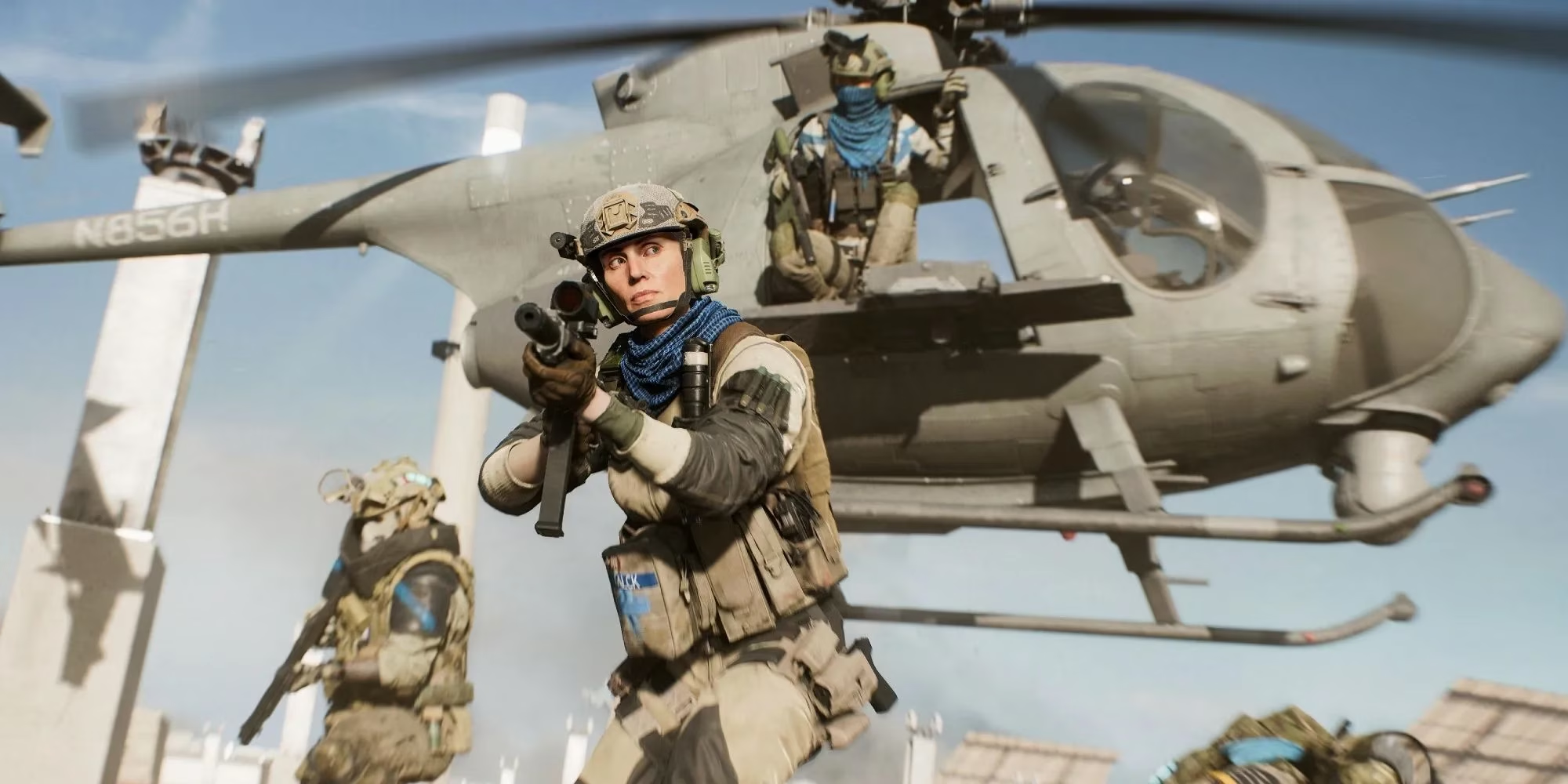
After Zero-Hour, that pain mostly melted away. DICE overhauled the netcode so that hit registration became reliable, and deaths that felt unfair became the exception rather than the rule. Now, when you line up a headshot through smoke or snap onto an enemy sprinting across a rooftop, you can trust the result. It’s one of those invisible upgrades that you don’t notice until it’s gone – but boy, did we notice. By 2026, even newcomers who never experienced the launch chaos can feel just how snappy the gunplay is. The fact that so many of us still instinctively flinch when we think about early netcode says a lot, but the game today is a smooth, dependable shooter that doesn't make you rage-quit because of technical voodoo.
64 Players vs. 128: Embracing the Sweet Spot
One of Battlefield 2042’s biggest marketing pitches was the jump to 128-player lobbies. On paper, it sounded epic – more soldiers, more vehicles, more chaos. In practice, it often turned maps into endless meat grinders. Tactical play vanished, frame rates suffered, and those “only in Battlefield” moments became rare because nothing felt intentional. Surprisingly, many players found themselves gravitating toward the classic 64-player playlists that DICE kept as an option, and those modes proved consistently more popular.
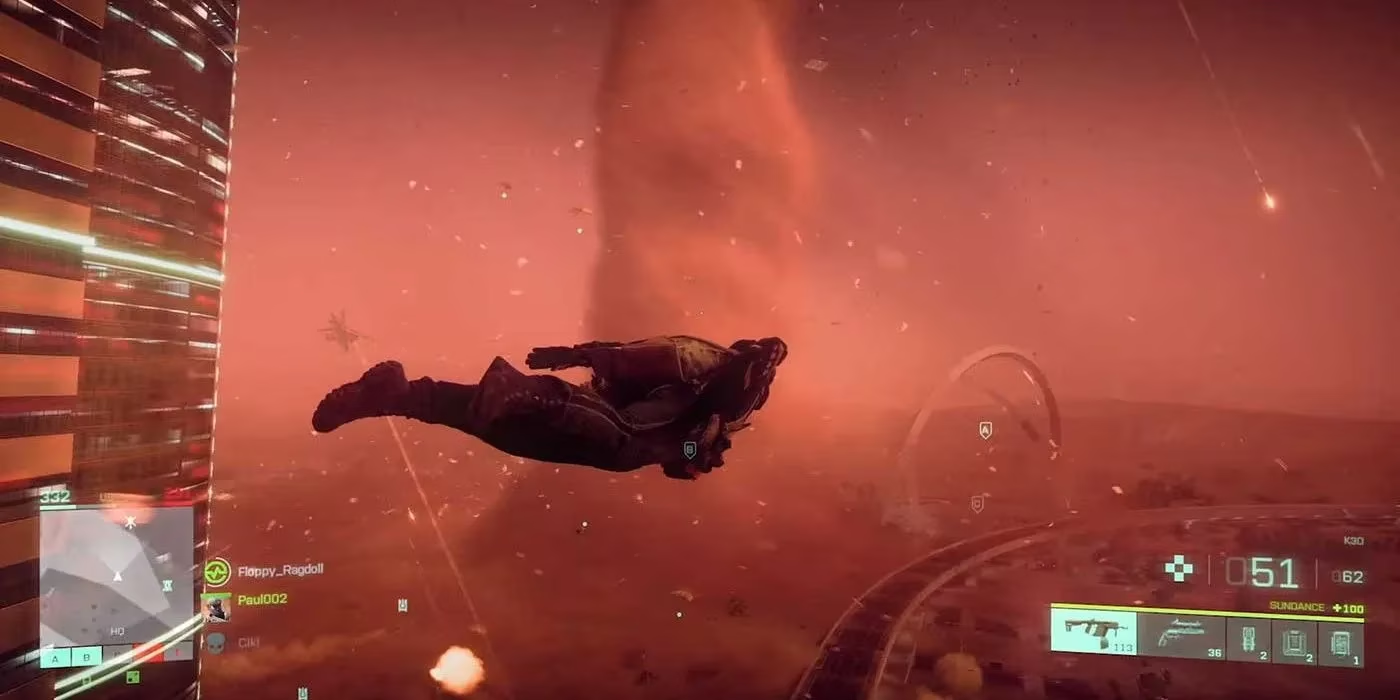
With Zero-Hour, DICE finally accepted that bigger isn't always better. Conquest modes were reworked to focus on 64 players, with 128-player variants kept only for legacy maps and the new seasonal arena. The result? Maps that felt designed with purpose again. Cover was useful, flanking routes mattered, and squads could actually coordinate without being instantly deleted by the 37th sniper hiding in a distant skyscraper. That shift created a healthier game flow that, to this day, defines the post-2022 identity of Battlefield 2042. You know what I mean when I say 128-player matches are a fun novelty but 64 is where the real magic lives. The community voted with its playtime, and DICE listened.
Vehicles Everywhere, Cinematic Moments Included
Vehicles are the soul of Battlefield. They separate it from the faster-paced, infantry-only shooters and create those jaw-dropping, user-generated movie scenes – a helicopter crashing into a tank, a jet narrowly skimming the ground, a jeep loaded with C4 barreling into an objective. Early on, 2042 made vehicles far too rare and their spawns frustratingly inconsistent. Matches often felt one-sided because one team hogged the few available air assets while the other was left running across open fields with no counter.
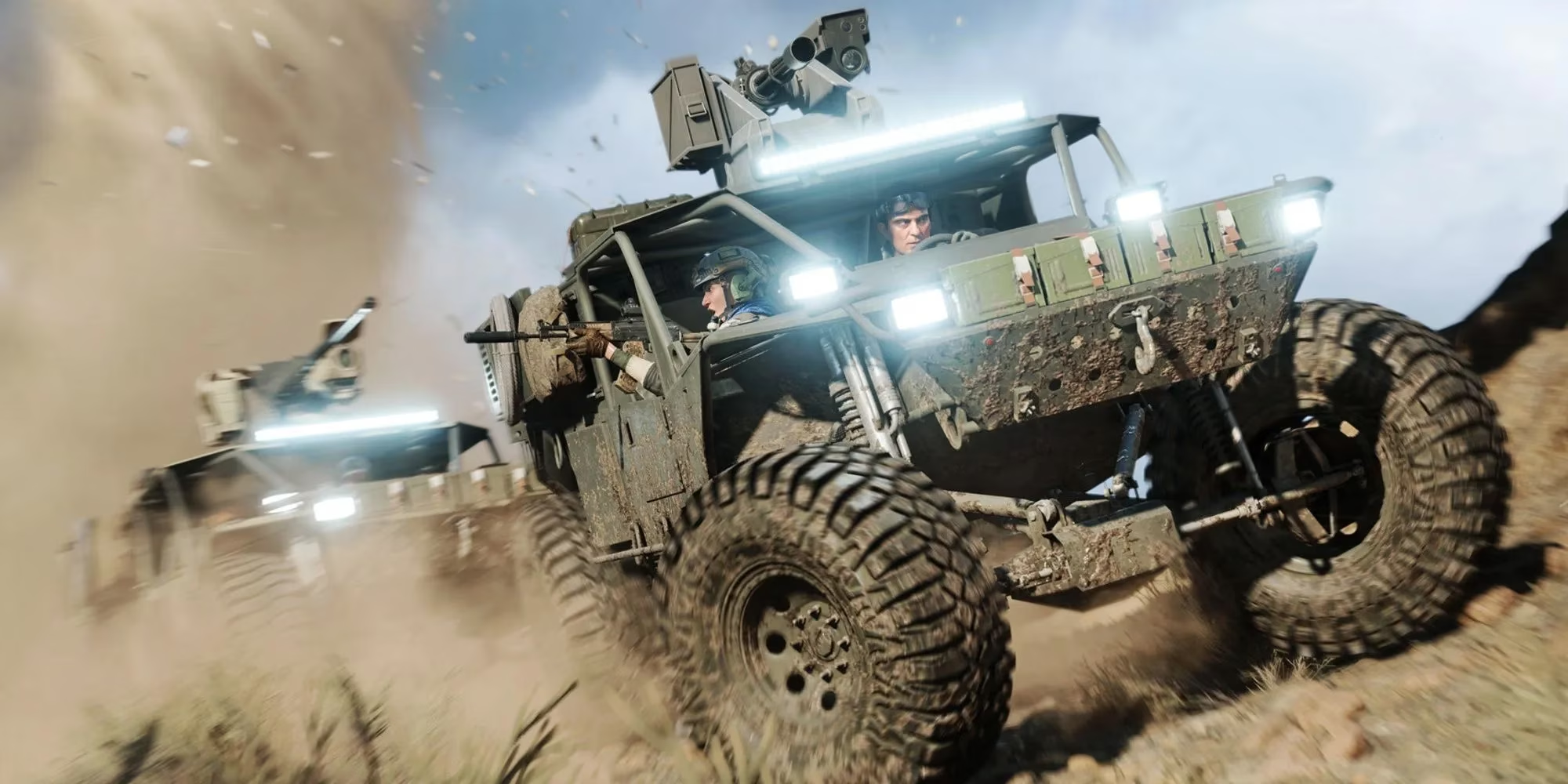
The Zero-Hour update dramatically increased vehicle availability and adjusted spawn timers so both teams had a fair chance at armor and aircraft. Combined with the lower player count, this meant you were much more likely to find yourself in a transport helicopter, laying down minigun fire while your pilot dodged RPGs – and that’s exactly the kind of chaos players love. Even in 2026, you’ll see squads piling into jeeps for a suicide run, and those moments don't get old. The fun-to-frustration ratio tilted back toward fun, and honestly, that’s all we ever wanted.
The Long-Term Legacy
Looking back, Battlefield 2042’s Zero-Hour season wasn't just a patch. It was a statement. It told players that DICE, after stumbling hard, remembered what made the series great: fluid gunplay, rewarding teamwork, solid technical performance, and maps that breathed rather than suffocated. Today, the game hosts a loyal player base that continues to get seasonal content, and communities have built themselves around the 64-player sweet spot.
Would we have preferred if the game launched in this state? Absolutely. But that’s not the timeline we live in. Instead, we got a redemption arc that, while not perfect, proved that a struggling live-service title can be saved with the right priorities. If you haven't touched BF2042 since the dark days of 2021, firing it up in 2026 feels like playing a completely different game – the game we were promised. And that, right there, is the real victory of Zero-Hour.
Comments