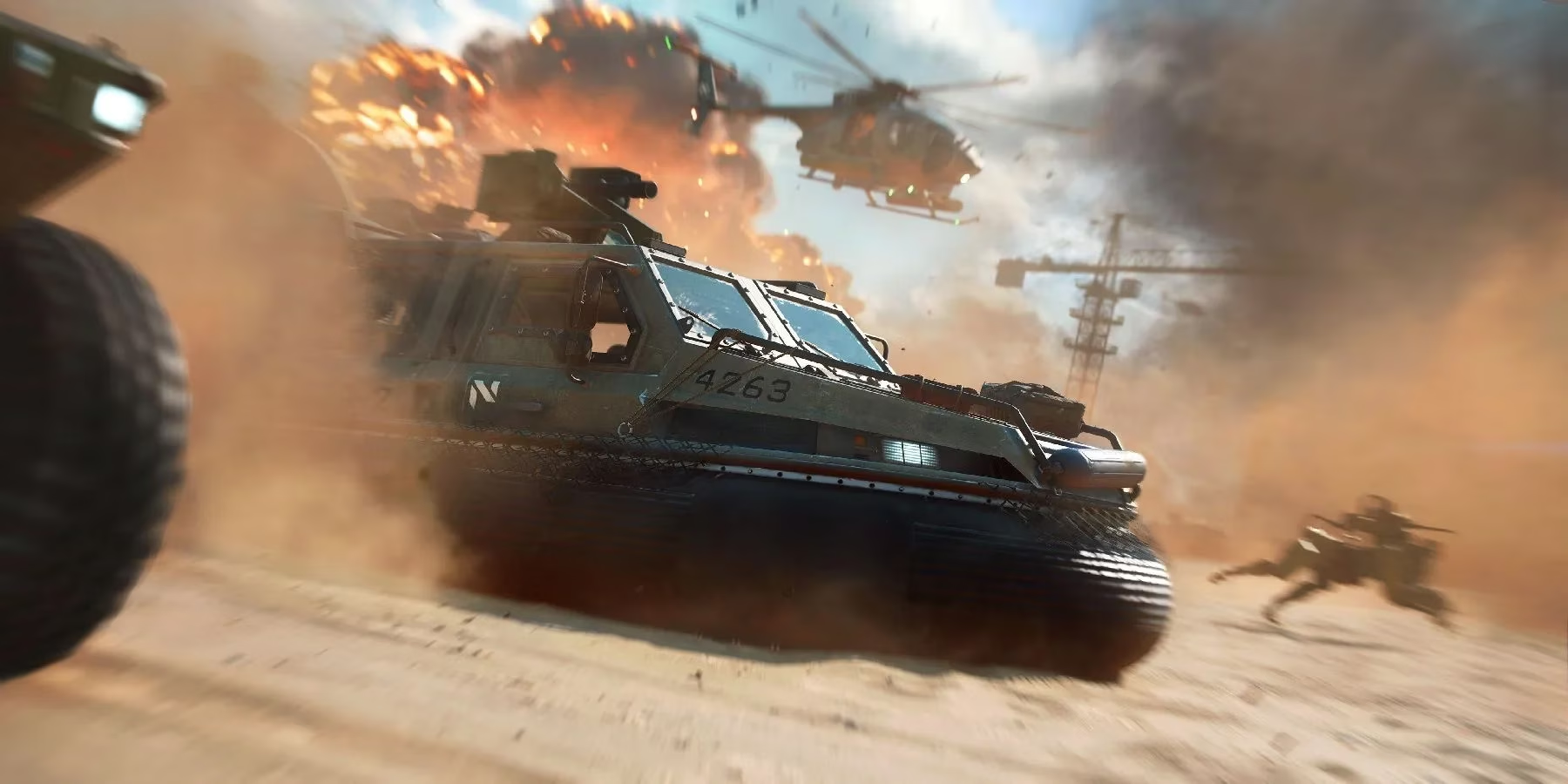
The Battlefield franchise has always been synonymous with massive, vehicle-fueled chaos, but it’s also notorious for rocky starts that leave fans furious. I’ve been playing DICE’s shooters since the early days, so I’ve seen my share of broken launches. Battlefield 2042 was supposed to be the ultimate sandbox with 128-player warfare and futuristic gadgets, but when it dropped, it felt like a half-finished prototype. Glitches made matches unplayable, performance tanked, and the community quickly fractured. Fast forward to 2026, and while Battlefield 2042 never fully captured the glory of its predecessors, one of the most significant turning points was the vehicle overhaul that began rolling out in the spring of 2022. That patch, which slashed attack vehicle spawns and extended respawn timers, didn’t just tweak numbers – it redefined how we fought on the battlefield.
I still remember the early days of 2042’s All-Out Warfare. Tanks would roll through objectives with almost no downtime, and helicopters rained rockets from above in a never-ending cycle of instant death. Foot soldiers were often nothing more than target practice. The 128-player servers, which were supposed to be the game’s flagship feature, turned into slaughterhouses where you’d spawn, get blown up by a nightbird or an M1A5, respawn, and die again within seconds. It felt oppressive, especially on maps like Kaleidoscope and Hourglass where open spaces meant zero cover from air threats. I watched my squadmates quit match after match, and no amount of skillful M5 Recoilless shots could stem the tide. The vehicle spam wasn’t just a balance problem; it was killing the fun.
Then DICE finally broke the silence with a surprisingly frank admission. After months of radio silence and a few vague “valuable lessons” statements, the team announced concrete changes. The core of the update was simple: reduce the active count of attack helicopters and main battle tanks in 128-player modes from three to two per team. This might not sound earth-shattering on paper, but in practice it meant that at any given moment there were 33% fewer armored beasts roaming the map. The cooldown timer was also doubled, jumping from 60 seconds to a full two minutes before a destroyed vehicle could respawn. For me, these two adjustments instantly transformed the pacing. Suddenly, taking down a Hind or a Bolte with a well-placed rocket wasn’t a meaningless gesture – you actually created a window of safety where infantry could capture points without looking up every two seconds.
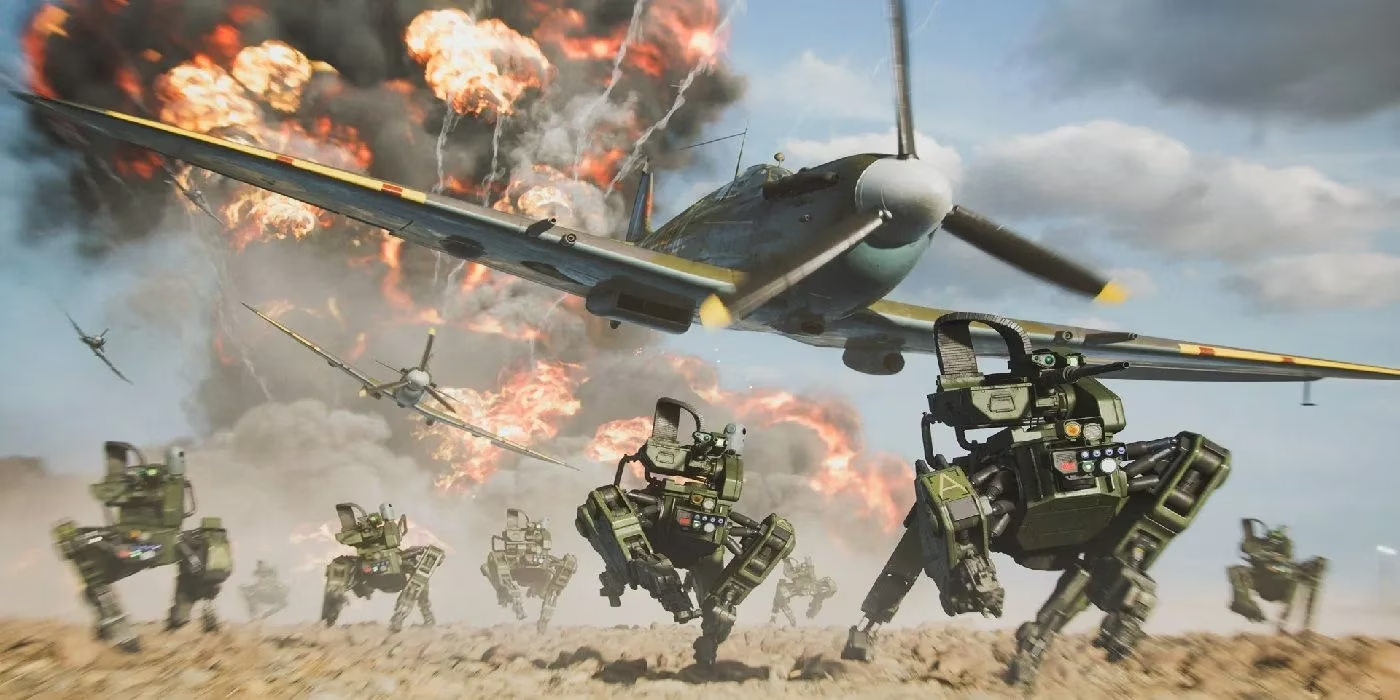
The psychological impact was just as important as the stat changes. Before the overhaul, I’d often see entire teams stacking engineers with anti-air launchers and still feeling powerless because three attack choppers could cycle their countermeasures and repair cycles so efficiently that nothing died. After the patch, vehicle operators had to be more cautious, sticking closer to repair crews or avoiding headlong dives into enemy zones. The reduced vehicle density also meant that dogfights between jets and helicopters became more meaningful duels rather than one-sided massacres where whoever had more air assets won by default. I noticed a lot more players gravitating toward the 128-player servers again, and while 64-player modes remained popular, the reduced intensity actually made the larger mode feel tactical rather than chaotic.
Of course, not everyone was thrilled. Vehicle mains complained bitterly that their beloved tanks and aircraft were being nerfed into irrelevance. The long respawn timers meant that if you lost your tank early, you’d be stuck on foot for what felt like an eternity in a fast-paced match. Pilots who relied on rapid rotations to rack up kills suddenly found themselves waiting on the deployment screen while their squad captured objectives without them. I sympathized to some degree – Battlefield’s identity is built on epic vehicle combat, and there’s a fine line between balancing and suffocating. However, the raw data didn’t lie. Infantry survival rates jumped, objective play became more dynamic, and the overall sentiment on forums and social media shifted from pure rage to cautious optimism.
The changes didn’t stop with attack vehicles. DICE also hinted at tweaks to transport vehicles, though those arrived more gradually. In the initial patch, the focus was strictly on the most lethal platforms. The MD540 Nightbird, the KA-520 Super Hokum, and heavy armor like the T28 sparked the most heated debates. I remember discussing with my squad whether the Jet’s absence from the cooldown increase was a glaring oversight, since skilled jet pilots could still dominate uncontested. Later updates would eventually address some of those gaps, but the 2022 vehicle rebalance was the first concrete proof that EA and DICE were willing to cripple power-fantasy elements in favor of a healthier meta.
Looking back from 2026, this vehicle spawn nerf was a watershed moment for Battlefield 2042. It didn’t singlehandedly save the game – many other fixes were needed, and the player base never fully recovered to franchise-peak numbers. But it did signal a philosophy shift: DICE finally understood that spectacle doesn’t equate to fun when one class of player constantly stomps on another. The lessons learned from this overhaul directly fed into the design of the next Battlefield title, which launched with far more restrained vehicle counts and smarter map layout from day one. We saw integrated counters like the return of stationary AT guns, more accessible AA emplacements, and a clearer rock-paper-scissors balance between infantry, armor, and air.
Personally, I still hop into 2042 occasionally for a nostalgia trip, and those vehicle changes hold up. The 128-player massive warfare feels like a proper battlefield instead of a spawn-die simulator. When I see a tank on the horizon, I know I have a fair chance to flank it with C5 or coordinate with a LATV4 Recon. When I hear rotor blades, I can scan the sky and trust that a swarm of stingers from nearby allies will eventually force it to retreat. The update didn’t erase all frustration – bad spawns and poor map design persist on some 2042 maps – but it restored a crucial sense of agency. For anyone who stuck with the game through the dark times, that vehicle overhaul remains a shining example of how a single balance pass can resurrect a game’s core loop and remind us why we fell in love with Battlefield in the first place.
Comments