As the dust settles on Battlefield 2042's final season, the gaming community is already looking ahead. With EA and DICE likely shifting gears towards the next major installment, there's a crucial lesson to be learned from the game's last hurrah. While Battlefield 2042 itself might be a one-and-done chapter in the franchise's history, its limited-time Future Strike event dropped a serious mic with the introduction of the Strike Team mode. This wasn't just another playlist; it was a blueprint for evolution, proving that even a veteran FPS series can still learn new tricks and shake up the meta. For the next Battlefield to truly level up, it needs to take this experimental gem, polish it to a shine, and make it a core part of the experience.
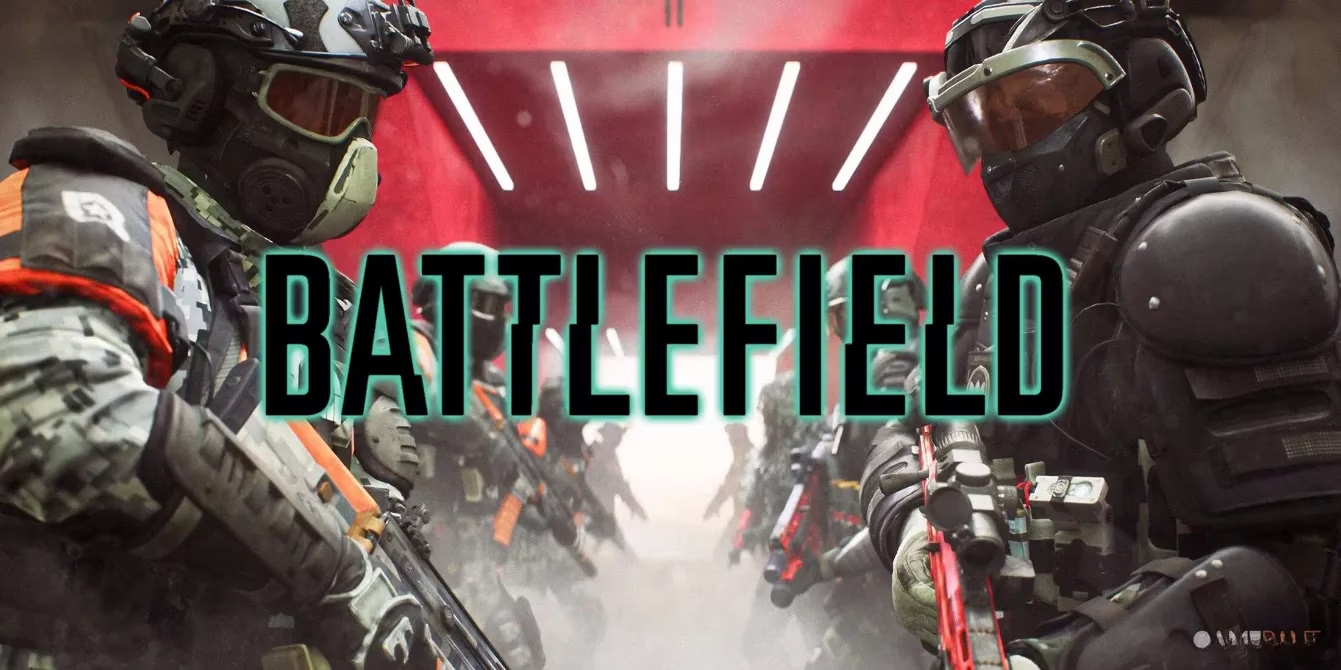
🔥 The Strike Team Blueprint: A Strategic Game-Changer
Let's break down what made Strike Team such a standout. DICE basically took the classic Battlefield formula—you know, the one with 128 players, vehicles galore, and glorious chaos—and flipped the script. This mode was all about small-scale, high-stakes, tactical gameplay. Drawing clear inspiration from legends like Counter-Strike and Call of Duty's Search and Destroy, it offered 4v4 or 8v8 matches on tighter maps where every single decision mattered.
The Core Loop was intense:
-
Objective-Based Rounds: Teams fought for control of points in super-short rounds, often lasting just over a minute. No time to camp!
-
High-Stakes Elimination: Forget constant respawning. Once you're down, you're out for the round... but not completely useless.
-
The Drone Mechanic: This was the real genius twist. Eliminated players could respawn as recon drones, letting them scout and mark enemies for their living teammates. Talk about staying in the fight!
The pace was frantic, the tension was palpable, and it required a blend of sharp aim, smart positioning, and team coordination that felt fresh for the franchise. It was proof that Battlefield doesn't always need to go big to be brilliant; sometimes, going focused and fierce is the move.
💡 Why This Can't Be a One-Hit Wonder
Look, Battlefield will always be the king of "Only in Battlefield" moments—those epic, large-scale battles are its DNA. But relying solely on that formula can get... predictable. The Strike Team mode showed that DICE still has the creativity to innovate. Abandoning this momentum would be a major missed opportunity. For the next game, fleshing out Strike Team into a fully-fledged, permanent mode could be a key to winning back players and staying relevant in a crowded shooter market.
Here’s what integrating Strike Team could do for the next Battlefield:
| Benefit | Impact |
|---|---|
| Diversifies Gameplay | Offers a tight, competitive alternative to all-out warfare. |
| Attracts a Broader Audience | Appeals to fans of tactical shooters like Valorant or CS2. |
| Extends Game Longevity | A deep, ranked Strike Team ladder could keep the hardcore community hooked for years. |
| Refreshes the Brand | Shows the series is evolving, not just iterating. |
🛠️ Leveling Up: How to Evolve Strike Team for 2026 and Beyond
The mode in BF2042 was a fantastic proof of concept, but for it to become a series staple, it needs more depth and polish. The core 90-second round timer should stay—it's perfect for that quick-hit, adrenaline-pumping action. But the post-death drone gameplay? That's where things can get even more interesting.
Potential Upgrades for the Next Iteration:
-
Enhanced Drone Utility:
-
Disruption Tools: Give drones a limited-use flash or EMP pulse to briefly disorient enemies defending an objective.
-
Objective Sabotage: Let drones slightly slow down an enemy team's capture rate, adding a strategic layer to post-death play.
-
Commander's View: Allow the team's designated leader (or a Specialist) to tap into a live feed from all active drones, creating a tactical overhead view of the battlefield.
-
-
Specialist & Loadout Synergy: Integrate the next game's Specialist abilities and weapon progression directly into the mode. Imagine a recon Specialist whose passive ability lets their drone spot enemies for longer, or an engineer whose drone can deploy a small, temporary shield. The potential for unique team compositions is huge.
-
Map Design & Verticality: Future maps designed specifically for Strike Team could embrace Battlefield's signature destruction and verticality on a smaller scale. Think destructible floors for surprise attacks, or ziplines for rapid flanks.
🎯 The Final Verdict: Strike Team is Battlefield's Future
In the end, the Strike Team mode was one of the most interesting things to happen to Battlefield in years. It was a bold experiment that paid off, showing that the franchise's heart can beat in a tighter, more strategic chest. As we look toward the next game in 2026 and beyond, DICE has a golden opportunity.
They shouldn't just copy-paste the mode. They should embrace it, expand it, and elevate it. By making a refined and feature-rich Strike Team a core pillar alongside the classic All-Out Warfare, the next Battlefield can offer the best of both worlds: the epic scale it's famous for, and the razor-sharp tactical depth that modern gamers crave. That's how you build a legacy that lasts. The future is Strike Team. Let's hope DICE is ready to deploy.
Comments