In the ever-churning, perpetually explosive world of military shooters, the next Battlefield title is shaping up to be less of a simple sequel and more of a grand, chaotic reunion. As we stand in 2026, Electronic Arts is quietly forging its next digital warzone, and whispers from the front lines suggest they’ve learned a crucial lesson from the rocky launch of Battlefield 2042: never leave a good idea behind. The crown jewel salvaged from that turbulent conflict? The beloved, genre-bending Battlefield Portal. This isn't just a feature making a comeback; it's being woven into the very DNA of the new project, promising a sandbox of destruction that spans the franchise's entire storied history. The developers, having nursed 2042 back from the brink with countless updates, seem intent on starting the next campaign with their most popular soldier already in the trenches.
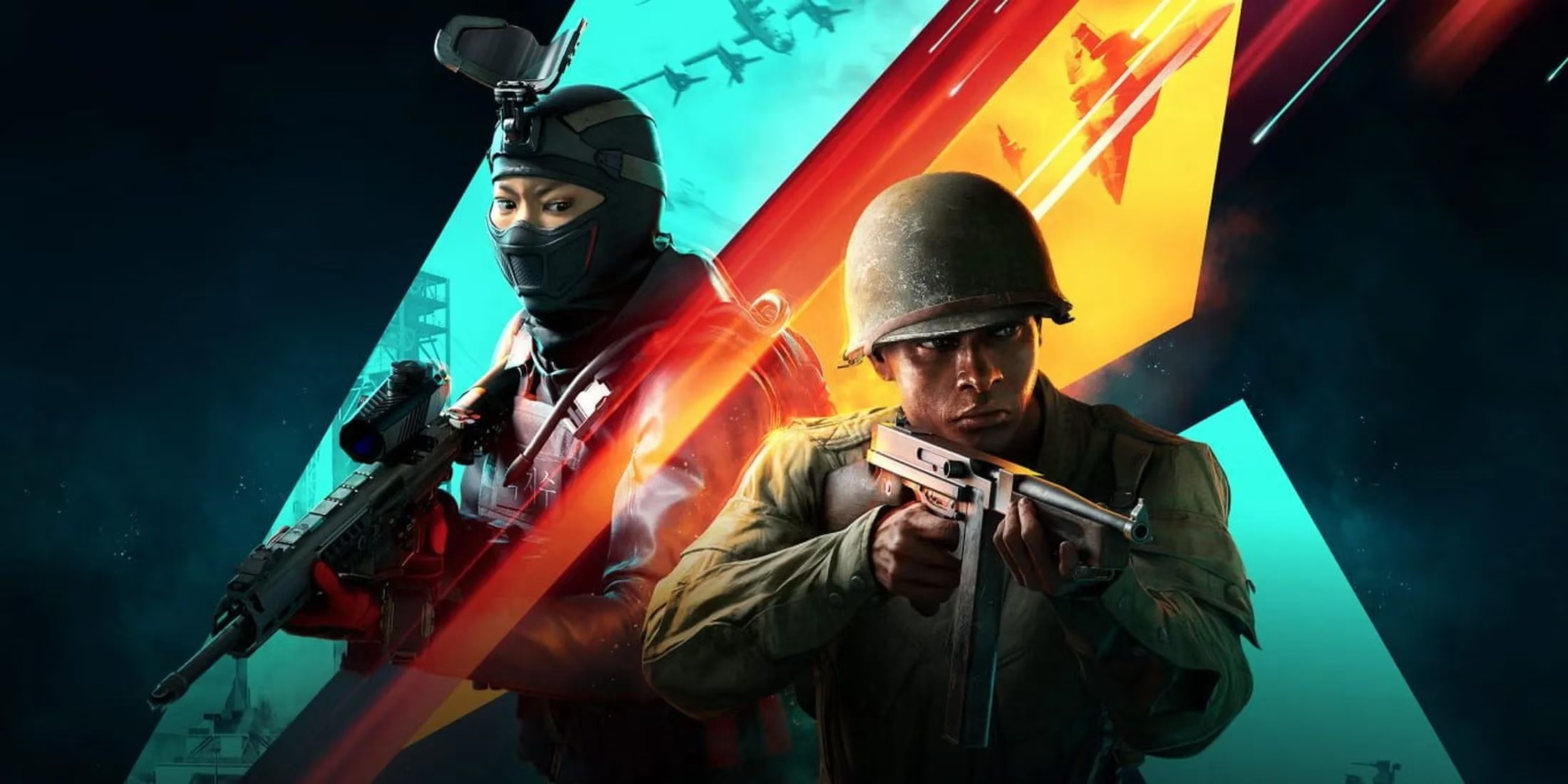
While EA remains as tight-lipped as a spy behind enemy lines about the game's official title or specific setting, their recent unveiling of Battlefield Labs—a revival of the Community Testing Environment last seen in Battlefield 1—acted as a strategic reconnaissance flare. Within this reveal, eagle-eyed observers like YouTuber Flakfire caught the confirmation: Portal is coming back. This early admission, while the game is still reportedly in a "pre-alpha" state and unlikely to storm the market before late 2026 at the earliest, is a tactical move. It signals a developer confident in its foundational pillars, aiming to build hype not just on promises of new tech, but on the proven, chaotic joy of the old. Think of it as a chef announcing the next gourmet meal will definitely include the secret sauce everyone raved about last time, even before the main course is fully planned.
The Portal Paradox: Salvation from a Rocky Past
Every Battlefield game carves its own niche in history, from the muddy trenches of World War II in 1942 and V to the futuristic skirmishes of 2042 and 2142. These distinct themes are the franchise's backbone. Yet, Battlefield Portal emerged as the rebellious, time-traveling spine that connected them all. It was the franchise's own "cosmic blender," allowing players to concoct absurd and brilliant custom soups from decades of military hardware. The community didn't just dabble; they went mad with power, creating everything from goofy pistol-only duels in WWII bunkers to fully realized tributes to classics like Battlefield: Vietnam.
This feature became the unlikely hero of Battlefield 2042. While the base game weathered a storm of criticism at launch—its reputation as fragile as a house of cards in a tornado—Portal stood firm. It was the community's playground, a digital museum, and a testament to what makes Battlefield unique: sheer, unadulterated sandbox warfare. For fans who hold a specific entry close to their heart, Portal was a love letter, allowing them to resurrect their favorite weapons and vehicles in new, player-created contexts. It strengthened the franchise's identity not by looking forward, but by lovingly curating its past.
Building the Future with Pieces of the Past
So, what does integrating Portal from the ground up mean for the 2026 title? It suggests a foundational philosophy shift. Instead of being a post-launch mode or a neat bonus, Portal's mechanics could influence core design decisions. Imagine:
-
Seamless Content Bridges: New maps and mechanics designed with cross-era compatibility in mind from day one.
-
Supercharged Customization: Deeper toolkits for mode creation, potentially integrating with the new Battlefield Labs for community testing and iteration.
-
A Living Legacy: A continuously expanding arsenal as new title-specific content automatically becomes fodder for Portal's time-warping shenanigans.
The challenge for DICE and its collaborators is akin to an architect trying to design a state-of-the-art skyscraper while also ensuring it can seamlessly host a renaissance fair, a WWII reenactment, and a sci-fi convention all at once. They must retain the intuitive, powerful editing tools that made Portal a hit, while ensuring the new game's own identity isn't swallowed by its own nostalgia engine. The goal is a harmonious chaos.
The 2026 Battlefield: A Speculative Arsenal
Based on the crumbs of intel available, we can speculate on what the next Battlefield experience might feel like with Portal as a cornerstone:
| Feature | Potential 2026 Implementation | Community Dream |
|---|---|---|
| Core Setting | Likely a new, distinct era (Cold War gone hot? Alt-history?) | A setting with visually and mechanically diverse maps. |
| Portal Integration | Built-in, accessible from the main menu, with assets from all mainline titles. | A "Portal Map Editor" for true forge-like creation. |
| Progression | Unified progression that carries across both standard and Portal modes. | Rewards for creating popular community modes. |
| Live Service | New content for the base game routinely added to the Portal item pool. | Seasonal themes that span eras (e.g., "Siege Warfare" across history). |
This approach could make the game a "perpetual motion machine of mayhem." The developers provide the new spark—the setting, the graphics, the core mechanics—and the community, armed with Portal, ensures the flame never dies, constantly remixing and reinventing the experience.
In conclusion, the next Battlefield's early commitment to Battlefield Portal is a masterstroke of player-focused strategy. It acknowledges that the franchise's strength lies not only in its cutting-edge spectacle but in its rich, messy history. By promising this toolset from the outset, EA is building a bridge of trust with its community, hoping to avoid the rocky launch of its predecessor. The 2026 title isn't just carrying a torch; it's building a bonfire and handing players the matches, inviting them to throw in memorabilia from every war they've ever fought in the series. The result, if executed well, won't just be a new game—it will be the definitive Battlefield platform, a chaotic and loving tribute to two decades of digital warfare where the only constant is that a well-placed explosive can be just as funny with a 1942 bazooka as it is with a 2142 railgun. The future of war, it seems, is delightfully, destructively nostalgic.
Comments