As the gaming world spins into 2026, the future of the Battlefield franchise feels as precarious as a soldier sprinting across an open field under sniper fire. The next installment isn't just another game; it's a desperate, high-stakes mission to win back the hearts of players still nursing the wounds inflicted by the rocky launch of Battlefield 2042. Sure, 2042 has been patched and polished, its content vaults overflowing with new maps and modes, but the ghost of its initial reception—a phantom pain of controversy and unmet expectations—still lingers in the server queues. For the next project, DICE and EA can't just add more stuff; they must learn, and one lesson screams louder than the rest: the series needs to ditch its wacky wardrobe and get back into uniform. The soul of Battlefield, it seems, was lost not in the gameplay, but in the dressing room.
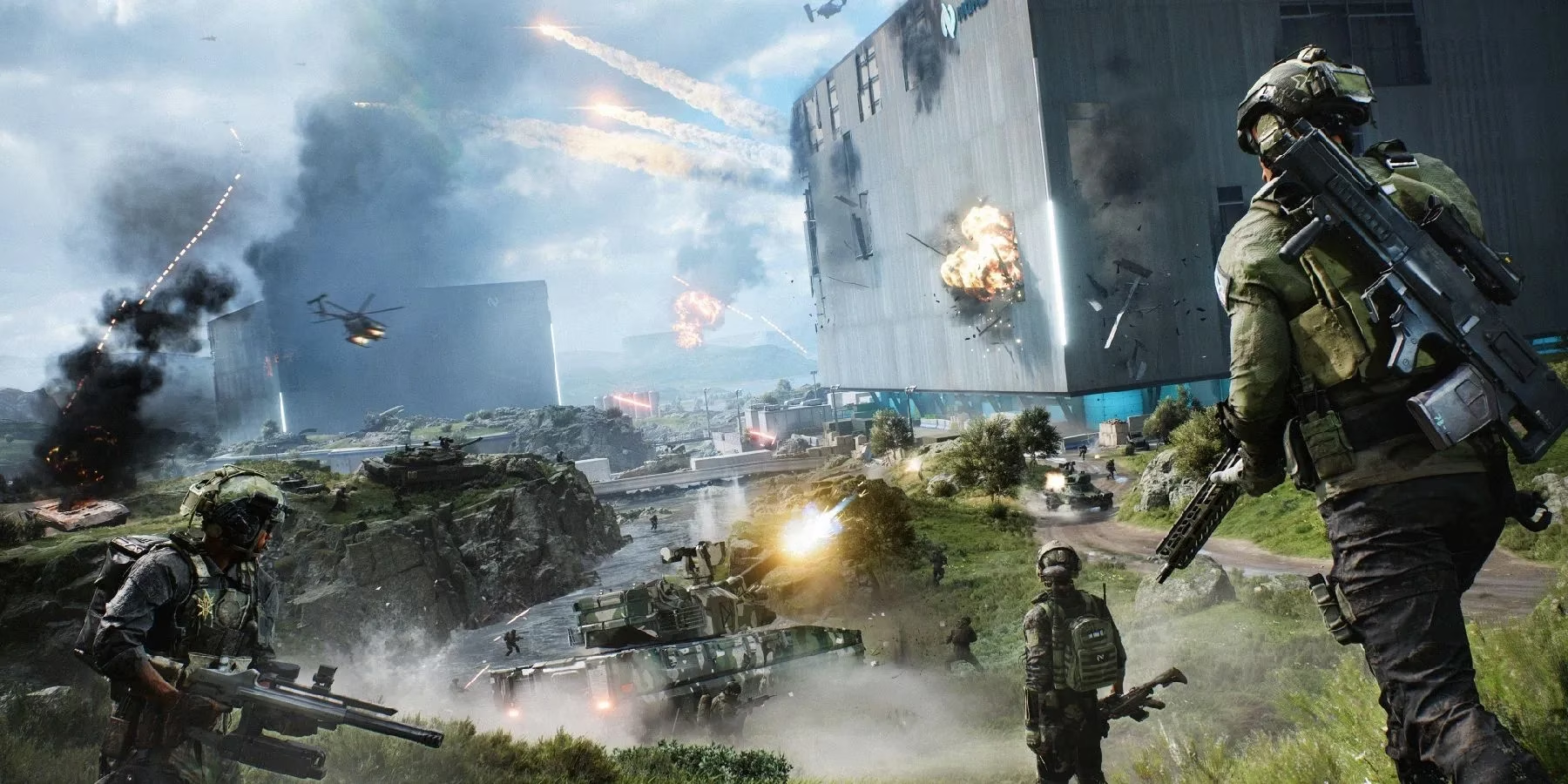
The franchise's historical identity is built on a very specific, and very successful, illusion: chaotic, believable warfare. For years, Battlefield marketed itself as the thinking person's large-scale shooter, a glorious, gritty counterpoint to Call of Duty's tightly scripted corridor sprints. Its magic wasn't just in the 64-player lobbies or the levolution events; it was in the feeling of being a cog in a vast, realistic military machine. A big part of that feeling came from the visual language. Players weren't just avatars; they were soldiers—identifiable, grounded, and serious.
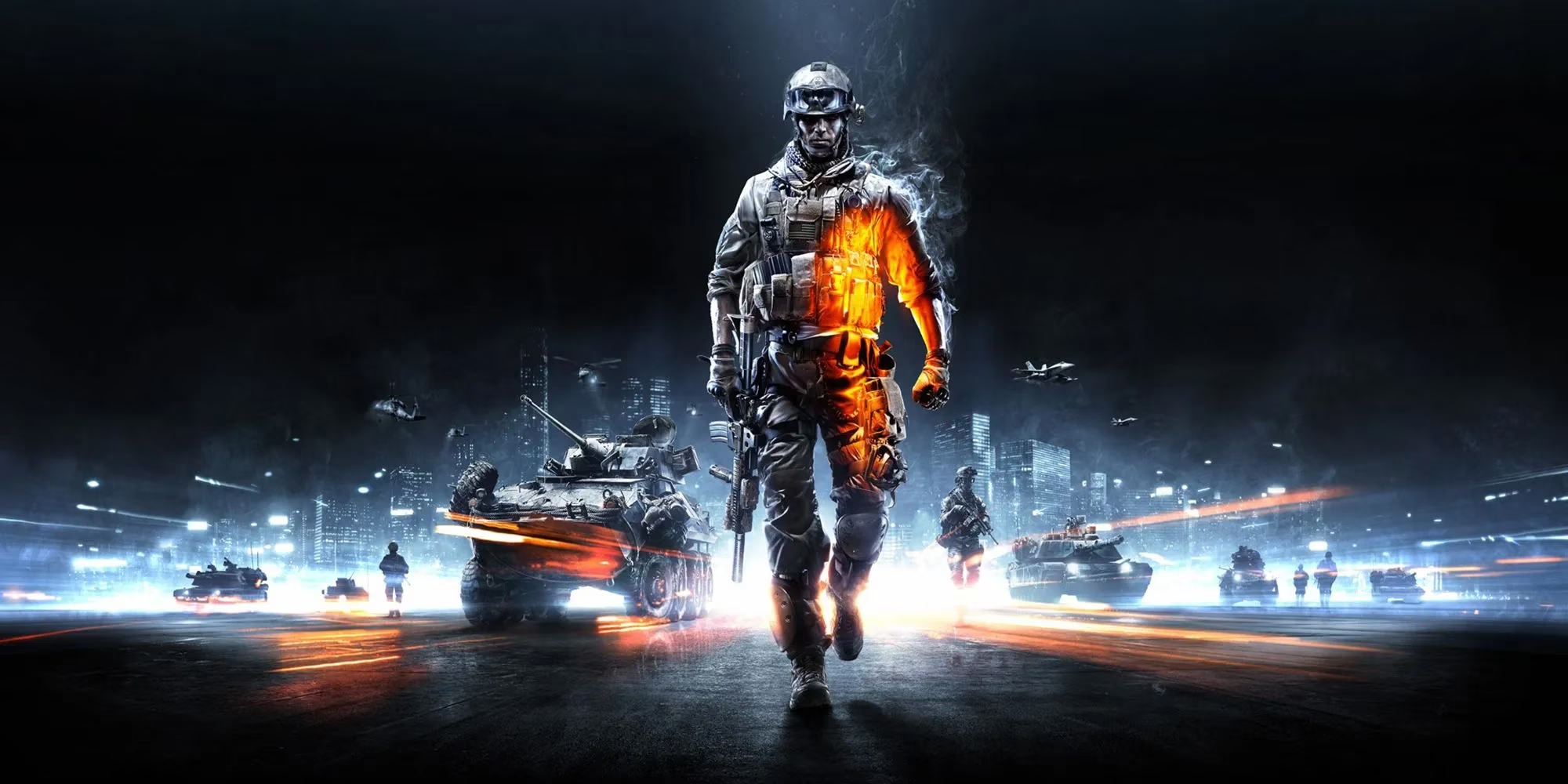
Take a trip down memory lane to the praised Battlefield 3. In that title, class recognition was instant and intuitive. Every Recon soldier shared a core silhouette and gear loadout, differentiated only by faction-appropriate color palettes (US vs. RU). The same went for Assault, Support, and Engineer. This system was elegant in its simplicity:
-
Instant Readability: In the heat of a firefight, you could instantly identify a threat. Is that a medic who can revive his squad, or an engineer who just popped out with a rocket launcher? Your brain processed it in a split second, based on visual cues that felt authentic.
-
Immersive Aesthetics: Every character model oozed a "serious military vibe." They looked like they belonged on a real battlefield, pulled from photo references of actual conflicts. This dedication to a grounded aesthetic sold the fantasy of being part of a larger war.
This foundation began to crack with Battlefield V. The community backlash was swift and merciless when promotional material revealed soldiers decked out in improbable, almost steampunk-inspired gear amidst the historically somber backdrop of World War II. A prosthetic arm here, a flamboyant coat there—it shattered the fragile immersion the series was known for. While the core gameplay had merits, the cosmetics became a constant, nagging reminder that realism had taken a backseat. 😬
Battlefield 2042, with its near-future setting, had more leeway. A fictional 2042 can justify more advanced, experimental gear. Yet, many felt it leaped over the line from "advanced" to "absurd." The specialists system, with their unique personalities and outfits, often clashed with the environmental storytelling of a world torn by climate disaster and resource wars. The gritty, desperate tone of the maps sometimes fought against the hero-shooter vibe of the characters running across them.
Here's the crucial strategic insight for 2026: Battlefield's biggest competitor is currently lost in the cosmetic woods, and it's the perfect time to strike a contrast. Call of Duty has fully embraced the "collaboration era," where operator skins now feature pop stars like Nicki Minaj and rappers like 21 Savage sprinting through pseudo-realistic warzones. The dissonance is jarring, and a significant portion of CoD's own community is vocally frustrated by it. They're craving a sense of tonal consistency that their favorite game has abandoned.
This presents a golden, once-in-a-generation opportunity for Battlefield. The path to differentiation and redemption is clear:
| Battlefield's Past Strength | Recent Misstep | Future Opportunity (2026+) |
|---|---|---|
| Grounded, faction-based uniforms | Over-the-top, character-centric skins | Distinct, believable faction aesthetics |
| Instant class/faction recognition | Visual clutter and confusion | Clear visual hierarchy and readability |
| Immersion through authenticity | Immersion broken by wacky cosmetics | Deepened immersion through cohesive art direction |
Imagine the next Battlefield, whether it's a return to historical conflict, a modern setting, or a new speculative future. Imagine two distinct factions, each with a unique but plausible visual identity. Their gear tells a story of their doctrine, their resources, their culture. Customization isn't about turning your soldier into a clown or a celebrity; it's about personalizing a believable soldier within the framework of their army. You choose different helmet variants, camouflage patterns appropriate to the biome, tactical patches, worn-down gear—all while still looking like you belong on your side of the conflict.
Cosmetics can still be appealing, profitable, and eye-catching without losing their grip on reality. A beautifully rendered, weathered set of digital camouflage or a meticulously designed futuristic helmet that looks like a logical evolution of today's tech can be just as coveted as any neon-colored monstrosity. The core tenet must be: grounded appeal. This isn't about stripping away fun or customization; it's about channeling it in a direction that reinforces, rather than undermines, the game's core identity.
The current state of alienating a large part of the traditional player base is a luxury the franchise can no longer afford. The "return to basics" that fans often clamor for isn't just about old-school gameplay mechanics (though that's part of it). It's a return to a cohesive, believable visual philosophy. It's about looking at the screen and feeling like you're in a war, not a costume parade. For the next Battlefield to succeed, it needs to remember that sometimes, the most powerful statement a soldier can make is not by standing out, but by fitting perfectly into the grim, glorious, and gritty picture of war the series once painted so masterfully. The battle for the franchise's soul will be won not with gimmicks, but with a steadfast commitment to its original, gritty aesthetic principles. 🎯
Comments