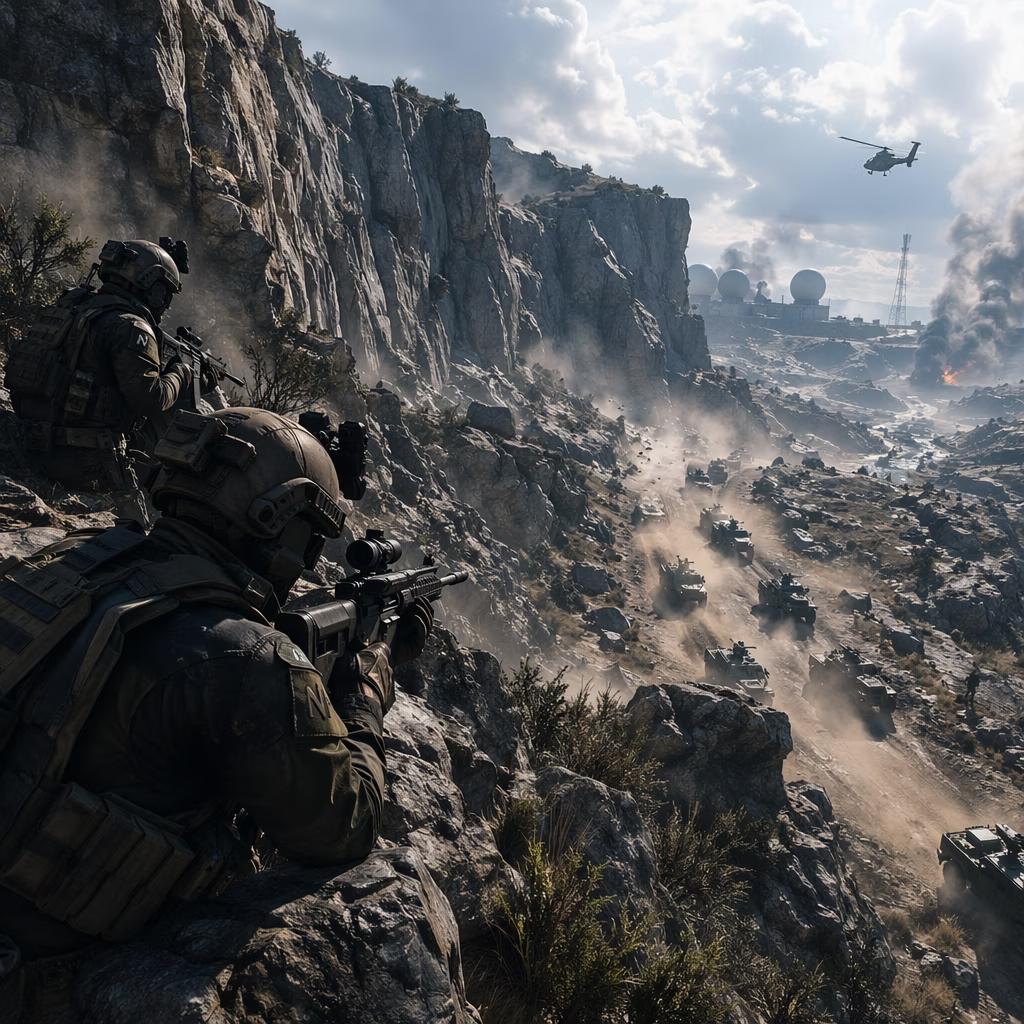
The studio behind the Battlefield franchise appears to be charting a new course, one that deliberately turns away from the futuristic horizons that once promised so much. According to insiders familiar with DICE’s plans in early 2026, the next major installment in the series is being reshaped to ground itself in a modern or near-future setting. This shift is not merely cosmetic; it is a recalibration borne from the aftermath of Battlefield 2042, a title that arrived with ambition but ultimately stumbled under the weight of its own divergences from the series’ core identity. Like a captain who over-navigated into uncharted storms, DICE is now trimming its sails to catch the familiar winds of tradition.
 .jpg)
.jpg)
Rumors sourced from reputable leaker Tom Henderson indicate that the original sequel plan was to double down on a hero-shooter framework, building directly upon the template that Battlefield 2042 attempted to popularize. That vision, which would have further entrenched specialist characters with unique gadgets, has reportedly been scrapped entirely. Internal reflections at DICE seem to have crystallized into a single, painful lesson: the introduction of operators in place of the classic class system fractured the very backbone of team play. By early 2026, player sentiment on platforms like Steam continues to show that the three most recent Battlefield entries set in the present day or historical periods—Battlefield 1, Battlefield V, and Battlefield 4—sustain player counts that overshadow Battlefield 2042 by a wide margin. The data acts as a mirror reflecting a community’s wish for classes that define roles, not personas that sell skins.
This directional pivot resembles an architect abandoning a glittering glass spire for a fortress grounded in time-tested stonework. The near-future or modern-day backdrop is not just a visual preference; it is a vehicle for the nuanced sandbox warfare that made the franchise iconic. Fans have long complained that Battlefield 2042’s oversized maps stretched the action thin, turning what should have been intense firefights into sparse pedestrian journeys across alien, empty landscapes. Recognizing this, DICE’s development roadmap for the upcoming title reportedly prioritizes map design that values density and flow over sheer square footage. Current updates to Battlefield 2042 already give hints of this philosophy, with newly introduced maps shrinking to create a tighter combat experience. It is an acknowledgment that a painter does not improve a canvas by making it larger but by filling it with compelling strokes.
.jpg)
The lessons from Battlefield 2042 extend beyond setting and map scale. The studio’s post-launch patches have functioned as a public autopsy. The much-criticized scoreboard, which initially obscured individual death counts in a misguided effort to reduce toxicity, now transparently displays kills and deaths across both teams, restoring a basic but vital element of competitive feedback. This small fix is emblematic of a broader retreat from experimental user-interface philosophies that alienated veterans. The new game’s direction, as hinted by insiders, seeks to heal these rifts by returning agency and clarity to players, ensuring that every soldier feels like a cog in a larger, coordinated machine rather than a solo performer on an extravagant stage.
Behind closed doors at DICE, the mood in 2026 is said to be one of quiet, determined reconstruction. The insider claims suggest a studio truly humbled, injecting the wisdom of failure into pre-production arteries. The abandoned hero-shooter concept—a potential path that might have chased trends—has been swapped for an emphasis on the visceral, class-based chaos that distinguished Battlefield 3 and Battlefield 4. This move can be likened to a composer discarding a complex, meandering symphony to rediscover the raw power of a simple, thunderous chorus. The new setting will serve as a clean slate, offering the technological familiarity that allows gadgets and vehicles to shine without the narrative baggage of an overly speculative future.
While official confirmation from EA remains pending, the consistency of these leaks paints a coherent picture. The next Battlefield is being engineered not to innovate for innovation’s sake, but to recapture a feeling that many feared had been lost in the tornado sirens of 2042. By stepping into a conflict that could unfold in the decades just ahead of our own, DICE positions the franchise where it has always belonged: at the fragile edge of today’s geopolitical tensions, rendered through the lens of spectacular, class-driven warfare. The gamble is significant, but the alternative—pressing forward into another cold, impersonal future—is a risk the studio no longer seems willing to take.
Comments