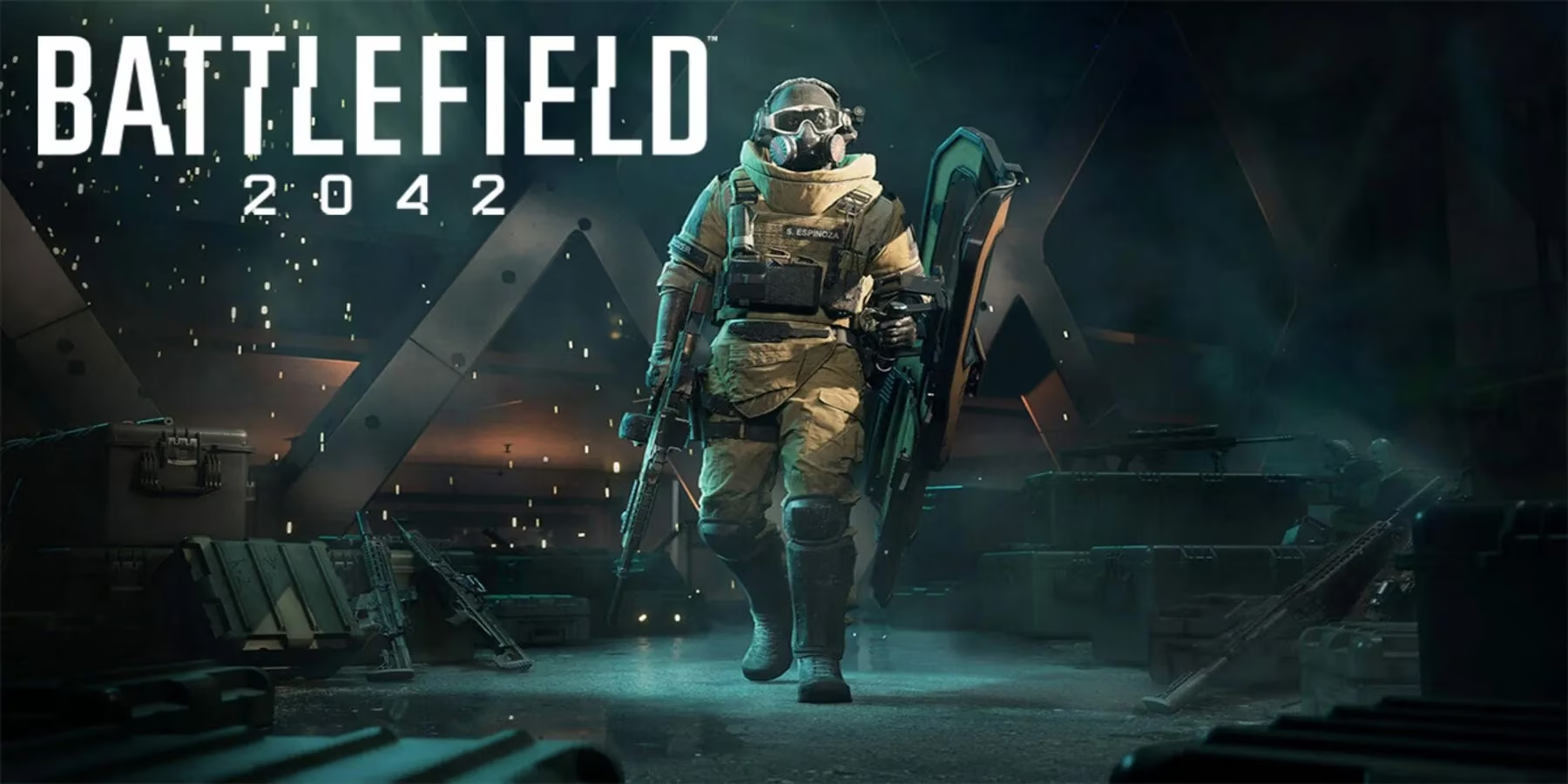
The early months of 2022 painted a grim picture for Electronic Arts as Battlefield 2042, the once highly anticipated first-person shooter, spiraled into what many industry observers called one of the year’s most visible triple-A disappointments. A combination of missing features, rampant technical issues, and a community that felt largely abandoned turned the launch into a cautionary tale. Within weeks of its release, whispers about the game pivoting to a free-to-play model began circulating, fueled by a dramatic collapse in active player numbers and an eerie silence around official sales performance. The image of a soldier clutching a riot shield, a staple of promotional material, soon became a symbol of a defensive posture rather than an offensive triumph.
Revenue Figures Remain Hidden
Internally, EA’s leadership treated Battlefield 2042 as a topic to be handled with extreme care. During quarterly earnings calls, the company conspicuously omitted any detailed breakdown of the game’s sales, a stark contrast to the fanfare that accompanied its pre-launch marketing. Prominent leaker Tom Henderson reported that the game accounted for less than 10% of EA’s overall portfolio revenue—a humbling statistic when placed beside the relentless cash engines that are Apex Legends and FIFA. This minuscule slice was so jarring that EA executives, when pressed during a shareholders’ meeting, openly admitted the title had failed to meet internal expectations. Analyst Daniel Ahmad noted that the company attributed part of the struggle to the challenges of remote development, but even that explanation felt flimsy given the scale of the misstep.
The reluctance to publish hard numbers only deepened the industry’s skepticism. In the absence of transparent data, the narrative of a game in freefall solidified. The giant publisher, accustomed to dominating conversations with robust live-service revenue reports, found itself inadvertently confirming that Battlefield 2042 was being utterly dwarfed by its own siblings.
Player Counts Plummet
The sales ambiguity was mirrored by an even more public humiliation: the evaporation of the player base. Merely a few months after its late 2021 launch, Battlefield 2042 tumbled out of the top 50 most-played Xbox titles, a list that typically retains even moderately successful games for far longer. On Steam, the situation was even more bruising. The game’s direct predecessor, Battlefield 5, a title that had already weathered its own storm of criticism, surged ahead and consistently attracted larger concurrent player counts. This unlikely overtaking by an older entry transformed social media timelines into galleries of unfavorable comparison screenshots. For a live-service shooter dependent on matchmaking speed and a sense of bustling warfare, a diminishing player pool spelled disaster.
Technical Troubles and Delayed Seasons
Behind the hollow lobbies lay a foundation cracked by unrelenting technical woes. Hit registration often felt inconsistent, objects failed to render correctly, and netcode problems turned pitched firefights into confusing slideshows. These weren’t minor quirks; they were pervasive enough to push even the game’s staunchest defenders to the brink. DICE, the storied developer behind the franchise, recognized the gravity of the situation and made a drastic call: the inaugural Season 1 of post-launch content was delayed. The official rationale was a need to prioritize stabilization over fresh drops, a message that, while logical, deepened the sense of a product still in beta. Players who had already paid $60 or more grew increasingly vocal about their frustration, accusing the studio of shipping a fundamentally unfinished experience.
Adding to the unease was the game’s design departure from series staples. Missing features like a traditional scoreboard and limited server browser options fueled the perception that Battlefield 2042 had betrayed its legacy. With each passing week without a substantial fix, the gap between the title’s ambition and its reality widened.
The Free-to-Play Dilemma
Desperate measures began to leak through the rumor mill. The most persistent speculation centered on EA allegedly evaluating a free-to-play transition for the entirety of Battlefield 2042. On the surface, such a move could inject a surge of new players into the struggling ecosystem. However, a pivot of that nature carried enormous risks. Early adopters who had invested $70 for the Gold Edition would feel utterly betrayed, potentially creating a public relations crisis even more severe than the technical shortcomings. Moreover, removing the paywall typically invites an avalanche of cheat developers, and without a robust anti-cheat infrastructure—something the game had already struggled with—the experience could degrade into an unplayable wasteland of aimbots and wallhacks.
Insiders and community voices alike proposed a more measured strategy: bundling Battlefield 2042 into EA Play and Xbox Game Pass. This approach would soften the blow for existing purchasers by offering them other catalog titles while organically growing the player base with subscribers who face a lower barrier to entry. It would generate recurring revenue without the stigma of a full free-to-play surrender. Whether EA’s leadership would choose a path of incremental recovery over a radical repricing remained an open question, but the fact that such contortions were being discussed publicly underscored just how far the franchise had tumbled from its pedestal.
Battlefield 2042 was available on PC, PlayStation 4, PlayStation 5, Xbox One, and Xbox Series X|S, yet its widespread hardware accessibility could not mask the core failings that turned it into a case study of modern AAA launch fragility. The road forward, whatever it looked like, would need to restore faith one patch at a time, a slow grind that tested the patience of both a wounded publisher and a disillusioned community.
Data referenced from SteamDB helps contextualize why Battlefield 2042’s live-service ambitions faltered so quickly, as publicly visible activity trends can underscore how rapidly a multiplayer shooter’s momentum can collapse when technical instability and missing legacy features erode trust. When concurrent participation thins out, matchmaking quality and perceived game “health” deteriorate in a feedback loop—making delayed seasonal drops and stabilization-focused patches feel less like a reset and more like damage control.
Comments