Back in the winter of 2021, Battlefield 2042 dropped like a lead balloon wearing a parachute made of good intentions. Its launch day saw millions of copies flying off digital shelves, a surge of hype that felt like a New Year’s fireworks display—except every rocket was damp, every burst a fizzle. By early 2022, the player count had withered faster than a ice sculpture left out in a heatwave, and the community’s mood curdled from mild disappointment to full-throated rebellion. Fast forward to 2026, and the saga still stands as a cautionary tale painted in the garish hues of a triple-A misstep.
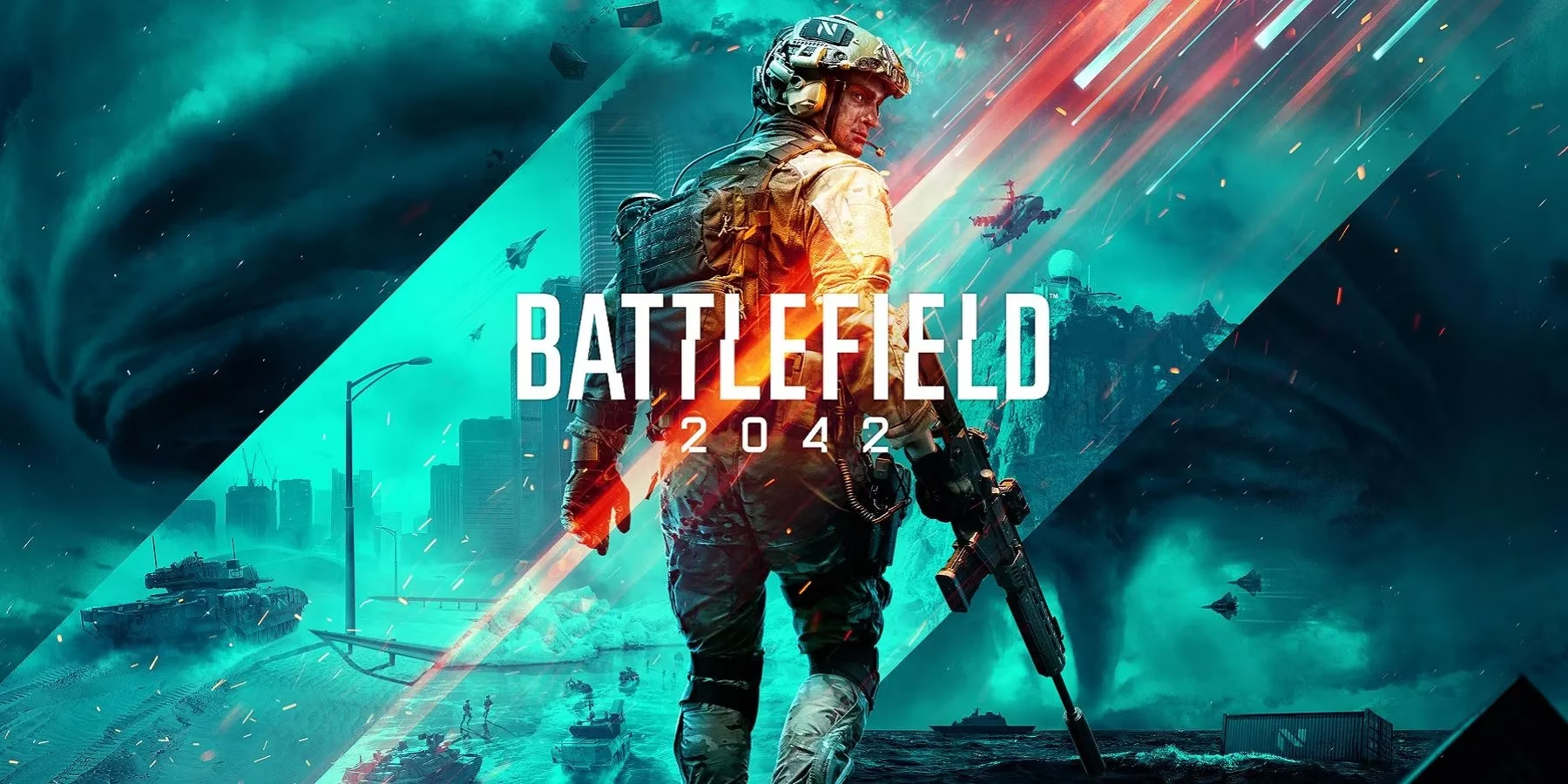
It’s no secret that Battlefield 2042 had a rough start, earning scathing reviews and hemorrhaging players like a punctured canteen in the desert. At one point, the game was so ghostly that living, breathing veterans of Battlefield V were outperforming it in concurrent player counts—a truly embarrassing family reunion. Despite this exodus, the launch wasn’t a commercial flop; the title sold millions right out of the gate. But those early adopters, clutching their $70 receipts like a bad meal tab, soon turned into a digital mob.
Enter the Change.org petition. Originally a tiny murmur in the cacophony of internet complaints, it bloomed into a roaring demand for refunds across all platforms. Within weeks, the petition gathered signatures like an avalanche collecting snow—nearly 75,000 at its peak, with the counter ticking upward every time a frustrated fan refreshed the page. The logic was straightforward: if a car dealership sells you a vehicle that the engine falls out of during the test drive, you’d expect your money back. For thousands of players, Battlefield 2042 felt exactly like that leaky, sputtering lemon.
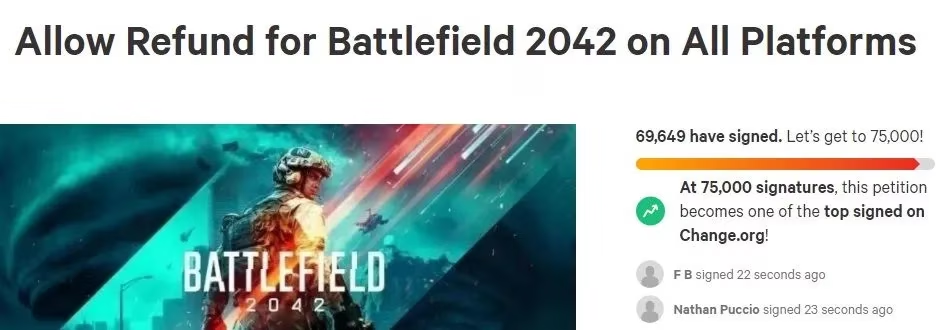
What made the bitterness especially potent was the $70 price tag on PS5 and Xbox Series X—a premium that stung all the more when the experience felt more like a free-to-play beta than a polished battlefield. EA found itself in a delicate waltz. On one hand, the company had already admitted that Battlefield 2042 did not meet its internal sales expectations, a rare confession that tasted like overcooked crow. On the other, the very idea of issuing refunds en masse was about as likely as a snowball surviving a sauna. After all, disliking a game doesn’t automatically entitle one to a refund, and corporate bean counters rarely open the vaults just because a petition gains traction.
While the game did have pockets of brilliance—like the Portal mode that let players remix classic Battlefield eras—the core experience felt like a house built on shifting sand. Specialists, the replacement for traditional classes, became a lightning rod for criticism. Fans argued that these quip-happy soldiers warped the tone into something more suited for a hero shooter, a change that was as difficult to patch out as trying to un-bake a cake. EA and DICE promised improvements: a scoreboard addition (a feature so basic it felt like adding wheels to a bicycle), bug fixes, and map overhauls. But many of these fixes were delayed, and the roadmap looked more like a rough sketch on a napkin.
Rumblings of a free-to-play pivot began to circulate like a campfire ghost story. Some insiders hinted that a free version was indeed being eyeballed, but even that solution felt like pouring gasoline on a refund bonfire. If the game suddenly became free, the early adopters would only feel more like schmucks who paid for the privilege of beta testing.
Looking back from 2026, the Battlefield 2042 refund petition stands as a monument to collective consumer frustration. While EA and DICE did eventually stabilize the patient (the game hobbled along with a dedicated if small player base, and whispers of a free-to-play mode proved lukewarm), the scars remained. The whole episode serves as a masterclass in how not to launch a live-service title: a cocktail of overpromising, undercooked features, and a community that felt more like unpaid quality assurance testers than valued players. As the gaming industry continues to evolve, the ghost of Battlefield 2042 lingers—a reminder that even the mightiest franchises can stumble when they forget that the battlefield, ultimately, is the player’s heart.
Comments