The landscape of the multiplayer shooter genre has undergone a profound transformation over the last few decades, evolving from the straightforward, kill-focused arenas of titles like Quake to the intricate, content-rich ecosystems seen in modern franchises like Battlefield and Call of Duty. These contemporary shooters blend multiple sub-genres, offering a vast array of modes, weaponry, and progression systems that are continually refined through free content updates. As the complexity of these games has escalated, so too have player expectations. Among the suite of features now considered essential for a modern multiplayer shooter, deep and meaningful character customization stands paramount. From nameplates and emblems to comprehensive skin systems, personalization has become a critical mechanism for sustaining player investment and fostering a sense of identity within the virtual battlefield. This is a domain where the Battlefield series, with its historical leaning towards a more realistic and grounded military tone, has frequently encountered challenges in striking an optimal balance. However, the key to resolving this enduring tension may lie not in the latest innovations, but in a decade-old blueprint provided by Call of Duty: Advanced Warfare.
The Customization Conundrum in Battlefield's Recent History
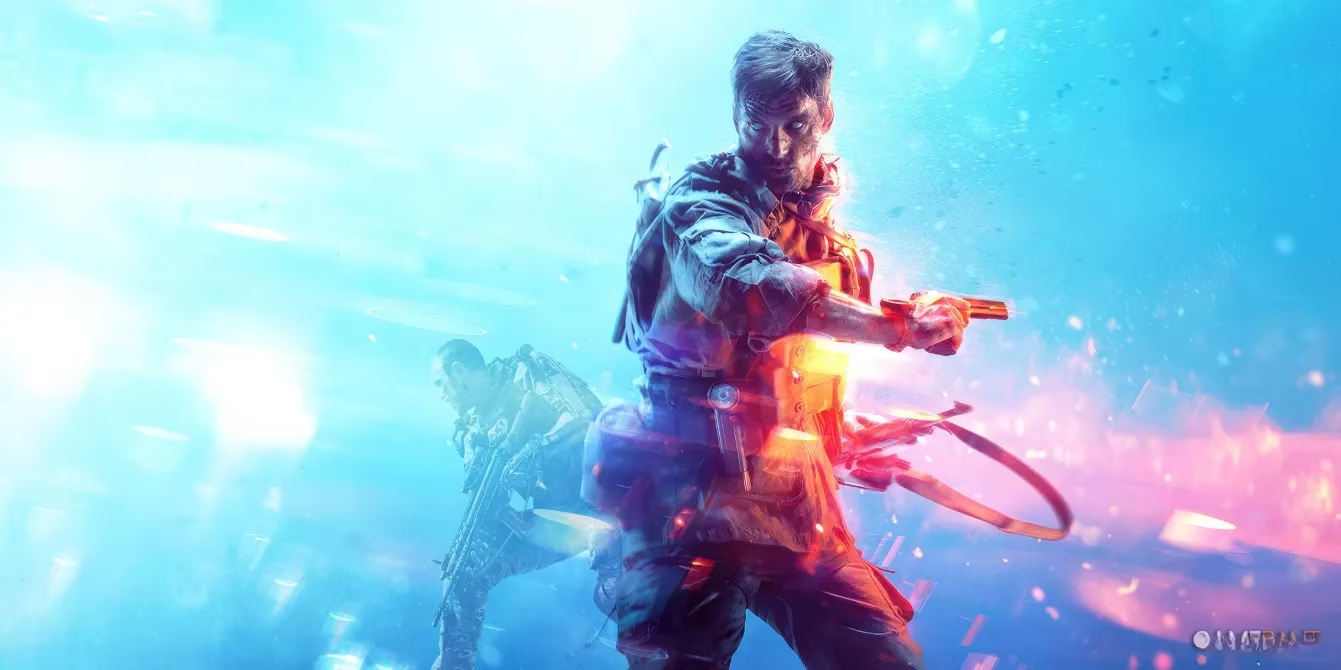
The Battlefield franchise's journey with player personalization has been marked by ambitious but often contentious experiments. Battlefield V (2018), while not universally acclaimed, introduced a system named "The Company" that showed initial promise. This framework allowed participants to select from a roster of pre-made characters and subsequently adorn them with a variety of cosmetic items for the torso, head, legs, and face. This system represented a foundational step toward player expression. However, it also introduced Elite characters—premium, non-customizable avatars with unique outfits available for purchase. This concept of distinct, named operatives was taken to its logical, and ultimately problematic, extreme in Battlefield 2042.
Battlefield 2042 replaced the series' iconic class system with a roster of Specialists. At launch, ten of these characters were available, each endowed with a unique active ability and a passive trait. This radical shift aimed to inject more pronounced hero-based dynamics into the large-scale warfare formula. The consequences, however, were significant and largely negative in the eyes of the longstanding community:
-
Loss of Individuality and Immersion: Ironically, the system designed to make characters "special" resulted in players feeling less unique. In the game's massive 128-player engagements, matches were frequently dominated by the same five or six meta Specialists. This led to players encountering identical character models repeatedly, which severely damaged the immersive, chaotic authenticity Battlefield is known for and created genuine gameplay confusion regarding team identification.
-
Tonal Dissonance: The voice lines and personality of the Specialists at launch were a major point of criticism. Characters like Webster Mackay delivered pre-match quips such as "Couldn't imagine a better line-up of ass-kickers than this" and "Hey, I've already had five cups of coffee, let's go!" These lines clashed dramatically with the franchise's traditionally more serious and grounded military atmosphere. Although these specific dialogues were later replaced with more generic call-outs like "Let's give them hell," the overall flamboyant and hero-centric tone of the Specialists remained a persistent issue.
This experiment demonstrated that simply grafting a hero-shooter framework onto Battlefield's core identity could backfire, sacrificing the series' signature tone and visual clarity for a trend that didn't align with fan expectations.
The Advanced Warfare Blueprint: Balanced Personalization
In contrast, Call of Duty: Advanced Warfare (2014) presented a masterclass in balanced customization that future titles, particularly Battlefield, would be wise to study. Its system was expansive yet coherent, allowing for profound player expression without compromising the game's militaristic, near-future aesthetic.
The framework was remarkably detailed, dividing cosmetic unlocks into nine distinct categories:
-
Eyewear
-
Helmets
-
Tops
-
Loadouts (affecting the visual appearance of equipped gear)
-
Gloves
-
Pants
-
Knee Guards
-
Boots
-
Exos (the powered armor suits central to gameplay)
This granular approach empowered participants to mix and match hundreds of components, enabling the creation of a visually distinct soldier that still felt like a plausible part of the game's advanced warfare setting. The system celebrated individuality—players could craft a unique mercenary or soldier—but did so within strict aesthetic guardrails that maintained the title's cohesive visual and narrative tone. There were no out-of-place, garish outfits or characters with jarring personalities; customization served the world-building, not undermined it.
A Path Forward for the Next Battlefield
For the next major Battlefield installment, expected around 2026, a complete abandonment of customization is neither feasible nor desirable. Player demand for personalization is higher than ever. The solution lies in synthesizing the lessons from its own past with the successful model of Advanced Warfare. A potential hybrid system could involve:
-
Return to a Class-Core Foundation: Re-establish the classic Assault, Engineer, Support, and Recon roles (or their equivalents) as the primary gameplay pillars. These would define a soldier's core equipment and role on the battlefield.
-
Deep, Class-Based Customization: Within each class, implement a robust, component-based customization system inspired by Advanced Warfare. Allow players to modify:
-
Headgear (helmets, caps, goggles, face paint)
-
Upper Body (jackets, vests, insignia)
-
Lower Body (pants, knee pads)
-
Footwear (boots)
-
Gear & Accessories (backpacks, ammo pouches, gloves)
-
-
Tone-Appropriate Cosmetics: All cosmetic items must be curated to fit the game's specific setting and tone—whether that's historical, modern, or near-future. The focus should be on authentic military gear, camouflages, and unit insignia, with any more experimental designs being rare rewards that still feel plausible.
-
Anonymous, Player-Created Soldiers: Move away from named "Specialists" with canned personalities. Instead, let the customized soldier be a blank canvas—a representation of the player themselves. Voice lines should be generic, professional, and context-dependent (e.g., calling out enemy positions, requesting ammo), devoid of cringe-inducing one-liners.
This approach would satisfy the human desire for personal expression and ownership over one's digital avatar while preserving the immersive, team-oriented, and visually coherent sandbox that defines the Battlefield experience at its best. It acknowledges that in the vast, chaotic theater of war, a soldier's identity shouldn't come from a pre-written personality, but from the scars, gear, and customization choices earned through battle—a lesson aptly demonstrated over a decade ago in the exosuit-laden corridors of Advanced Warfare. The future of military shooter customization lies not in louder heroes, but in more detailed, personal, and authentic soldiers.
Comments