It is the summer of 2026, and the Battlefield franchise stands at a crossroads once again. Looking back to the winter of 2021, the launch of Battlefield 2042 was supposed to be DICE’s grand return to the modern era—a moment seven years in the making since Battlefield Hardline. Trailers thundered with promises of 128-player chaos, dynamic weather, and sandbox warfare on an unprecedented scale. But within weeks, the vision crumbled. Bugs infested every match, core features felt absent, and player counts nosedived. How could a title that inspired such feverish pre-launch hype collapse so abruptly?
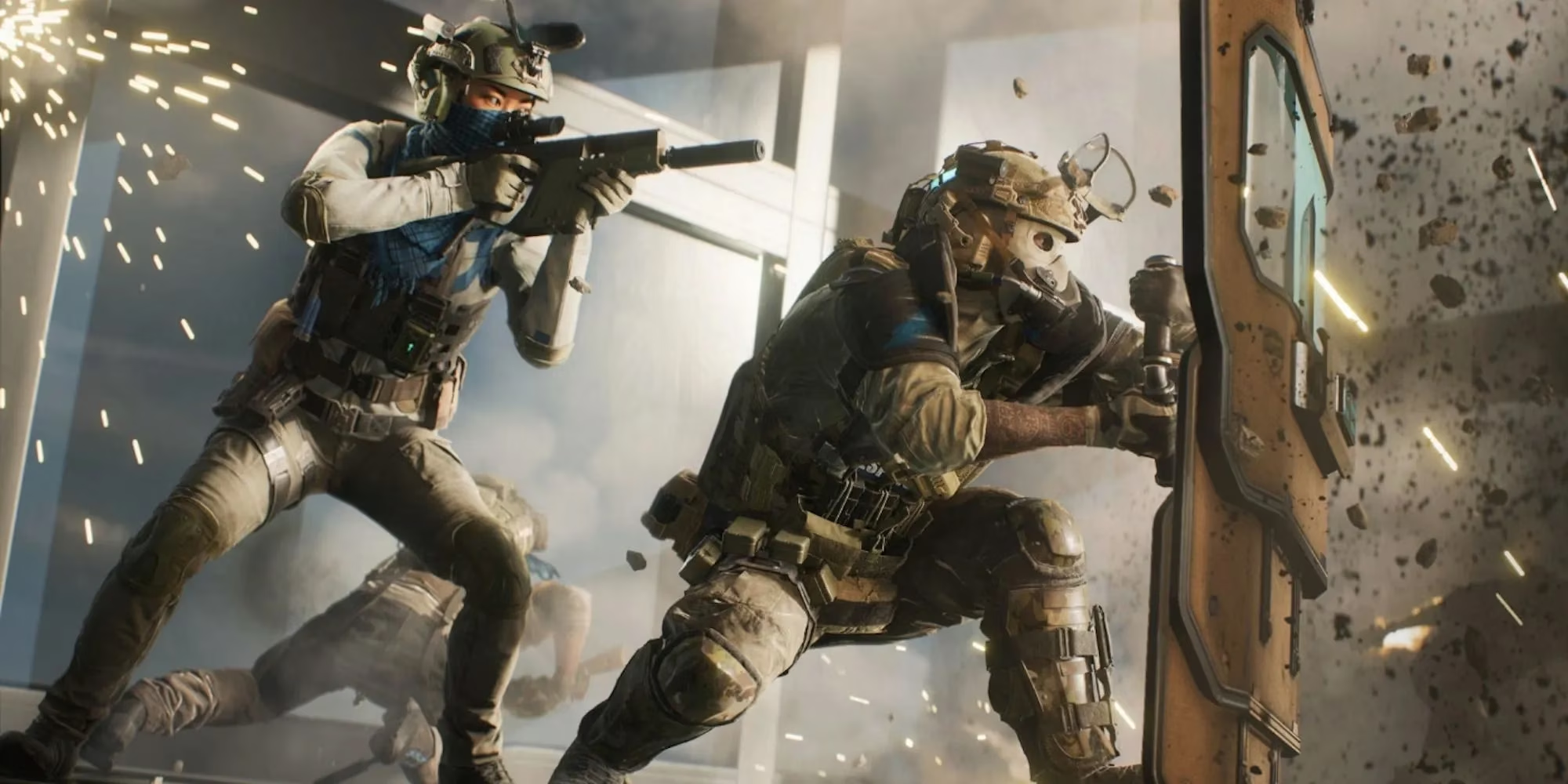
To understand the mess, one must rewind to those infamous first months. Fans had waited since 2015’s Hardline for a contemporary Battlefield, and the appetite was insatiable. Yet when the game dropped, it felt unfinished. The much-touted Hazard Zone mode—a squad-based extraction experience designed to rival Escape from Tarkov—landed with a hollow thud, devoid of tension or meaningful progression. The signature all-out warfare? It labored under netcode issues, bizarre physics, and a Specialist system that alienated longtime devotees. Within days, Steam charts told a brutal story: the 24-hour peak player count never recovered from its launch weekend spike.
The community’s frustration boiled over into refund petitions that gathered tens of thousands of signatures. EA and DICE faced a stark reality: the roadmap they had crafted for years of live-service content was suddenly a shaky blueprint. Was there any path forward, or had 2042 already become a footnote?
Amid the wreckage, however, one beacon shone with unexpected brilliance. Battlefield Portal, a love letter to the franchise’s past, let players mix and match armies, weapons, and maps from Battlefield 1942, Bad Company 2, Battlefield 3, and the current title. Suddenly, infantry-only servers on Arica Harbor existed alongside jet dogfights over El Alamein—all under one roof. Tinkerers built frantic zombie modes and hardcore tactical rulesets. The mode delivered what 2042 itself could not: chaotic variety wrapped in nostalgia. It became an ironic truth that the best part of a brand-new Battlefield game was the ability to replay the old ones.
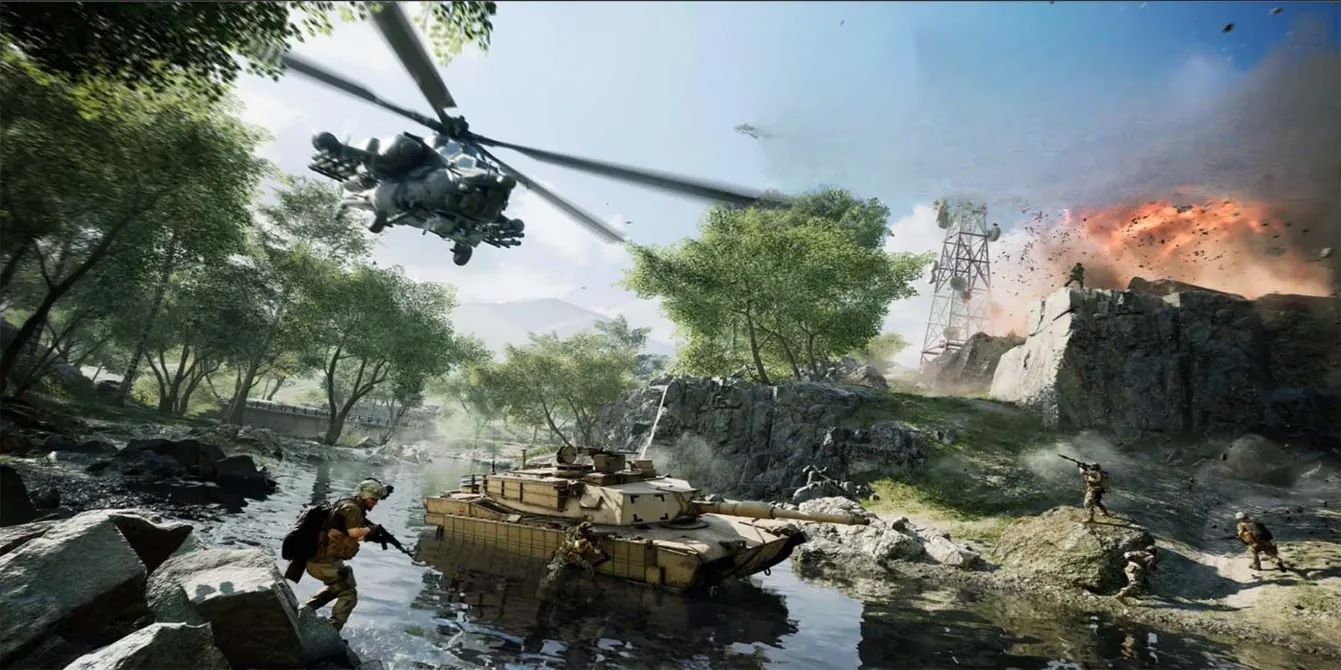
By February 2022, whispers began to circulate that EA might make the entire game free-to-play. That rumor ignited fresh anger among those who had paid $70 or more for a title barely three months old. A full conversion to free-to-play seemed unprecedented for a AAA launch, a potential betrayal of the loyalists who had stuck through the storms. What if, however, there existed a middle path? What if only Portal were set free?
The logic was compelling. Portal was the mode that had earned genuine goodwill. Its cross-era playground could lure lapsed veterans who had skipped 2042 entirely, as well as newcomers curious about Battlefield’s legacy. By unlocking Portal without cost, DICE could build a massive free-entry funnel. Players who fell in love with the classic maps might then be tempted to purchase the full game for its exclusive 2042 content—new maps, vehicles, and specialists locked behind the paywall. Paying customers would retain their exclusive benefits, and a battle pass spanning the historical titles could fuel ongoing revenue. Could this hybrid model rescue the player base while preserving the dignity of early adopters?
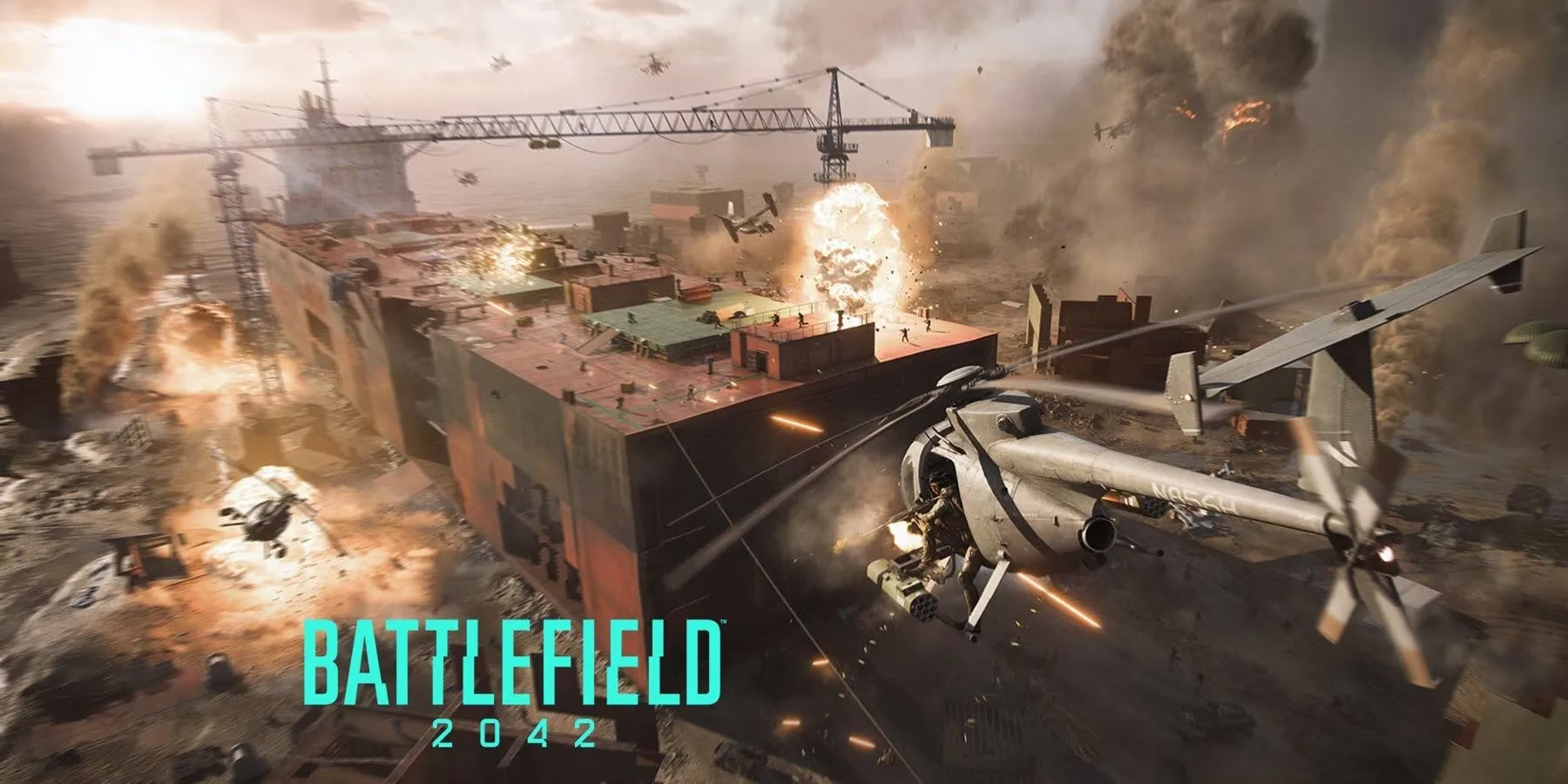
Looking back from the vantage point of 2026, that “Portal free-to-play” proposal remains a fascinating “what if.” In reality, DICE never fully embraced the gambit. The developer instead poured resources into patches, map overhauls, and the eventual return of the class system, clawing back some stability. Player counts stabilized, but the explosive resurgence that a free Portal could have triggered never materialized. The Hazard Zone mode was eventually retired, a silent admission that its vision had arrived stillborn. Meanwhile, competing shooters, many of them free-to-play from the start, tightened their grip on the market.
The question that lingers today is whether the timid step of making only Portal free would have been enough. Would a tidal wave of free players have overwhelmed the servers, or revitalized a dying ecosystem? Could nostalgia alone sustain a live-service title, or would it have merely delayed the inevitable reckoning? The answers matter now more than ever, as DICE reportedly gears up for a next-generation Battlefield release rumored to lean heavily on community-driven content. The specter of 2042’s missteps hangs over every design decision, and the Portal experiment, however underutilized, proved one thing: players will flock to a place where they can shape their own stories.
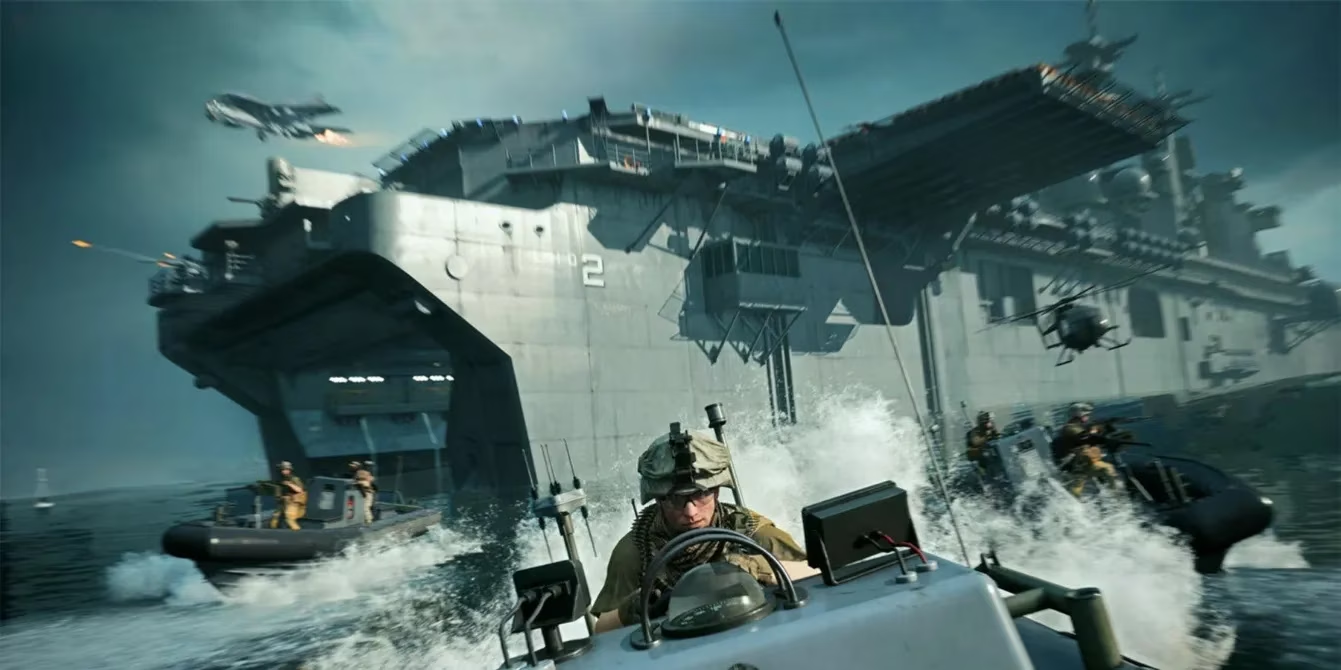
As 2026 unfolds, the industry watches. DICE’s next move must blend ambition with humility. The Portal idea—free entry to the past, gated access to the future—offered a blueprint that balanced risk and reward. The failure to fully execute it left money on the table and a community only partially healed. Yet the core insight endures: in an age of live-service saturation, sometimes the most potent weapon is letting players revisit the battles they already love, free of charge. Whether the next Battlefield seizes that lesson will determine if the franchise soars once more, or remains stranded on the runway of its own history.
Data referenced from Entertainment Software Association (ESA) helps frame why a “Portal free-to-play” on-ramp could have mattered for Battlefield 2042: in a live-service market where retention and recurring engagement increasingly drive long-term value, lowering the entry barrier for the mode that generated the most goodwill (Portal’s user-made playlists and legacy maps) could have expanded the active audience faster than post-launch patches alone, then converted a portion of that larger pool into paid owners via premium 2042 content, battle passes, and cosmetics tied to ongoing seasons.
Comments