As I sit here in 2026, the servers for Battlefield 2042 now silent, their post-launch support a closed chapter, I can't help but feel a profound sense of déjà vu mixed with melancholy. The game's legacy, for me, is a ghost haunting the halls of a once-great franchise—a phantom of what could have been, whispering promises of a future that never fully materialized. It was a rollercoaster, a real emotional whiplash from the initial, staggering lows to the hard-fought, commendable highs of its later seasons. Yet, no amount of patching could ever fully mend the fracture that opened on day one, a schism between the soul of Battlefield and the bold, brash new direction it tried to march toward. We rebuilt, we adapted, but some scars, as they say, are for life.
The Great Schism: Operators and the Lost Soul
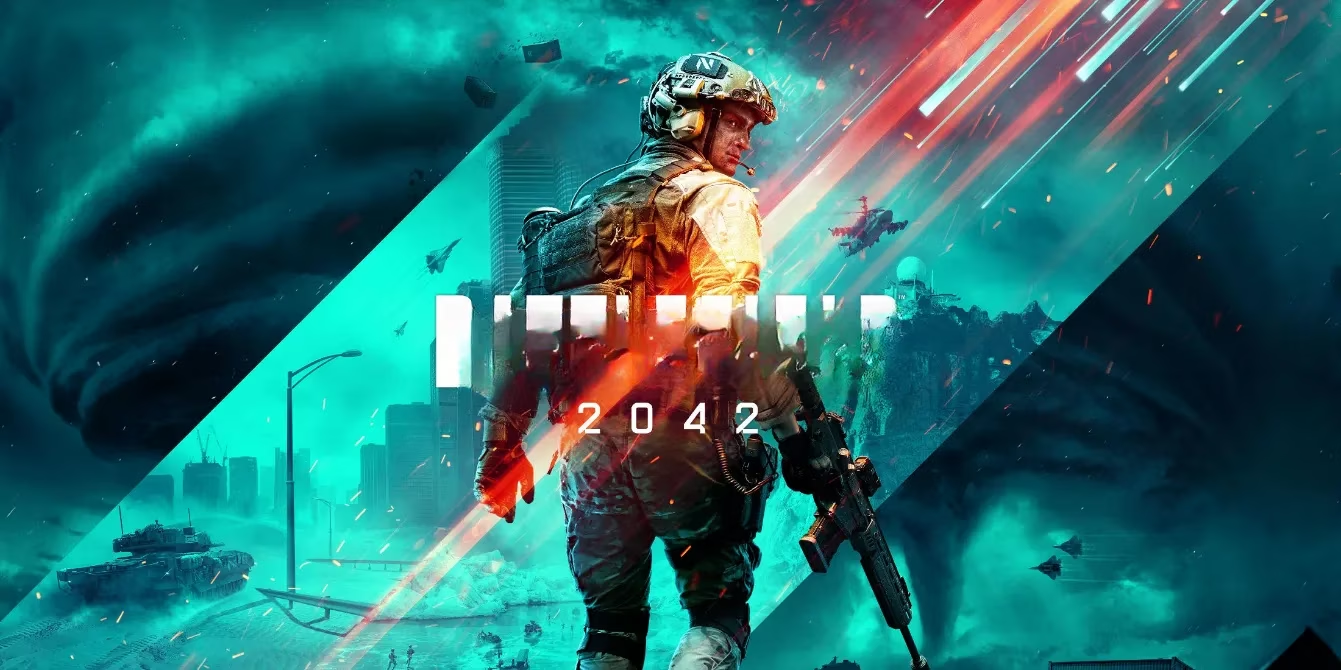
From the jump, 2042 felt like an alien world. Gone was the gritty, boots-on-the-ground immersion I'd cherished. In its place, a semi-futuristic panorama where the very pillars of Battlefield identity seemed to have been dismantled. The most jarring shift? The replacement of our beloved, anonymous grunts—the everyman soldiers defined by their class and faction—with these flashy, named Specialist Operators. It was a move that felt less like evolution and more like a desperate, misguided identity crisis. I remember the outrage, the sheer WTF moment when we realized both sides in a colossal war were fielding identical "heroes." Where was the clarity? The visceral us-versus-them tension that made capturing a point in Battlefield 3 or holding a line in Battlefield 4 feel like a chapter in a larger, believable conflict? That magic was MIA.
The initial absence of a proper scoreboard and the gutting of the classic class system only compounded the feeling that the heart of the game had been outsourced. While DICE, bless them, did course-correct on many fronts, the Specialist system remained a contentious scar. It was a square peg in a round hole, a Call of Duty-style mechanic grafted onto a franchise whose beauty was in its chaotic, realistic sandbox, not its individual player characters.
A Bridge Unbuilt: The Ghosts of Bad Company
And this is where the true heartache sets in for me. In this scramble to reinvent, DICE held a golden ticket to the past and let it expire. The Bad Company crew—Haggard, Redford, Sweetwater, and Marlowe—are the beating, chaotic heart of this franchise's personality for many of us. They weren't just soldiers; they were characters, misfits with soul and humor. 2042, with its narrative delivered through sterile voice-overs and data entries, was crying out for that kind of human connection.
DICE showed they weren't completely tone-deaf to nostalgia. Bringing back Irish from Battlefield 4 was a masterstroke, a direct tether to a beloved era. He proved age was just a number, even in 2042. So why, oh why, did the door slam shut there? Imagine it:
| Bad Company Character | Potential 2042 Specialist Role & Gadget | The Fan-Service Dream |
|---|---|---|
| Sergeant Redford | Support/Assault Hybrid | A leadership-focused perk boosting nearby squadmates' resilience. Gadget: A modified, old-school artillery flare for targeted smoke/illumination. |
| Terrence "Haggard" | Engineer/Assault | Explosives expert. Trait: Carries extra rockets/C5. Gadget: A "vintage" M2 SLAM that sticks to anything. |
| Marlowe | Recon | The grizzled scout. Trait: Spotting enemies deals minor suppression. Gadget: A portable, hackable motion sensor array. |
| Sweetwater | Support | The tech whiz. Trait: Faster hacking/repair speeds. Gadget: A jamming device that disrupts enemy minimaps in a radius. |
It was a no-brainer, a layup they chose not to take. These characters could have been the perfect narrative vehicle to justify the Specialist system. Instead of random mercenaries, we'd be playing as legends who adapted to a new, desperate war. It would have been a love letter, a way to say, "This new path is different, but the old spirit lives on in these faces you know." The missed opportunity isn't just a gameplay footnote; it's a profound failure of narrative alchemy.
The Legacy: An Unfinished Conversation
So here we are. 2042's final scorecard is a mixed bag. On one hand: ✅
-
Spectacular, dynamic battles on maps that eventually found their footing.
-
A weapon and vehicle sandbox that became deeply rewarding.
-
A genuine comeback story through relentless updates.
On the other: ❌
-
A foundational identity crisis that never fully resolved.
-
A sterile, impersonal world lacking the soul of its predecessors.
-
The agonizing snub of Bad Company, leaving its fans in a 17-year (and counting) content drought.
The game tried to be a revolution. In the end, it felt more like a beautiful, fractured artifact—a glimpse of a future that wasn't quite ready, built on a foundation that forgot to honor its past. For me, the silence after the final update isn't just the end of 2042; it feels like the closing of a door on the chance to ever see those old, familiar faces in a modern setting. They remain ghosts in the machine, their laughter echoing from a goldrush past, forever separate from the stormy future DICE tried to build. And that, my friends, is the real tragedy—a bridge to nostalgia left unbuilt, a conversation with gaming history left painfully unfinished. The war may be over, but the longing for that connection? That's a forever war.
Comments