In late 2020, the gaming world witnessed a spectacle that felt less like a launch and more like a controlled demolition. Cyberpunk 2077 arrived not with a flourish, but with a stumble so epic it became a cautionary tale whispered in development studios from Warsaw to California. Like a world-class chef who serves a half-baked soufflé to a Michelin-starred audience, CD Projekt Red discovered that even the most anticipated dish can collapse if it leaves the kitchen too soon. That moment, that collective gasp of disappointment, quietly reshaped the entire industry. Fast forward to 2026, and the ripples are still visible: game delays are no longer a sign of failure—they are a badge of wisdom.
🎮 The Unforgotten Launch That Broke Trust
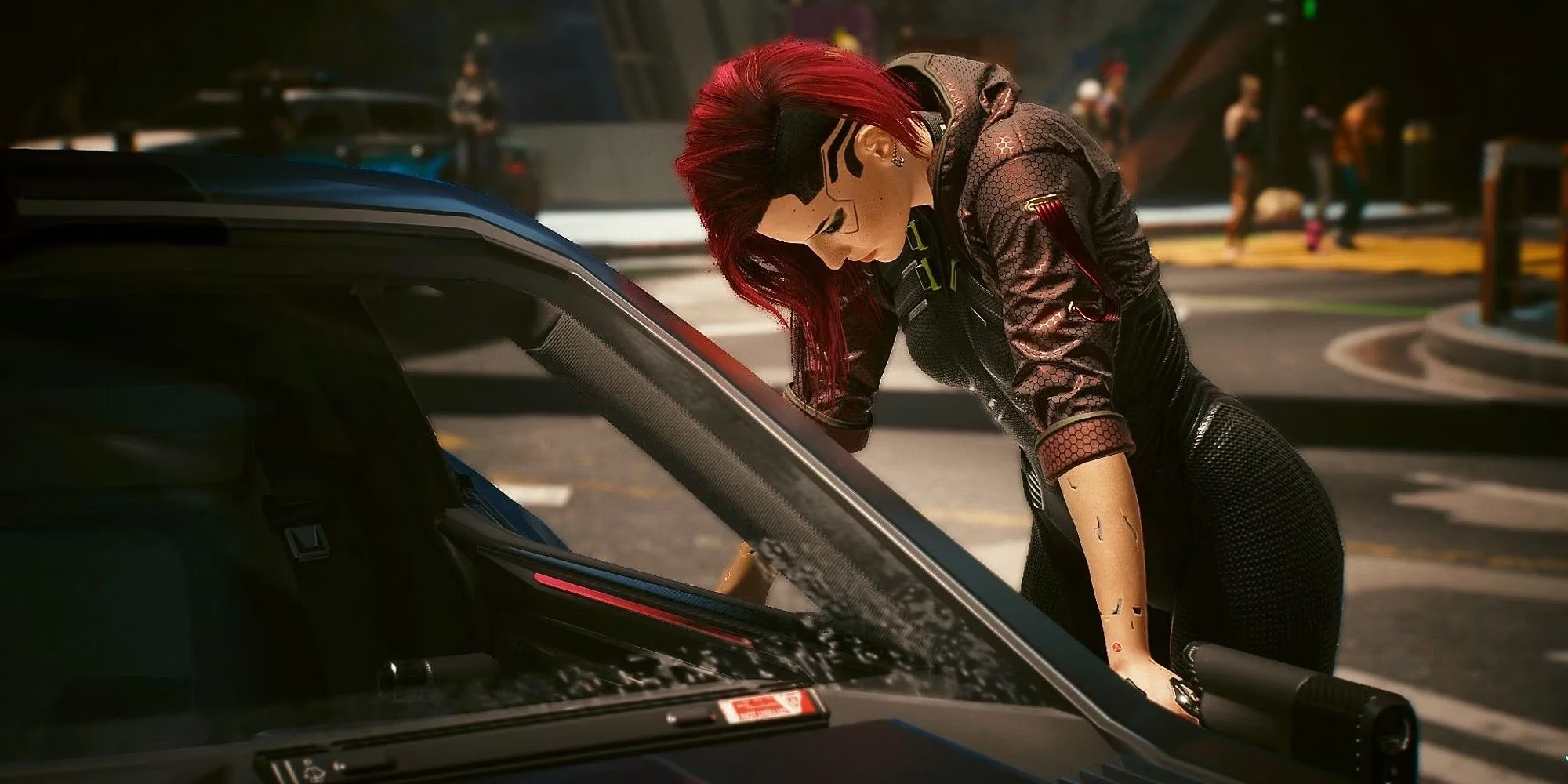
The story of Cyberpunk 2077’s 2020 release is now taught in game design courses as a masterclass in what not to do. On paper, it was the sci-fi role‑playing dream: a neon-soaked megacity, limitless character customization, and the pedigree of The Witcher 3 behind it. In reality, it was an unfinished build that glitched its way into headlines. Base consoles staggered under the load, NPCs blinked in and out of existence, and Sony took the unprecedented step of yanking it from the PlayStation Store. For a studio once considered untouchable, it was a fall from grace akin to a tightrope walker missing the net entirely. The industry took notes.
🌱 The Delayed Bloom Theory
Behind closed doors, developers started invoking a quiet mantra: “We’d rather delay than destroy.” An anonymous US game director told GamesIndustry that after watching Cyberpunk’s implosion, their team decided unequivocally: “We took one look at what happened and thought ‘yep, we’re delaying this.’” The reasoning was visceral. Releasing a broken game isn’t just a technical fiasco—it’s a reputational black hole. Like a gardener who knows that forcing open a bud only kills the flower, studios began to give their projects the time needed to bloom naturally. A patch might hide cracks, but it can’t rebuild trust that has evaporated overnight.
That philosophy gained momentum in 2022 and 2023, when Bethesda faced a similar crossroads with Starfield. Whispers flew that the space epic might become “the next Cyberpunk.” Rather than gamble, the team pushed the launch into 2023—a move that felt radical at the time but now looks prescient. By 2026, Starfield is remembered not for bugs but for its vast, explorable cosmos, proving that a few extra months can transform a potential disaster into a classic.
🛠️ Lessons Learned by the Heroes and the Fallen
Even CD Projekt Red itself has become a disciple of patience. Instead of rushing out expansions to recapture momentum, the studio spent years crafting Cyberpunk 2077’s story DLC, Phantom Liberty, which finally landed in 2023 to genuine acclaim. The mantra had shifted: “make sure it’s properly crafted” trumped any arbitrary calendar deadline. This deliberate pace echoed through countless other titles. In 2024 and 2025, high-profile projects like Beyond Good & Evil 2 and The Elder Scrolls VI openly flaunted their delayed statuses as a sign of quality, not chaos.
🔍 The Hidden Architects of Change
While Cyberpunk 2077 lit the fuse, other forces fanned the flames. The pandemic rewired how games are made, turning living rooms into development hubs and forcing asynchronous collaboration. Crunch—once the dirty secret of the AAA world—became unsustainable when burnout met lockdown. Battlefield 2042’s own troubled launch in 2021 hammered home another truth: even mega-franchises can stumble. These twin shocks, like two electrodes jolting a sluggish heart, convinced executives that the old model of rigid timelines and holiday-ready launches was a relic. By 2026, flexible roadmaps and “when it’s ready” messaging are the norm, not the exception.
📊 A New Vocabulary of Development
The language around game delays has transformed. Gone are the days when a postponed title triggered anger and refund demands. Now, communities greet delays with cautious optimism—a quiet nod that recognizes the alternative could be another cyberpunk‑ish heartbreak. Social media threads are filled with GIFs of Keanu Reeves in Cyberpunk 2077, captioned “take your time, we’ve learned.” Developers openly share polished vertical slices years ahead of release, inviting feedback rather than shielding their creations until the last, panicked minute. It’s a dance of transparency where the music is played by a patient audience.
✨ Why 2026 Looks Different
Walking through any digital storefront today, the evidence is clear. Major releases come wrapped in early-access chapters, developer diaries, and community playtests that act as stress tests long before the official date. The modern game launch resembles a carefully rehearsed symphony, not a spontaneous punk show. Even the biggest titans—Rockstar with GTA VI, for example—issue statements that blend ambition with caution, acknowledging that a game’s legacy is forged in its first month, not its first trailer. The wake-up call worked.
💡 Final Thought
Cyberpunk 2077’s disastrous debut was more than a corporate embarrassment; it was the industry’s collective therapy session. It forced a reckoning between art and commerce, between marketing hype and tangible craft. Today, as players wander through polished worlds that deliver on their promises, they owe a quiet debt to that glitchy, unforgettable launch. The decade’s most infamous failure became its most powerful teacher—and the lessons are still being written, one delayed masterpiece at a time.
Comments